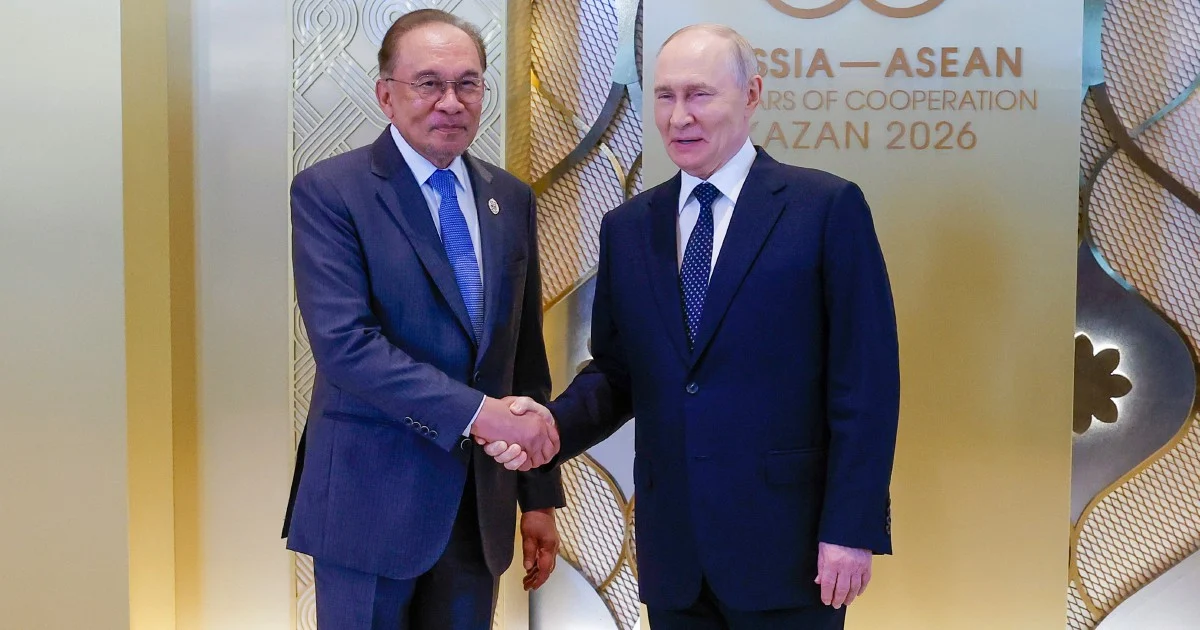
Prime Minister Datuk Seri Anwar Ibrahim's recent diplomatic visits to Russia and Turkmenistan have been hailed by BRICS International Malaysia as strategically significant steps that will reinforce the nation's energy independence and expand opportunities within the hydrocarbon sector. The two-nation tour represents a deliberate shift towards broadening Malaysia's international partnerships in critical infrastructure and resource development beyond traditional Western trading partners.
Turkmenistan stands as one of Central Asia's most substantial natural gas producers, with proven reserves among the world's largest, while Russia maintains its position as a global energy powerhouse across multiple commodities. For Malaysia, whose own petroleum reserves face depletion projections within coming decades, cultivating robust relationships with these energy-rich nations carries profound implications for medium and long-term economic stability. Such partnerships allow Malaysian policymakers to negotiate favourable supply agreements and explore joint ventures that could secure fuel supplies at competitive pricing amid volatile global energy markets.
The strategic importance of these visits extends beyond transactional energy deals. By engaging directly with Russia and Turkmenistan, Malaysia signals its commitment to adopting a genuinely non-aligned foreign policy, diversifying its diplomatic and commercial relationships at a time when geopolitical tensions between Western and non-Western bloc nations continue to escalate. This approach mirrors Malaysia's historical positioning as a bridge nation seeking to maintain pragmatic engagement with multiple global powers without becoming economically or politically dependent on any single partnership.
Energy security has emerged as a paramount concern for Malaysian policymakers and business leaders throughout the Asia-Pacific region. The region's rapid industrialization and growing population place unprecedented demands on power generation capacity, necessitating stable, long-term fuel procurement strategies. Malaysia's own gas resources, while substantial, require careful management to balance domestic consumption with revenue-generating exports. Partnerships with Central Asian and Russian producers could create beneficial diversification within Malaysia's energy portfolio, reducing vulnerability to supply disruptions in any single region.
BRICS International Malaysia, a business-focused advocacy group promoting cooperation between member economies and other nations, underscores that the diplomatic mission aligns with Malaysia's broader economic diversification strategy. By strengthening commercial partnerships with non-Western economies, Malaysia can access alternative markets, investment capital, and technological expertise that complement its existing relationships with Europe, North America, and ASEAN neighbours. Such multidirectional engagement provides Malaysian companies with expanded opportunities to participate in cross-border projects and develop competitive advantages in emerging markets.
The timing of Anwar Ibrahim's visits carries additional significance given Malaysia's role within regional and global forums. As a nation frequently sought for consensus-building between diverse economic blocs, Malaysia's strengthened ties with Russia and Turkmenistan demonstrate its capacity to engage constructively with all parties while advancing its national interests. This nuanced diplomatic positioning enhances Malaysia's influence within ASEAN, the G20, and other multilateral bodies where energy policy remains contentious.
From an economic development perspective, enhanced cooperation in the oil and gas sector could generate substantial employment opportunities and technology transfer for Malaysian workers and enterprises. Joint ventures in exploration, production, refining, and distribution would expose local specialists to advanced methodologies and best practices employed by experienced international operators. Such exposure strengthens Malaysia's technical capabilities while building human capital in critical infrastructure management—a sector essential for sustainable prosperity.
The visits also carry implications for Malaysia's transition towards cleaner energy pathways. While strengthening conventional fossil fuel partnerships, Malaysia simultaneously pursues renewable energy expansion and explores hydrogen production possibilities. Strategic relationships with energy-rich nations can provide both the conventional fuels needed during transition periods and investment capital that funds renewable infrastructure development. This parallel approach allows Malaysia to address near-term energy demands while positioning itself for long-term sustainability imperatives.
From a Southeast Asian perspective, Malaysia's initiative to deepen energy partnerships with Central Asian and Russian entities demonstrates the region's increasing independence in international relations. As Vietnam, Indonesia, and other ASEAN members similarly expand their diplomatic and commercial networks, the regional bloc gains greater leverage in global negotiations affecting tariffs, technology transfer, and market access. This collective diversification strengthens ASEAN's strategic autonomy, a principle increasingly central to regional foreign policy deliberations.
The energy agreements emerging from Anwar Ibrahim's travels will likely require legislative approval and subsequent implementation through government-to-government frameworks and private sector participation. Malaysian energy companies, particularly Petronas, would potentially play central roles in executing exploration contracts, managing joint ventures, and ensuring Malaysian workers gain meaningful participation in value-added activities. The success of these partnerships ultimately depends upon transparent governance, professional management standards, and equitable distribution of benefits across Malaysian society.
Looking forward, the consolidation of relationships with Russia and Turkmenistan positions Malaysia advantageously for navigating energy market dynamics extending into the 2030s and beyond. As global energy demand patterns shift and traditional suppliers face increasing scrutiny regarding environmental and governance standards, partnerships based on mutual respect and commercial fairness offer attractive alternatives to conventional arrangements that may face political complications or ethical questions.