Prime Minister Datuk Seri Anwar Ibrahim has stirred considerable online engagement by sharing a poetic reflection on unity, discipline and solidarity through a traditional four-line Malay pantun on his official Facebook page. The post, which carried deliberate messaging about the value of friendship and consensus, quickly accumulated substantial digital traction, garnering more than 11,500 likes within two hours and sparking over 1,700 comments from users who responded with enthusiasm and, in many cases, their own pantun contributions.
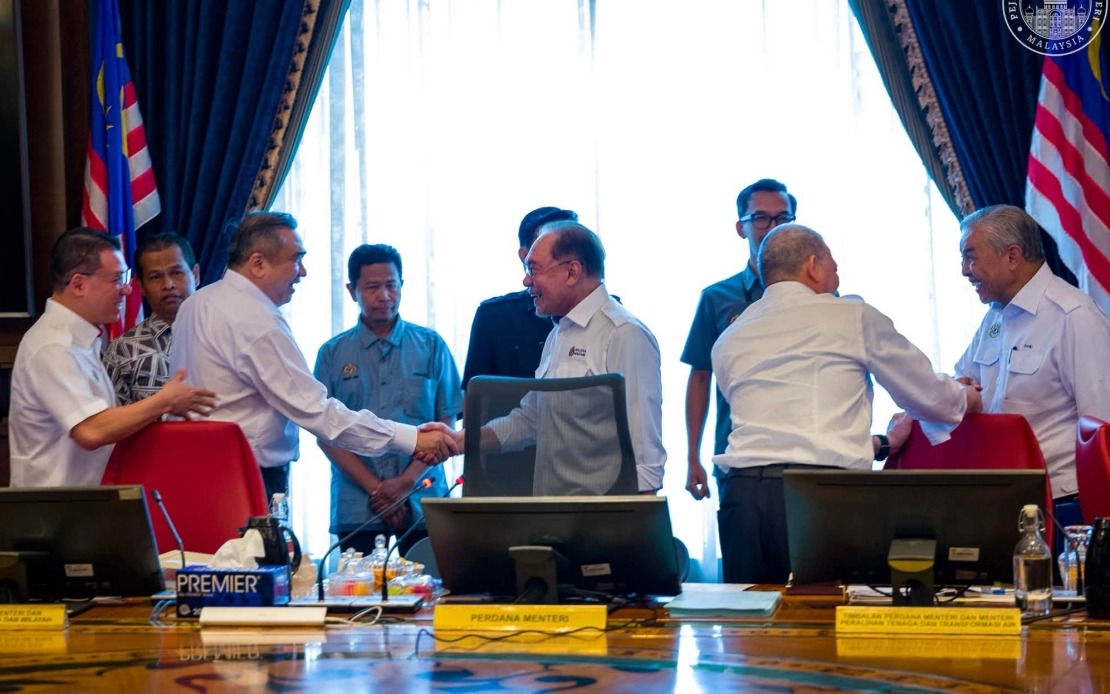
The timing and content of Anwar's message carry particular significance given the current political landscape in Malaysia. The Prime Minister chose to emphasize themes of cohesion and collective strength at a moment when the two main pillars of the Federal Unity Government—Pakatan Harapan and Barisan Nasional—are locked in competitive contests at the state level, most notably in the Negeri Sembilan state election scheduled for August 1. The simultaneous publication of Cabinet photographs showing Deputy Prime Minister Datuk Seri Dr Ahmad Zahid Hamidi and Transport Minister Anthony Loke in relaxed, cordial settings reinforced the narrative of internal harmony.
The strategic deployment of a cultural and linguistic device such as the pantun deserves closer examination. By choosing this traditional Malay poetic form rather than issuing a straightforward political statement, Anwar elevated the message beyond routine political communication into the realm of shared cultural values. This approach demonstrates sophisticated understanding of how symbolism and cultural resonance can reach beyond partisan divisions and appeal to a broader cross-section of Malaysian society. The accompanying 1980s musical reference further broadened the emotional and nostalgic dimensions of the post, suggesting continuity and timelessness in core national principles.
The political context underlying this expression cannot be overlooked. The Federal Unity Government, formed in 2022, represents an unprecedented arrangement in Malaysian politics where historically opposing coalitions agreed to cooperate at the federal level while retaining the flexibility to contest elections separately at state and local levels. This arrangement has created inherent tensions, as demonstrated by the current Negeri Sembilan campaign where Anwar-led Pakatan Harapan is contesting all 36 state seats while Barisan Nasional, chaired by Ahmad Zahid, is fielding candidates in 25 constituencies and simultaneously forging an alliance with Perikatan Nasional.
This apparent contradiction between federal partnership and state-level competition has generated considerable public discourse about the durability and coherence of the unity arrangement. By publishing his pantun message, Anwar appears to be addressing underlying anxieties about whether vigorous electoral competition at the state level might undermine the stability of the federal coalition. The post functions as both an affirmation of governmental solidity and a gentle reminder to supporters of both coalitions that broader national interests transcend particular electoral contests.
The public response to the Prime Minister's post reveals much about contemporary Malaysian political culture and the evolving nature of political communication in the social media age. That the comments section filled rapidly with responses in pantun form indicates genuine cultural engagement rather than mere partisan cheerleading. Many observers specifically commended what they characterized as Anwar's conciliatory and statesmanlike tone, suggesting that voters across the political spectrum appreciate messaging that prioritizes national cohesion over zero-sum partisan conflict.
The Negeri Sembilan state election itself carries implications beyond that single state. As the first significant electoral test since the Federal Unity Government's formation, the outcome will provide crucial indicators about how this power-sharing arrangement is perceived by voters. Both coalitions are mounting vigorous campaigns, yet Anwar's cultural messaging suggests an attempt to frame the electoral contest as a normal democratic process rather than an existential struggle that threatens governmental stability. This framing could influence how voters make their electoral calculations, particularly among undecided voters who may value continuity and predictability.
The Election Commission's timeline—with early voting scheduled for July 28 and polling day on August 1—means that Anwar's pantun post appears during the final and most intensive phase of campaigning. Media strategists would recognize that releasing such content at this juncture serves multiple purposes: it maintains the Prime Minister's visibility without appearing to violate campaign conduct norms, it projects an image of confident leadership secure enough to emphasize unity rather than attack opponents, and it potentially influences late-deciding voters who may be swayed by appeals to national interest.
The broader implications for Malaysian politics merit consideration. The Federal Unity Government remains an experiment in post-election coalition management. While the arrangement has survived its first year intact, questions persist about its long-term viability and whether genuine policy coordination can be achieved when the constituent parties maintain fundamentally different ideological orientations. Anwar's emphasis on solidarity and consensus suggests recognition that maintaining this balance requires constant reinforcement of shared commitment to governmental stability.
For Southeast Asian observers, the Malaysian situation illustrates broader regional challenges regarding coalition politics and democratic governance. Several countries in the region have experienced similar power-sharing arrangements, and the Malaysian experiment provides a contemporary case study in how multiparty democracies navigate the complexities of united government when electoral pressures push toward fragmentation. The success or failure of the Federal Unity Government could influence how future Malaysian governments approach coalition formation and maintenance.
Looking forward, the Negeri Sembilan election results will provide the first significant empirical data on voter sentiment regarding the unity arrangement. If either coalition emerges with a decisive mandate, it could embolden that coalition to reassess the terms of federal cooperation. Conversely, if the results are more ambiguous or if there are significant swings compared to previous elections, it may reinforce Anwar's message that maintaining unity requires sustained attention to managing inter-coalition relationships even amid electoral competition. The Prime Minister's poetic intervention may ultimately be remembered as an early attempt to reshape political discourse around themes of coherence rather than confrontation during a pivotal moment in Malaysia's post-2022 political evolution.

