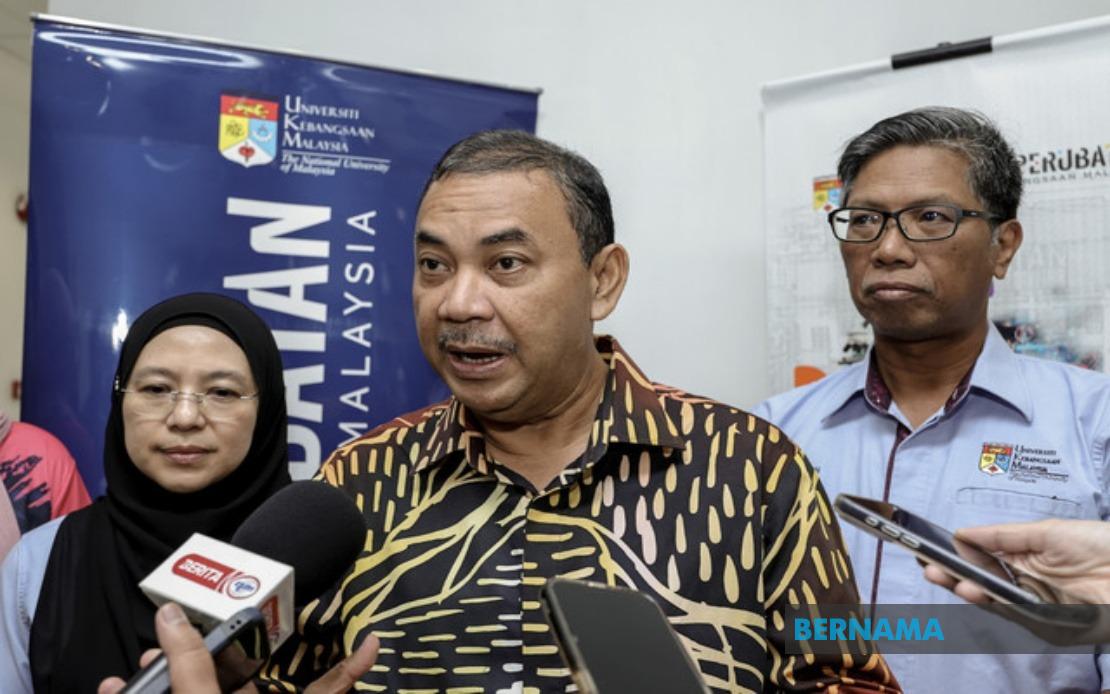
Prime Minister Datuk Seri Anwar Ibrahim's administration has garnered acknowledgement from multiple stakeholders for its handling of key economic indicators, including foreign investment inflows, overall economic management and currency stability, according to his political secretary Datuk Azman Abidin. Speaking in Kuala Lumpur, Azman characterised these outcomes as evidence of the government's competence and pointed to them as a compelling reason for voters to grant the MADANI administration another term in office when elections next occur.
Azman's remarks reflect a broader narrative the government has been promoting about its economic stewardship since taking office. According to the political secretary, the government's track record across investment, macroeconomic performance and currency management cannot reasonably be disputed. He contended that achievements in these domains provide a solid platform upon which the electorate can base its decision at the ballot box, indicating confidence that voters will recognise and reward the administration's efforts.
The government intends to maintain momentum on policy implementation and ensure that the benefits of its initiatives reach citizens across different demographic groups and regions. Azman signalled that Anwar will unveil several fresh measures and initiatives prior to the National Day and Malaysia Day festivities, as well as when Budget 2027 is presented to Parliament. These announcements appear designed to maintain public focus on the government's agenda and demonstrate continued commitment to delivery before electoral calculations intensify.
Speaking at an education-focused event at Universiti Kebangsaan Malaysia, Azman expressed faith that the public would evaluate the government's record soberly and fairly when casting votes in the next general election. His confidence rests on the assumption that tangible improvements in economic conditions and investment performance will resonate with voters who have historically prioritised bread-and-butter issues. Political analysts quoted by Azman have already assessed that the MADANI Government has demonstrated substantial capability and should be permitted to proceed with its reform and excellence initiatives during a subsequent mandate.
Beyond electoral positioning, Azman used the occasion to address the importance of science, technology, engineering and mathematics education in Malaysia's long-term competitiveness. He was speaking at the opening of the STEM Exploration 2.0 programme, organised by the Department of Tissue Engineering and Regenerative Medicine at UKM's Faculty of Medicine. The initiative aims to identify scientific talent among young Malaysians and cultivate enthusiasm for careers in science and medicine from an early stage.
The second iteration of the STEM Exploration programme brought together 200 Form Three students from the Klang Valley and Selangor regions to participate in hands-on scientific activities. Azman indicated that the programme should eventually expand to encompass students nationwide, reflecting the government's intention to nurture scientific capability across the entire country rather than concentrating resources in urban centres. He emphasised that STEM education must transition from being treated as an optional addition to the curriculum and instead become integral to national educational strategy.
Azman framed scientific and technological advancement as essential for Malaysia to navigate the challenges posed by rapid global technological change. His argument implicitly acknowledges concerns about Malaysia's competitive position relative to other advanced Asian economies in high-technology sectors. By promoting STEM education as foundational rather than peripheral, the government appears intent on signalling commitment to developing the human capital necessary for prosperity in an increasingly knowledge-dependent economy.
The STEM Exploration 2.0 programme exposed participating students to diverse scientific fields and modern applications. Activities encompassed laboratory experiments, microbiology work, and instruction on the immune and circulatory systems. Participants also observed demonstrations of three-dimensional printing technology deployed in medical contexts, illustrating how cutting-edge manufacturing techniques are transforming healthcare delivery and treatment options. Such exposure aims to broaden student awareness of available career pathways and demonstrate the practical relevance of scientific knowledge.
Azman's appeal to participants framed scientific achievement as a long-term endeavour requiring foundational commitment and incremental progress rather than overnight success. He urged students to view their participation in the programme as a launching point for ambition and encouraged them to pursue knowledge relentlessly. The remarks underscored that prominent scientists and national leaders do not emerge fully formed but rather develop through dedication to learning and intellectual development sustained over time. This framing positions early educational engagement with science as a crucial step in developing future talent pools.
The dual nature of Azman's public engagement—simultaneously promoting the government's economic record while championing scientific education—reflects broader strategy. The administration appears intent on projecting an image of competent economic management while simultaneously laying groundwork for long-term competitive advantage through human capital development. As Malaysia approaches the next electoral cycle, the government continues calibrating its messaging to emphasise both immediate economic results and forward-looking investments in national capability, seeking to consolidate support across constituencies concerned with immediate prosperity and those focused on future prospects.

