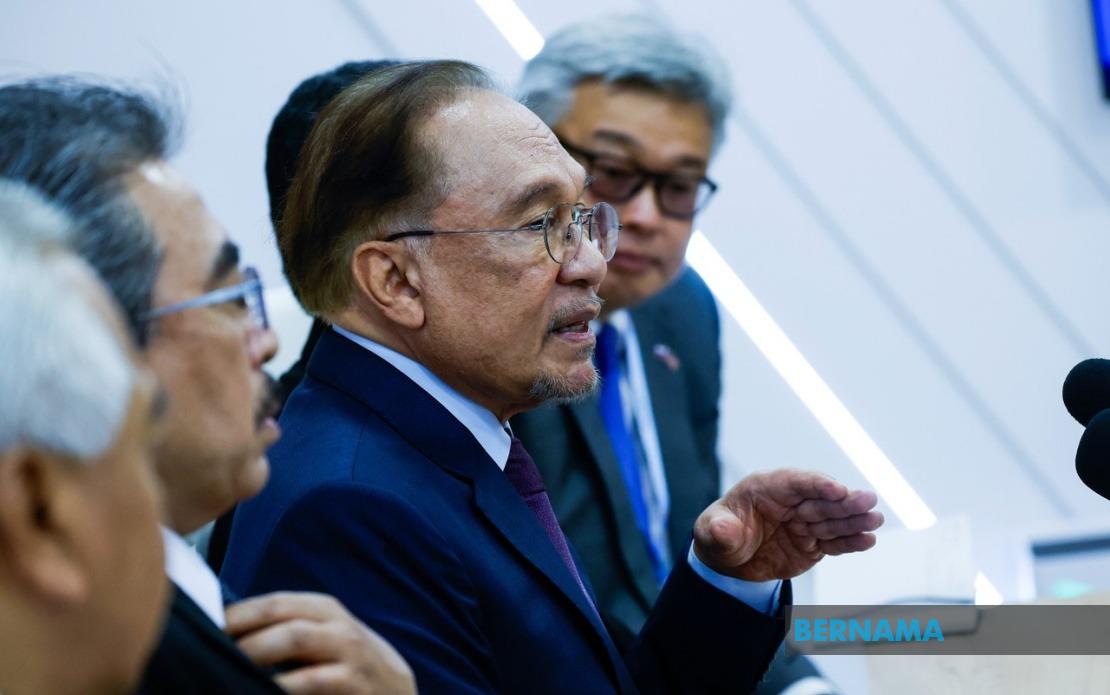
Prime Minister Datuk Seri Anwar Ibrahim's attendance at the 35th ASEAN-Russia Commemorative Summit in Kazan has delivered a major strategic win for Malaysia's energy security infrastructure. The centerpiece of this diplomatic mission was Russia's commitment to guarantee prolonged supplies of petroleum, oil, and gas through structured multi-year arrangements—a departure from Malaysia's previous dependence on annual or seasonally-renewed contracts. This shift toward long-term energy agreements addresses a critical vulnerability in Malaysia's supply chain, offering stability in an unpredictable global energy marketplace buffeted by geopolitical tensions and price volatility.
During his closing press briefing, Anwar outlined the procedural status of these energy arrangements, noting that the foundational framework had already received formal approval and the negotiations had advanced to their closing stages. He indicated that Russian corporate delegations had already travelled to Malaysia to finalise contractual details, with the documentation substantially prepared and core principles already negotiated. The Prime Minister pledged to accelerate this process upon his return, emphasizing that the remaining steps involved administrative review and formal signature—effectively a formality rather than a substantive negotiation hurdle.
This energy partnership reflects a broader strategic recalibration in Malaysia's foreign economic policy. Anwar articulated the necessity for Malaysia to adopt a more assertive and forward-thinking approach toward deepening economic relationships with Russia and other emerging market partners, cautioning against excessive hesitancy in international commercial engagement. This rhetorical shift signals a departure from what he characterized as an overly conservative posture, suggesting Kuala Lumpur intends to maximize economic opportunities across diverse geopolitical alignments without ideological constraints.
Beyond energy matters, the summit produced the finalization of the ASEAN-Russia Strategic Programme on Trade and Investment Cooperation 2026-2035, which Anwar hailed as instrumental for propelling the next generation of regional economic collaboration. This framework institutionalizes trade, investment, finance, and halal economy partnerships across the bloc, positioning Southeast Asia and Russia for deepened commercial integration. The endorsement of this regional roadmap complements Malaysia's bilateral energy diplomacy, creating overlapping institutional mechanisms that reinforce economic ties at both national and collective levels.
Statistical evidence underscores the scale of emerging ASEAN-Russia economic engagement. Bilateral commerce between ASEAN and Russia reached US$18.1 billion during 2024, while Russian foreign direct investment inflows into the bloc totalled RM367.90 million (US$92.97 million). Within this broader relationship, Malaysia occupies a notable position, ranking as Russia's ninth-largest trading partner among European trading partners in 2025 with aggregate bilateral trade valued at RM8.72 billion (US$2.04 billion). Malaysia's export basket to Russia emphasizes electrical and electronic goods, industrial machinery, equipment components, and processed food products, while imports centre on petroleum derivatives, mineral resources, and chemical compounds—a complementary trade structure reflecting Malaysia's manufacturing capabilities and Russia's resource endowments.
Anwar's bilateral engagement with Rais of the Republic of Tatarstan, Rustam Minnikhanov, extended discussions beyond energy into education, tourism, the halal sector, technology development, and human capital advancement. This expanded aperture is significant given Tatarstan's position as a substantial Russian oil production centre, presenting downstream opportunities in refining and petrochemical manufacturing. The geographic specificity of this regional engagement indicates Malaysia's strategy to cultivate relationships not solely at the federal Russian level but across constituent republics controlling substantial natural resource endowments, thereby diversifying partnership channels and reducing dependency on singular decision-making structures.
The logistics dimension of Malaysia-Russia engagement received particular attention, with Anwar calling for expedited visa waiver arrangements and the establishment of direct aviation routes between the two nations. These infrastructure improvements target tourist flow expansion and amplification of interpersonal connections, recognizing that economic partnerships require foundational people-to-people engagement mechanisms. Direct flights and simplified mobility arrangements lower transaction costs for business travellers, investors, and tourists, thereby facilitating the commercial and cultural exchanges underpinning deeper institutional relationships.
Anwar's broader regional commentary during the visit highlighted cooperation potential across energy security, cybersecurity, agricultural collaboration, digital technology advancement, scientific research initiatives, and tertiary education partnerships. This comprehensive enumeration signals ASEAN's positioning as seeking multidimensional engagement with Russia rather than narrow extractive relationships. The emphasis on cybersecurity and digital technology particularly resonates within Southeast Asia's development trajectory, where technological sovereignty and defensive capabilities increasingly shape strategic autonomy.
The Prime Minister additionally expressed cautious optimism regarding United States-Iran diplomatic negotiations, suggesting that successful conflict resolution in West Asia could stabilize regional dynamics and create conditions for durable peace. This commentary, though peripheral to immediate bilateral energy discussions, situates Malaysia's energy diversification strategy within broader Middle Eastern geopolitical calculations. Regional tensions directly affect oil and gas market stability, pricing structures, and supply chain resilience—variables directly impacting Malaysia's energy security calculations.
Anwar's subsequent transit to Turkmenistan represents the strategic continuation of this Central Asian energy consolidation mission, extending beyond Russian partnerships into the broader hydrocarbon-rich region. Turkmenistan's substantial natural gas reserves and geographic position make it a logical complementary supplier to Russia, enabling Malaysia to construct a more geographically distributed energy import portfolio. This sequential diplomatic architecture—Russia followed by Turkmenistan—reflects deliberate strategy to establish redundant supply relationships that collectively insulate Malaysia from singular-source vulnerabilities.
The broader context animating this diplomatic push involves Malaysia's vulnerability to global energy market volatility. Geopolitical disruptions, supply chain interruptions, and price fluctuations driven by international tensions create structural uncertainties that long-term bilateral agreements partially mitigate. By establishing contractual frameworks anchoring supply commitments across extended timeframes, Malaysia reduces exposure to spot market pricing and supply shocks that disproportionately impact Southeast Asian economies heavily dependent on imported hydrocarbons.
For Malaysian stakeholders, the implications are multifaceted. Industrial manufacturers reliant on stable energy inputs gain cost predictability and supply security. Consumers benefit from stabilized electricity and fuel pricing. Government finances gain relief from subsidy pressures during global price spikes. Simultaneously, the geopolitical dimension warrants attention—deepening Russian energy dependencies create constituencies favouring stable Malaysia-Russia relations, potentially constraining Malaysia's diplomatic flexibility on certain international issues. Balancing economic benefits against strategic autonomy represents the enduring challenge for Malaysian policymakers managing these partnerships.
Anwar's characterization of the visit as productive and his expression of heightened optimism regarding subsequent Turkmenistan engagement suggest confidence in Malaysia's capacity to construct durable energy partnerships across Central Asia. Whether these aspirations translate into functioning long-term supply contracts remains contingent on finalizing legal documentation and navigating persistent geopolitical uncertainties. Nonetheless, the diplomatic momentum established in Kazan represents measurable progress toward Malaysia's explicit objective of enhancing energy security through diversified, commitment-based partnerships transcending traditional Western-aligned suppliers.

