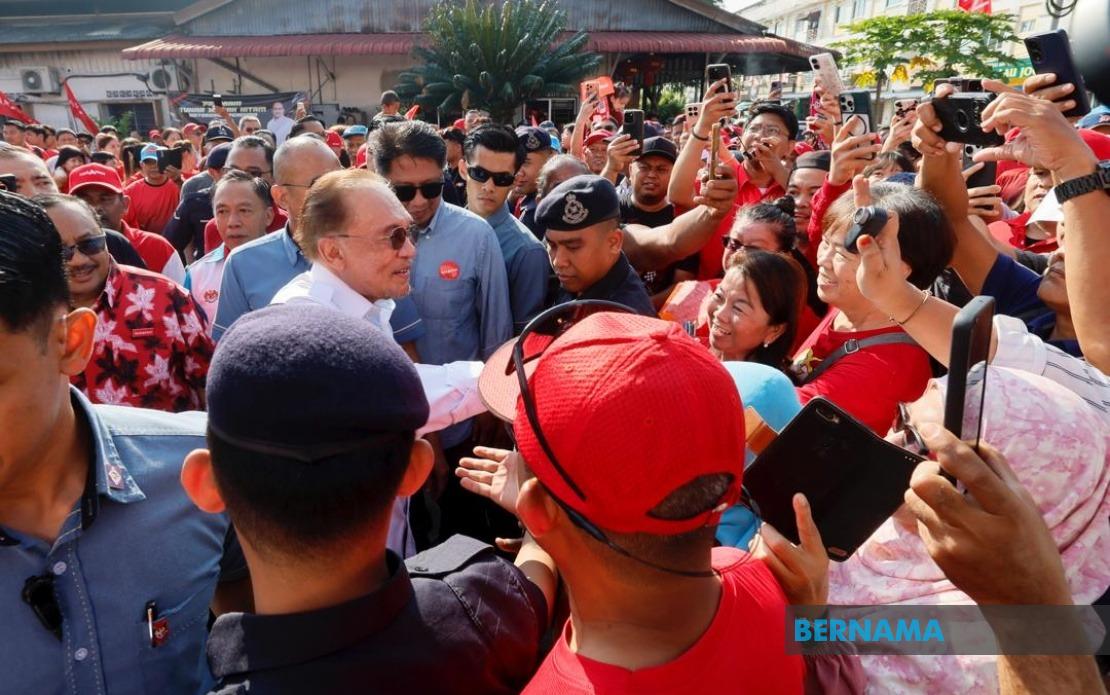
Prime Minister Datuk Seri Anwar Ibrahim's presence on the campaign trail in Johor on July 5 has provided a crucial lift to Pakatan Harapan's electoral machinery as the coalition enters its final stretch before the state election on July 11. The visit to the Simpang Renggam area, encompassing the Machap and Layang-Layang state constituencies, served as both a rallying point for PH workers and a direct engagement with voters, with more than 1,000 residents attending the casual "PMX Santai Sarapan Bersama Masyarakat" (PMX Casual Breakfast with the Community) programme. For a coalition that has faced mounting pressure across multiple electoral fronts, such high-profile leadership presence during the critical final week of campaigning underscores the stakes the party leadership places on Johor, a state that has historically been a bellwether for national politics.
Nur Hafiz Roslan, the PH standard-bearer for Machap, described Anwar's visit as transformative for campaign morale and focus. Beyond the symbolic value of a sitting Prime Minister campaigning alongside grassroots candidates, Nur Hafiz emphasised that Anwar's message emphasised service-oriented politics rooted in Islamic principles of righteous conduct. The Prime Minister reportedly reminded campaign teams that their efforts must centre on public welfare rather than partisan antagonism, a particularly resonant message in a political environment where accusations of divisiveness have dogged various camps. This framing—presenting the election as a choice between service-driven governance and self-interested politics—attempts to reposition PH within an ethical narrative, especially important as the coalition seeks to rebuild trust after previous administrations and internal controversies.
The geographical focus on Simpang Renggam parliamentary constituency and its component state seats reflects strategic considerations about where Pakatan Harapan believes it can consolidate support or make inroads. Machap and Layang-Layang represent the type of mixed urban-rural constituencies where fence-sitters may be decisive; Anwar's direct appeal to community welfare and development becomes a practical argument rather than mere political rhetoric. His emphasis that elected representatives must prioritise local development if given a mandate speaks to bread-and-butter concerns that often determine voting behaviour in Malaysian state elections, where proximity to decision-making and tangible service delivery matter enormously to voters.
Guna Balakrishnan, the PH candidate for Layang-Layang, highlighted how Anwar's personal intervention has accelerated community outreach efforts. Though existing sentiment from residents has been positive, Guna stressed that the campaign cannot become complacent, a message that reflects both strategic necessity and the competitive intensity of the race. The presence of the party chairman provided external validation of candidates' standing within the broader coalition hierarchy, potentially influencing undecided voters who view leadership endorsement as a proxy for candidate capability. This multiplier effect—where a PM's visit doesn't just energise party machinery but also signals to voters that particular candidates enjoy senior leadership confidence—represents a sophisticated understanding of how symbolic politics translates into electoral advantage.
Voter testimony from the ground event provides insight into the messaging resonance. Chuan Chee Mei, a 48-year-old Simpang Renggam resident, reported that witnessing Anwar's direct engagement with communities strengthened her decision to support PH candidates, suggesting that the party's attempt to project approachability and genuine interest in constituents is gaining traction. Similarly, Noor Takiyudin Salleh, aged 38, was impressed by what he characterised as Anwar's relaxed and accessible demeanour during the programme, noting the impressive turnout as evidence of grassroots enthusiasm. These anecdotal accounts matter in Malaysian electoral context because voter perception of leadership sincerity and willingness to engage at community level remains surprisingly influential, particularly among swing voters in state elections who may not follow national politics closely.
The Johor state election represents the 16th iteration of such contests in the state, with 172 candidates competing for 56 seats across a diverse electoral landscape encompassing rural, semi-urban, and urban constituencies. This scale of competition means that resource allocation becomes critical; every PM visit carries opportunity cost, and the decision to campaign in Simpang Renggam-Machap-Layang-Layang reflects internal polling assessments about battleground seats. For Pakatan Harapan, a coalition that suffered severe defeats in previous Johor elections, rebuilding in a state where the opposition maintained strong structural advantages requires both grassroots mobilisation and high-profile leadership presence to reverse negative perceptions and recapture voter confidence.
The timing of Anwar's visit nine days before polling is strategically significant. This window allows the campaign momentum generated to compound through final-week canvassing and word-of-mouth, while being recent enough that the boost remains vivid in voters' minds as they enter the ballot booth. Early voting on July 7 means that some voters will cast ballots within 48 hours of the PM's visit, potentially maximising the recency effect of positive impressions. The scheduling reveals sophisticated campaign planning about optimal timing for high-impact interventions.
For Southeast Asian political observers, this episode illustrates how Malaysian electoral campaigns increasingly emphasise leader-voter direct engagement and service-oriented messaging as counterweights to rising political polarisation. Unlike campaigns that rely heavily on negative messaging or partisan tribal appeals, PH's approach—at least as publicly articulated during Anwar's Johor visit—emphasises unity, community welfare, and ethical governance. Whether this messaging gains sufficient traction to materially shift outcomes in Machap and Layang-Layang will become clear on July 11, but the campaign strategy itself signals how dominant coalitions attempt to defend electoral territory against challengers.
The broader context matters here as well. Johor elections have traditionally served as testing grounds for national political shifts. If Pakatan Harapan can improve its performance in the state, it would signal renewed momentum for the coalition nationally; conversely, poor results would fuel questions about the sustainability of the current federal government. Anwar's personal campaign engagement represents both a vote of confidence in specific candidates and an implicit acknowledgment that the state election carries implications beyond Johor's borders. Regional political developments often turn on such state-level contests, making Johor's July 11 election consequential not just for state-level governance but for the broader trajectory of Malaysian politics and the balance of power within the federal government.
As polling day approaches, the campaign machinery that Anwar energised during his Simpang Renggam visit will translate mobilisation into actual voter turnout. The test of whether this morale boost and messaging resonance converts into electoral gains lies in the ballot count, but the visible investment of prime ministerial time and effort has already signalled to both party workers and voters that Pakatan Harapan views this contest as significant and is committed to competing hard for Johor's 56 state seats.

