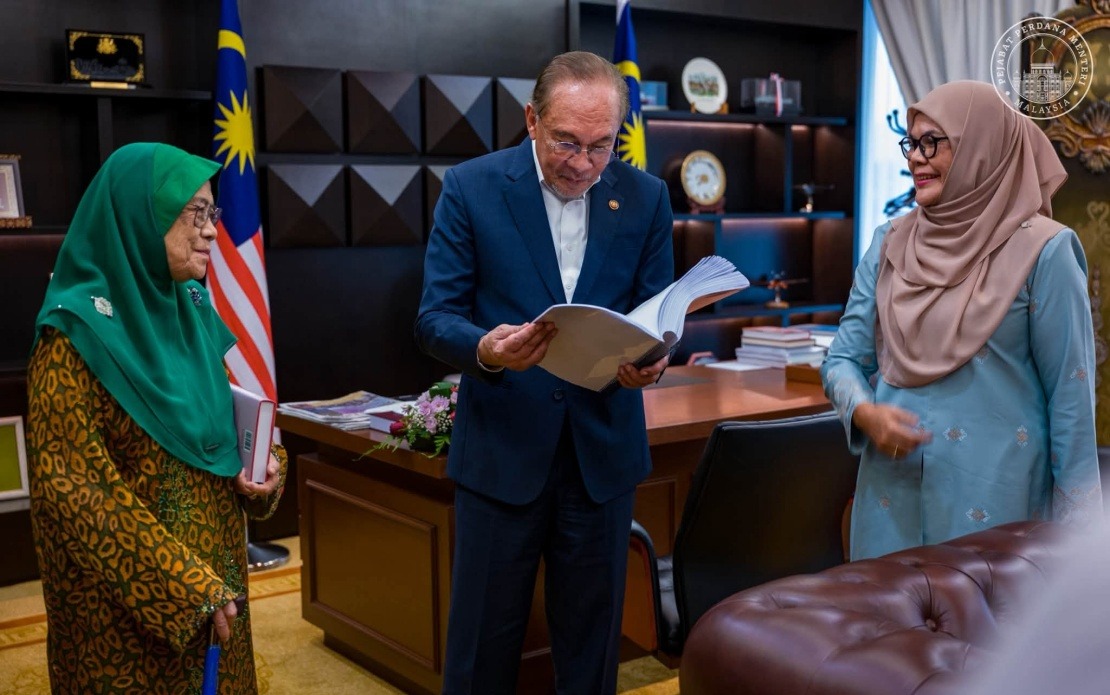
Prime Minister Datuk Seri Anwar Ibrahim is looking to cement his intellectual legacy through a newly completed manuscript that comprehensively charts his political thinking, personal values, and approach to governance. The book, authored by Professor Dr Salinah Ja'afar from the Academy of Malay Studies at Universiti Malaya, represents an ambitious attempt to crystallise the premier's decades-long engagement with policy, philosophy, and nation-building into a single definitive text.
Anwar's endorsement of the project, announced through a Facebook post, signals his confidence that the work will transcend the immediate political moment to become a lasting reference point for understanding contemporary Malaysian leadership. The publication reflects a broader trend among senior political figures globally to document their intellectual journeys while still in office, creating a contemporaneous record that complements official histories written after their political careers conclude.
The involvement of Professor Emeritus Datuk Dr Nik Safiah Abdul Karim as academic adviser lends scholarly gravitas to the undertaking. A renowned language specialist and intellectual figure in Malaysian academia, Nik Safiah's participation suggests the book aspires to meet rigorous scholarly standards rather than serve merely as a political memoir. This dual commitment to both intellectual rigour and accessibility positions the work as potentially valuable both for academic study and public understanding of the Prime Minister's worldview.
Anwar's direct participation in the manuscript review process and his willingness to grant exclusive interviews to the researchers underscores how personally invested he is in shaping this narrative. Prime ministers typically maintain careful control over how their ideas are presented to the public, and his active involvement indicates that accuracy and contextual nuance matter significantly to him. The iterative feedback process between author, academic adviser, and subject suggests the final product will reflect genuine collaboration rather than unauthorised interpretation.
The emphasis on documenting Anwar's thinking through the lens of life experience and reading habits offers insight into how he views the formation of political consciousness. By highlighting that his ideas emerge from both lived experience and intellectual engagement with texts, the Prime Minister is positioning himself within a humanist tradition that values reflection and philosophical grounding. This framing may also serve to underscore the consistency of his political trajectory across his various roles in government, academia, and opposition.
For Malaysian readers and Southeast Asian observers, the book's anticipated focus on nation-building carries particular significance. Malaysia's ongoing challenges with ethnic harmony, economic development, and regional stability mean that any serious articulation of governing philosophy around these themes commands attention. The work could provide clarity on how the current administration intends to approach structural issues that have preoccupied Malaysian policymakers for decades.
The targeting of "future generations" as the primary audience reveals an important temporal dimension to Anwar's thinking about his role and impact. Rather than viewing the book as a statement for immediate consumption, he frames it as a contribution to long-term national dialogue. This forward-looking orientation suggests he understands that political ideas often gain resonance only after their originator has left office, when removed from immediate partisan contestation and available for more objective assessment.
In the Malaysian context, where intellectual documentation by political leaders remains relatively uncommon, this project stands out as significant. Most Malaysian prime ministers have not systematically compiled their political philosophy into authoritative texts during their tenure. Anwar's initiative thus represents a departure from established practice and may establish a precedent for future leaders to similarly invest in formal documentation of their intellectual contributions. It also reflects the particular importance Anwar places on ideas and ideological coherence as central to political legitimacy.
The involvement of Universiti Malaya scholars rather than external or foreign academics further grounds the project in Malaysia's indigenous intellectual ecosystem. This choice validates local expertise and scholarship while ensuring that the interpretation of Anwar's ideas occurs within a framework familiar to the Malaysian educational and intellectual establishment. It also signals respect for Malaysia's academic institutions and their capacity to engage with contemporary political thought at scholarly levels.
The book's completion arrives at a moment when Anwar's government faces mounting pressures from economic headwinds, persistent social divisions, and regional geopolitical shifts. The publication of an intellectual roadmap may serve multiple functions simultaneously: establishing his policy rationale for posterity, providing his administration with a unifying philosophical framework that officials can reference and adopt, and creating a document that shapes how his tenure will ultimately be understood and taught in Malaysian schools and universities.
Beyond the immediate Malaysian context, the book may interest observers across Southeast Asia who study comparative governance, particularly those tracking how regional leaders articulate development philosophies and nation-building strategies. Anwar's international experience, including his tenure in the International Monetary Fund and his engagement with global development debates, means his intellectual framework extends beyond parochial concerns to encompass broader questions about development and governance relevant to the wider region.
The project also reflects evolving attitudes toward political accountability and transparency, where leaders increasingly see value in making their thought processes and values explicit rather than leaving interpretation to journalists and historians. By authoring and endorsing a definitive account of his ideas while in office, Anwar is attempting to shape the historical record proactively, establishing his preferred version of his intellectual legacy before other voices attempt to define it for posterity.

