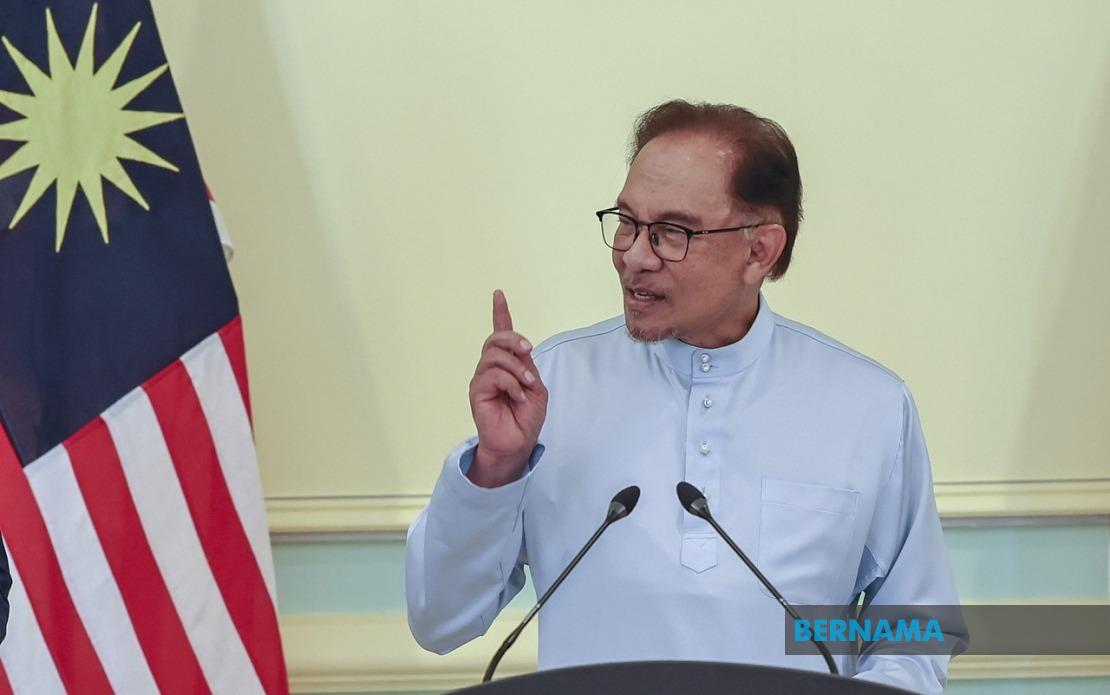
Prime Minister Datuk Seri Anwar Ibrahim's handling of the Gaza crisis represents a coherent diplomatic strategy that merits recognition for blending moral conviction with legal rigour and humanitarian commitment, according to an analyst from Universiti Pertahanan Nasional Malaysia. The approach, which UPNM Honorary Professor Dr Mizan Aslam characterised as combining pressure, principle and pragmatism, reflects how middle-power nations can translate concern into substantive action across multiple channels—from courtrooms to humanitarian corridors to multilateral forums.
The scale of suffering underpinning the Prime Minister's stance cannot be overstated. After 1,000 days of warfare, Gaza has experienced catastrophic civilian losses: 73,066 people killed, 173,514 wounded, and over 59,000 children orphaned. The scale extends beyond casualties. More than 90 per cent of the territory's physical infrastructure lies in ruins, with 81 per cent of all structures damaged or demolished and 92 per cent of homes affected. Water and sanitation systems have deteriorated so severely that 91 per cent of households now face acute shortages. The humanitarian toll encompasses 21,730 children among the dead and 45,113 injured, with 5,400 survivors bearing permanent disabilities or amputations. This destruction transforms what might once have been framed as a localised conflict into what Dr Mizan termed a comprehensive failure of international law and global institutions.
The health crisis layered atop this physical devastation underscores the urgency animating Malaysia's response. Gaza's medical system has been systematically targeted, with 825 attacks recorded against healthcare facilities, leaving 1,723 medical workers dead and 362 detained. Forty hospitals and 158 primary health centres have been hit. Malnutrition has become endemic, with 466 deaths linked to hunger and malnutrition, 17,800 cases among children under five during 2025, and 68,996 cases of severe malnutrition recorded by May 2026. Nearly two million people face acute food insecurity, with 641,000 experiencing famine-level hunger. These metrics reveal a territory in acute humanitarian collapse, not merely suffering conventional wartime hardship.
Anwar's strategy operates across interconnected dimensions that distinguish it from rhetorical solidarity alone. Malaysia's support for South Africa's case before the International Court of Justice against Israel, centred on allegations of genocide under the 1948 Genocide Convention, represents a deliberate choice to channel concerns through formal legal mechanisms rather than confine them to political statements. This move, Dr Mizan argued, demonstrates that Malaysia invests resources in accountability infrastructure rather than offering symbolic condemnation. The decision positions the nation alongside those building a legal record that may shape future accountability processes, ensuring that arguments and evidence accumulate within institutions designed to transcend momentary political pressure.
Simultaneously, the Prime Minister has leveraged multilateral forums to amplify Malaysia's voice. His participation in the Arab-Islamic Extraordinary Summit produced calls for enhanced action against atrocities, strengthened support for the United Nations Relief and Works Agency for Palestine Refugees in the Near East, and escalated pressure on weapons-supplying nations. These diplomatic moves reflect a calculation that middle powers like Malaysia can magnify their influence through collective action, transforming bilateral concerns into coordinated multilateral positions. The strategy acknowledges constraints on any single nation's ability to alter events unilaterally while recognising that sustained, coordinated advocacy backed by legal mechanisms generates traction over time.
Material support complements diplomatic and legal positioning. Malaysia's initial allocation of RM100 million for humanitarian assistance to Gaza reflects a commitment to translating stated concern into tangible relief at a moment when acute food insecurity affects nearly two million people. This funding arrives as malnutrition claims lives and undermines survival prospects for hundreds of thousands. The humanitarian investment distinguishes Malaysia's approach from countries that restrict themselves to statements, embedding principles within concrete assistance that reaches affected populations regardless of broader political outcomes.
The framework underpinning these diverse actions reflects what analysts term "active non-alignment"—a foreign policy doctrine enabling Malaysia to adopt positions based on principle, values and national interest rather than great-power alignments. Under this approach, Malaysia prioritises civilian protection, guarantees humanitarian access, promotes legal accountability, and affirms Palestinians' entitlement to sovereign statehood. These positions emerge not from ideological conformity but from principled evaluation of international law, humanitarian norms and national values. The doctrine permits Malaysia to engage selectively with international mechanisms while maintaining strategic independence, supporting ICJ cases without surrendering diplomatic flexibility or economic interests.
Critically, Anwar's approach transcends ceasefire demands to envision comprehensive political solutions. Rather than treating a halt to fighting as an endpoint, Malaysian diplomatic efforts emphasise establishing a viable, sovereign Palestinian state capable of self-determination and economic viability. This distinction matters: ceasefire demands focus on immediate violence reduction, while state-building frameworks address structural causes of conflict and Palestinian grievances. By combining immediate humanitarian priorities with longer-term political demands, the Prime Minister's diplomacy avoids the false choice between emergency relief and enduring solutions.
Dr Mizan emphasised that Malaysia's influence, whilst real, remains bounded by its middle-power status and the complexities of international geopolitics. The nation cannot unilaterally resolve the Gaza crisis, nor can it compel major powers to alter their strategic calculations. However, Malaysia can ensure the issue circulates persistently through international courts, global conferences, diplomatic corridors and international moral consciousness. This persistence matters because it prevents conflicts from fading from international attention, maintains legal accountability mechanisms, and signals that global consensus extends beyond major powers. The cumulative weight of such sustained, multi-channel advocacy shapes diplomatic costs and creates space for accountability that might otherwise evaporate.
The coherence distinguishing Anwar's approach lies in its integration of immediate humanitarian response, legal accountability mechanisms, and long-term political solutions within a consistent ethical framework. Rather than oscillating between pragmatism and principle, the strategy treats them as complementary. Humanitarian aid addresses urgent suffering whilst legal mechanisms pursue accountability and precedent. Diplomatic pressure and state-building frameworks tackle structural solutions. This multi-dimensional engagement reflects understanding that sustainable resolution requires addressing suffering, establishing accountability, rebuilding institutions and creating political frameworks within which communities can rebuild lives. For Malaysia and other regional actors observing Gaza's trajectory, the lesson extends beyond Gaza itself: principled foreign policy need not sacrifice effectiveness, and middle powers can generate influence through persistent, multifaceted advocacy anchored in law, values and solidarity.

