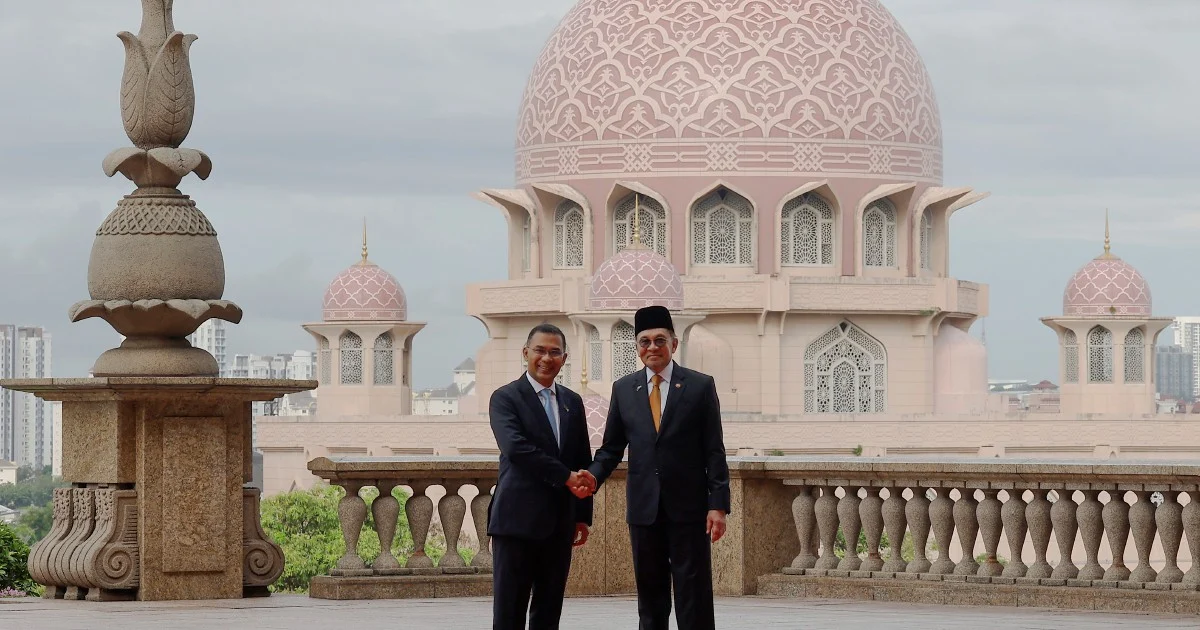
Prime Minister Anwar Ibrahim has extended a formal state welcome to Bangladesh Prime Minister Tarique Rahman at Malaysia's seat of government in Putrajaya, underscoring deepening diplomatic engagement between the two South Asian and Southeast Asian neighbours. Rahman's two-day visit marks a significant moment in bilateral relations, with the ceremonial reception at the Perdana Putra Complex serving as a visible demonstration of Malaysia's commitment to strengthening partnerships across the region.
The timing of this high-level visit carries particular significance given the fluid geopolitical landscape in Asia. Bangladesh, with a population exceeding 170 million people, represents one of South Asia's most economically dynamic nations and a crucial partner for Malaysia in regional forums and collaborative initiatives. As both countries navigate evolving trade relationships and security challenges, such state visits provide essential platforms for leaders to address shared interests and chart fresh diplomatic directions.
Official state visits of this calibre typically involve comprehensive bilateral discussions spanning economic cooperation, trade advancement, and people-to-people exchanges. For Malaysian policymakers, engagement with Bangladesh offers opportunities to deepen ties within Islamic-majority nations and strengthen Malaysia's broader Asian connectivity strategies. The formal nature of the reception signals that both governments view this engagement as substantive rather than ceremonial, suggesting substantive outcomes may emerge from behind-the-scenes discussions.
For Bangladesh, strategic partnerships with established Southeast Asian economies like Malaysia remain crucial for economic development and regional stability. Malaysia's expertise in Islamic finance, technology sectors, and manufacturing could present valuable collaboration opportunities for Bangladesh's ongoing development agenda. Conversely, Bangladesh's substantial workforce and emerging manufacturing capabilities align with Malaysian business interests seeking regional supply chain diversification and expansion opportunities beyond traditional markets.
The bilateral relationship encompasses multiple dimensions beyond traditional diplomacy. Trade volumes between Malaysia and Bangladesh have shown consistent growth, with Malaysian investments flowing into Bangladesh's garment manufacturing, textiles, and energy sectors. Such economic interdependence creates mutual incentives for maintaining stable, cooperative relations and resolving any emerging tensions through dialogue rather than confrontation.
Educational and cultural exchanges represent another substantive pillar of Malaysia-Bangladesh relations. Thousands of Bangladeshi students pursue tertiary education at Malaysian universities annually, creating long-term people-to-people connections that transcend official government channels. These networks often translate into professional collaborations, business partnerships, and cultural understanding that fortify diplomatic foundations.
Regional context amplifies the importance of this visit. Within ASEAN and broader Asian frameworks, Bangladesh's observer status and growing engagement with Southeast Asian institutions reflect its recognition as an important stakeholder in regional peace and prosperity. Malaysia, as an ASEAN member and Islamic world player, occupies a unique position to facilitate dialogue between South Asian and Southeast Asian perspectives on shared challenges including maritime security, counterterrorism, and economic integration.
The visit also occurs within the broader context of Bangladesh's recent political transitions and governance developments. Rahman's presence in Malaysia demonstrates the country's commitment to maintaining diverse international partnerships and reinforces Bangladesh's positioning as a stable, engaged member of the global community. For Malaysia, receiving such high-level visitors reaffirms its standing as a respected diplomatic hub within Asia and its capacity to host meaningful strategic engagements.
Energy cooperation presents another potentially substantive area for discussion between the two governments. Both nations grapple with growing energy demands and sustainability considerations, potentially creating opportunities for collaboration in renewable energy development, technology transfer, and infrastructure projects. Bangladesh's strategic location along major international shipping lanes also intersects with Malaysian maritime and regional security interests.
Looking forward, this visit may catalyse expanded cooperation in sectors ranging from infrastructure development to technological innovation and digital economy initiatives. The formal state reception format suggests both leaders intend to elevate bilateral engagement beyond routine diplomatic courtesies, potentially establishing new frameworks or accelerating implementation of previously agreed cooperation mechanisms.
For the broader Southeast Asian region, strengthened Malaysia-Bangladesh ties contribute to a more interconnected Asian economic and political landscape. As countries seek to diversify partnerships and reduce dependency on any single power or bloc, such bilateral engagements strengthen the region's collective resilience and foster the kind of cross-regional networks essential for addressing transnational challenges from climate change to pandemic response.
The official reception of Prime Minister Rahman illustrates how traditional diplomacy remains essential in contemporary international relations. Despite the prevalence of digital communication channels, in-person state visits retain symbolic and practical value, enabling leaders to build personal rapport, engage in candid discussions, and demonstrate to domestic constituencies the priority their governments assign to particular relationships. This visit accordingly represents more than ceremonial pageantry—it reflects strategic intentionality shaping Malaysia's engagement with South Asia and Bangladesh's positioning within broader regional architectures.

