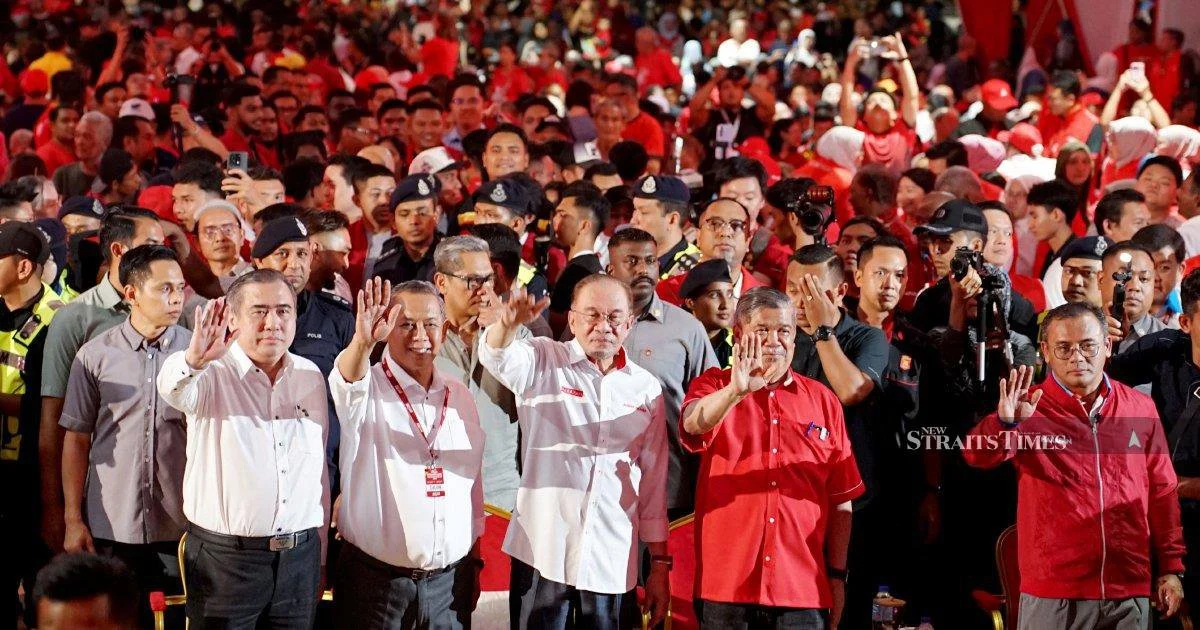
Prime Minister Datuk Seri Anwar Ibrahim has issued a direct appeal to all political stakeholders, particularly party leaders, to keep the nation's royal institutions out of electoral campaigns and political positioning. Speaking in Kuala Pilah, Anwar emphasised that the monarchy should remain insulated from the cut-and-thrust of partisan politics, drawing a clear line between the constitutional role of the royal institution and the competitive arena of electioneering.
The warning comes amid the Negri Sembilan state election campaign, a politically sensitive period when competing parties often seek to mobilise voter sentiment through various rhetorical strategies and appeals. By explicitly cautioning against the politicisation of royal symbols and institutions, Anwar is attempting to establish a normative boundary that, if respected, would preserve the apolitical standing traditionally associated with Malaysia's monarchy. This distinction between the institution as a constitutional pillar and its potential misuse as electoral currency remains a persistent challenge in Malaysian democracy.
The message carries particular weight given Anwar's position as head of government and his responsibilities in maintaining institutional integrity across Malaysia's federal system. His intervention suggests that concerns about the inappropriate invocation of royal authority or symbols in campaign contexts are sufficiently pronounced to warrant a public intervention. The Prime Minister's reminder underscores the importance of maintaining what political scientists refer to as the constitutional settlement—the unspoken compact between political actors and the institution of monarchy that has historically helped stabilise Malaysian governance.
Negri Sembilan, as a state with a reigning Sultan, holds particular significance in Malaysia's federal structure. The Sultan of Negri Sembilan occupies a dual role as both a constituent member of the Conference of Rulers and as the ceremonial head of state administration within Negri Sembilan. This dual status makes the state particularly susceptible to campaigns that might invoke royal references or attempt to associate particular political camps with royal preferences or endorsements. Anwar's intervention seeks to forestall such tactics before they take root.
The warning also reflects broader anxieties about democratic erosion and institutional capture. When political parties seek to mobilise the prestige, legitimacy, and symbolic power of the royal institution for partisan advantage, they risk commodifying an institution that derives much of its political utility from its perceived neutrality and distance from party politics. Malaysian history contains cautionary tales of moments when the boundaries between institutional impartiality and political instrumentalisation have grown dangerously thin, with consequences for democratic stability and institutional credibility.
For Malaysian voters, particularly those in Negri Sembilan, Anwar's admonition carries an implicit message: evaluate political campaigns on their substantive merits—policy proposals, track records, and programmatic visions—rather than through attempted associations with royal sentiment or alleged royal approval. This framing seeks to elevate the quality of electoral discourse by discouraging appeals to authority that lie outside the democratic process itself. It positions the royal institution as a guardian of constitutional order rather than as a political asset to be claimed or leveraged.
The timing of this intervention within the Negri Sembilan campaign calendar suggests that political operators may already have ventured into territory that the Prime Minister considers inappropriate. By speaking publicly and directly, Anwar signals that the federal government takes seriously its custodial responsibility for the nation's constitutional institutions. This is not merely a matter of political etiquette; it reflects concerns about how democratic norms and institutional relationships are understood and practiced at the ground level.
Regionally, Malaysia's experience with maintaining royal institution integrity amid competitive democracy offers lessons for other Commonwealth nations in Southeast Asia and beyond. The strength of Malaysia's constitutional monarchy has historically depended on political actors respecting certain zones of non-contestation. When those boundaries erode, the institution itself becomes vulnerable to politicisation and the attendant loss of legitimacy that comes from transparent partisan association. Anwar's warning, therefore, functions as a defensive mechanism protecting both the immediate campaign environment and the longer-term health of the institution.
The Prime Minister's statement also illuminates the ongoing challenge of reconciling popular sovereignty with constitutional monarchy. In liberal democracies, voters typically elect representatives based on policy platforms and leadership qualities. When political contestants attempt to invoke royal authority or symbolism to enhance their electoral appeal, they implicitly suggest that institutional blessing matters more than democratic choice. This inversion of democratic principles is what Anwar's warning seeks to prevent. By reminding all parties of the distinction between legitimate electoral competition and institutional capture, he reinforces the primacy of democratic processes.
For political observers monitoring Malaysia's democratic development, this intervention merits close attention. How seriously the various Negri Sembilan-based political actors take this warning will reveal something important about the current health of elite consensus regarding institutional boundaries. Compliance with Anwar's appeal would demonstrate a shared commitment to constitutional norms; violations would suggest that competitive pressures are overriding institutional restraint among some quarters of the political class.
Moving forward, the extent to which media outlets, civil society organisations, and watchdog groups hold political campaigners accountable to this standard may determine whether Anwar's warning gains traction beyond rhetorical force. The royal institution's political insulation ultimately depends not on statements from government but on collective adherence to norms by politicians, commentators, and voters themselves. Anwar's public call therefore functions partly as an appeal to the broader political community to maintain these boundaries voluntarily.

