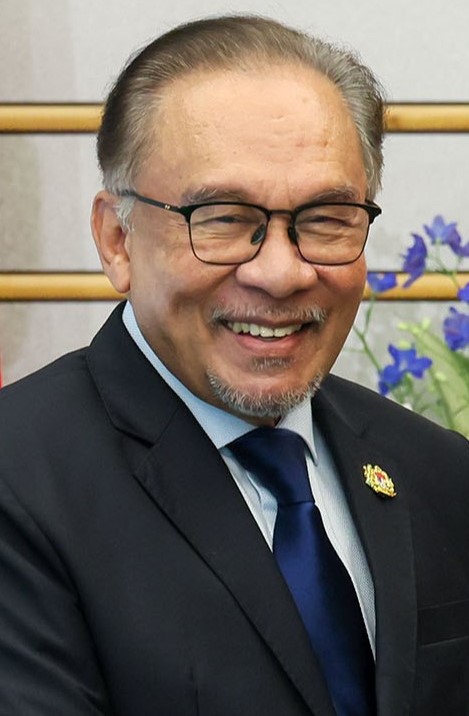
Prime Minister Datuk Seri Anwar Ibrahim has issued a forthright warning to Malaysia's political establishment to refrain from entangling the royal institution in partisan electoral contests and ideological disputes. Speaking in Alor Gajah on June 24, Anwar underscored the imperative of maintaining clear boundaries between the realm of competitive politics and the constitutional role of the Malay Rulers, institutions that hold profound symbolic and legal significance within Malaysia's constitutional framework.
The Prime Minister's remarks came amid mounting concern within government circles about the politicisation of royal institutions during the election cycle. Anwar articulated a measured but firm position that disagreements between political actors and divergent statements by individual politicians must be resolved through substantive debate and mature engagement, rather than weaponised against constitutional authorities whose standing depends on perceived neutrality and respect across the political spectrum.
Anwar's comments were prompted by statements attributed to Amanah president Datuk Seri Mohamad Sabu during Pakatan Harapan's candidate announcement event in Johor on Monday. Multiple observers interpreted these remarks as containing implicit criticism directed toward the royal institution, triggering broader conversations about the boundaries of permissible political speech in Malaysia's context.
The Prime Minister's intervention reflects a genuine constitutional anxiety. Malaysia's system of government vests significant ceremonial and residual powers in the Malay Rulers, who serve as constitutional monarchs within individual states and whose collective entity, the Conference of Rulers, exercises defined powers at the federal level. The stability of this arrangement depends fundamentally on public perception that the institution operates above partisan contestation. When political parties invoke royal concerns or appear to critique ruling structures, they risk corroding the careful neutrality upon which monarchical legitimacy rests in a multi-ethnic democracy.
For Malaysian readers accustomed to strict conventions surrounding discussions of royal prerogatives, Anwar's admonition carries particular weight. The constitutional provisions governing speech about the monarchy remain among the most restrictive in Commonwealth democracies, reflecting the founders' determination to shield the institution from political weaponisation. Yet periodic tensions emerge when electoral competition intensifies, as ambitious politicians occasionally test the boundaries of acceptable commentary or seek to mobilise sentiment regarding governance questions that tangentially involve constitutional authorities.
The timing of Anwar's statement assumes added significance given Malaysia's approaching electoral cycle. Prior elections have witnessed moments where opposition and ruling coalition members have engaged in rhetorical exchanges that bordered on implicating the royal institution in their disputes. These episodes have occasionally necessitated clarifying statements from palace officials or government sources seeking to reframe discussions and reassert the institution's impartiality. By speaking prophylactically now, Anwar appears intent on establishing clear expectations before campaign rhetoric escalates further.
The presence of Melaka Chief Minister Datuk Seri Ab Rauf Yusoh and Deputy Higher Education Minister Adam Adli Abd Halim at the public engagement suggests coordinated messaging across government structures regarding appropriate political conduct. Such synchronized positioning typically indicates that the Prime Minister's Office views the matter with sufficient seriousness to warrant reinforcement through multiple ministerial channels. The involvement of the Chief Secretary to the Government, Tan Sri Shamsul Azri Abu Bakar, in the same event further underscores the administrative establishment's alignment with this constitutional principle.
For Southeast Asian observers, Malaysia's experience illuminates the distinctive challenges facing constitutional monarchies within plural societies where electoral competition runs high. Unlike Westminster systems where the sovereign reigns but does not govern, Malaysia's rulers retain circumscribed but real executive authority within their respective states, rendering them simultaneously more powerful and more potentially vulnerable to politicisation than their counterparts in purely ceremonial roles.
Anwar's intervention also carries implications for coalition management within Pakatan Harapan itself. The coalition comprises parties with sometimes divergent constituencies and policy preferences, requiring careful navigation of sensitive issues. By publicly admonishing any party that crosses lines regarding the royal institution, Anwar signals that maintaining coalition cohesion does not extend to tolerating behaviour that jeopardises broader constitutional consensus. This distinction matters considerably in Malaysian politics, where coalitional governments depend on shared understandings about constitutional boundaries even when policy disagreements are substantial.
The distinction Anwar drew between legitimate electoral competition and inappropriate institutional politicisation reflects a recognition that vibrant democratic contestation need not entail compromising the neutrality of constitutional authorities. This principle, though sometimes honoured more in the breach than in the observance during heated electoral campaigns, remains foundational to Malaysia's stability. By reiterating it clearly before campaign temperatures rise further, the Prime Minister seeks to establish a baseline expectation that his government takes these boundaries seriously.
Looking forward, how effectively this message resonates depends partly on whether opposition parties reciprocate with similar restraint. In polarised political environments, unilateral constraint becomes disadvantageous if opposing actors view it as an opening for rhetorical advantage. Nonetheless, Anwar's public statement establishes clear accountability standards, creating a record against which subsequent political behaviour can be measured and potentially critiqued by civil society organisations, constitutional commentators, and international observers monitoring Malaysia's democratic practice.
The broader Malaysian discourse around this issue reflects ongoing negotiation between democratic imperatives and constitutional traditions. As electoral competition intensifies and parties compete vigorously for votes, maintaining a firewall between partisan struggle and institutional integrity requires constant reinforcement. Anwar's reminder serves this essential function, reminding the political class that electoral victory achieved through constitutional transgression carries costs that extend far beyond the immediate contest.