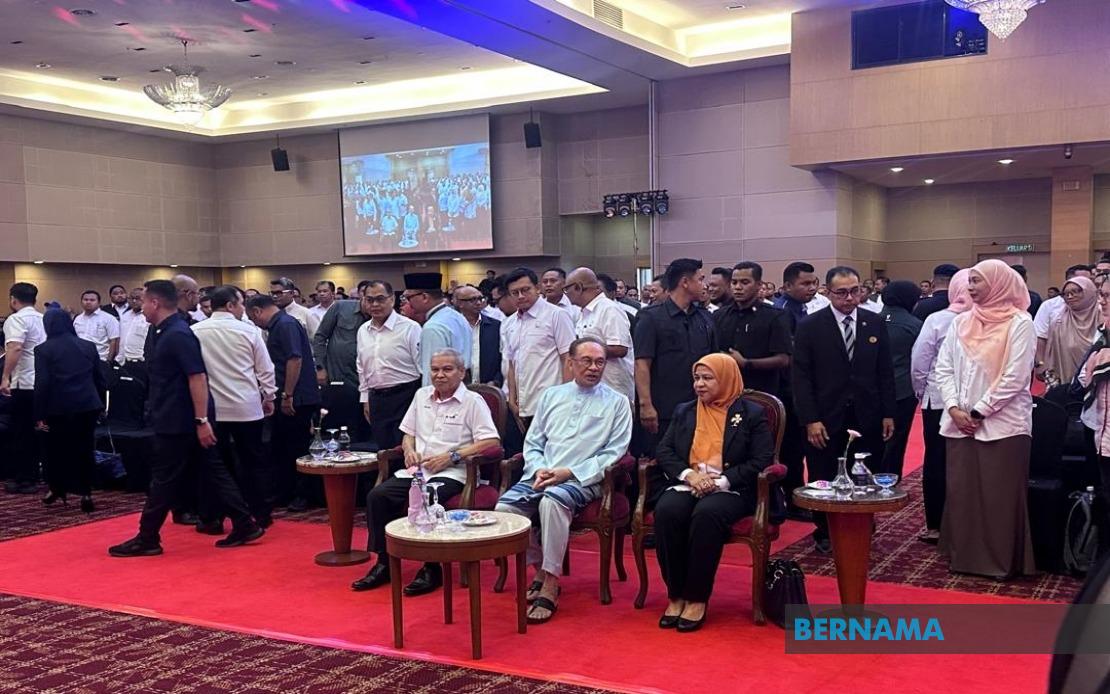
Prime Minister Datuk Seri Anwar Ibrahim has signalled patience with an ongoing investigation into the Federal Land Development Authority, indicating he will not rush into public announcements until the Special Task Force delivers its complete findings. Speaking at a management engagement session in Bangi on August 21, Anwar stressed that transparency and thorough examination of both historical and current operations remain his priority, though he stopped short of providing a specific timeline for the probe's conclusion.
The announcement underscores the government's commitment to systematically addressing longstanding questions about FELDA's institutional governance. By insisting on waiting for comprehensive results rather than releasing preliminary observations, Anwar is positioning the investigation as a serious institutional review rather than a politically-timed intervention. This measured approach reflects lessons learned from recent high-profile inquiries and suggests the administration wants to avoid accusations of selective disclosure or politically motivated fact-finding.
FELDA, which operates one of the world's largest land settlement schemes affecting hundreds of thousands of settlers across Malaysia, has long been scrutinised for its financial management and settler welfare standards. The authority oversees agricultural land and settler livelihoods, making its operational efficiency directly relevant to rural communities and national food security. The government's decision to establish a special task force signals recognition that institutional reform cannot proceed without authoritative documentation of past shortcomings and current deficiencies.
Anwar's framing of the investigation's scope is revealing. He emphasised that while examining historical problems remains necessary for institutional learning, the forward-looking dimension takes precedence. This suggests the task force is not primarily a fault-finding exercise but rather an assessment designed to support modernisation of FELDA's management structures and strategic direction. Such an approach aligns with broader government rhetoric about moving beyond blame towards constructive reform.
The Prime Minister indicated that the investigation would address multiple dimensions of institutional performance, including management frameworks, operational efficiency improvements, and governance arrangements. This comprehensive scope suggests the task force is examining not merely financial irregularities but systemic weaknesses in how FELDA allocates resources, monitors performance, and serves settler interests. The breadth of inquiry indicates recognition that FELDA's challenges stem from interconnected organisational deficiencies rather than isolated incidents.
Anwar's commitment to public release of findings represents a departure from past practice where sensitive institutional reviews remained confidential. By pledging transparency comparable to the Royal Commission of Inquiry into Tabung Haji, he is establishing expectations of accountability and democratic oversight. The invocation of the TH RCI report—which revealed significant governance failures and prompted leadership changes—signals that FELDA's investigation carries similar institutional weight and may similarly trigger substantive reforms.
The presence of FELDA chairman Tan Sri Ahmad Badri Mohd Zahir and director-general Datuk Dr Suzana Idayu Wati Osman at the engagement session suggests the authority is cooperating with the investigation, though questions remain about institutional resistance to finding critical conclusions. Cooperation at management level does not guarantee candid acknowledgment of systemic problems, and the investigation's credibility will depend on whether participants feel empowered to identify uncomfortable truths.
Media reports indicating a timeline of several months for investigation completion suggest the task force is conducting substantive research rather than cursory review. This extended period allows for examination of documentary records, financial transactions, operational outcomes, and management decision-making across multiple years. However, it also creates an information vacuum where speculation about emerging findings may generate political pressure or institutional anxiety among FELDA stakeholders.
For Malaysian settlers dependent on FELDA schemes, the investigation represents an opportunity to address legitimate grievances about land management, commodity pricing mechanisms, and social service provision. Many settlers have experienced declining incomes and felt marginalised within the contemporary Malaysian economy. A credible institutional review could provide evidence-based foundation for policy reforms addressing settler welfare and scheme viability.
The timing of Anwar's announcement also reflects broader patterns of institutional reform across the Malaysian government. Following years of concern about governance quality and institutional capture, successive administrations have initiated various inquiries into major authorities. FELDA's investigation fits within this reform trajectory, suggesting sustained commitment to institutional accountability rather than isolated initiative.
International observers and development analysts have long viewed FELDA as a case study in large-scale settlement schemes, and the investigation's eventual findings will likely attract regional and international attention. The report may offer insights into challenges facing land-based development authorities across Southeast Asia and could influence how other countries approach institutional reform in agricultural and land settlement sectors.
Anwar's measured announcement ultimately reflects both confidence in the investigation process and awareness of its potential significance. By waiting for complete findings before public disclosure, he protects the investigation's integrity while building anticipation for what could be a consequential institutional assessment. The eventual report may reshape how FELDA operates and how Malaysian policy approaches rural development and settler welfare.

