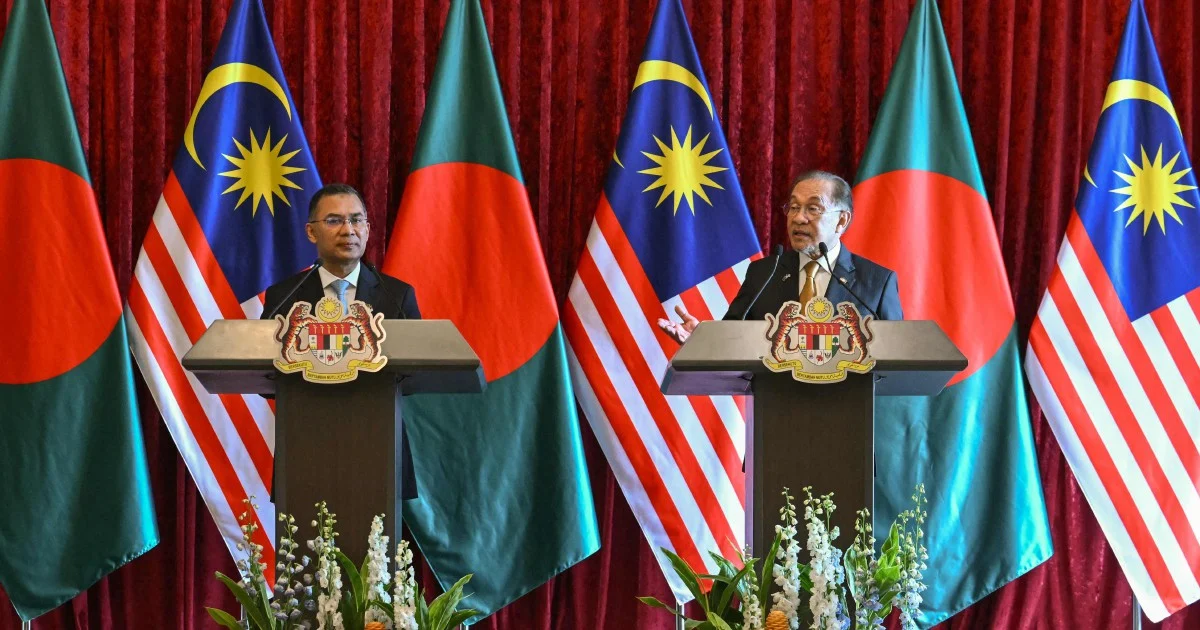
Prime Minister Datuk Seri Anwar Ibrahim has committed to eliminating labour exploitation affecting Bangladeshi workers, recognising their indispensable role in sustaining Malaysia's economic infrastructure. Speaking on the matter, Anwar characterised such abuses as intolerable and signalled that his administration would pursue systemic reforms to address vulnerabilities within the migrant worker framework.
Bangladeshi nationals form one of Malaysia's largest foreign labour cohorts, concentrated primarily in construction, manufacturing, plantation, and domestic service sectors. These workers remit substantial sums to their families each year, contributing significantly to Bangladesh's foreign exchange reserves whilst simultaneously filling critical labour shortages in Malaysian industries where local workers remain scarce. The economic interdependence between Malaysia and Bangladesh through labour migration has deepened over two decades, making worker welfare increasingly central to bilateral relations.
The Prime Minister's statement reflects mounting international and domestic scrutiny over conditions faced by migrant workers in Malaysia. Numerous investigations by global labour rights organisations have documented systematic abuses including wage theft, excessive working hours, unsafe conditions, contract substitution, and restrictions on movement. These practices disproportionately affect workers from South Asian countries, who often arrive with limited knowledge of Malaysian labour laws and insufficient access to legal recourse.
Anwar's framing of Bangladeshi labour as critical to Malaysia's economic survival acknowledges an uncomfortable reality: many vital sectors would face acute workforce shortages without foreign workers. The construction industry particularly depends on migrant labour for infrastructure development and real estate projects. Manufacturing facilities across the Klang Valley and northern corridors rely substantially on migrant workers. Plantations and agricultural enterprises in Peninsular Malaysia and Sabah employ migrant labour extensively. This dependency, however, has sometimes enabled employers to exploit workers' precarious situations.
The government's stated commitment must translate into enforceable mechanisms to be credible. Previous administrations have announced worker protection initiatives with mixed implementation results. Effective reform would require strengthening the Ministry of Human Resources' inspection capacity, establishing independent grievance mechanisms that workers can access without fear of deportation, enforcing meaningful penalties against offending employers, and ensuring Malaysian employers understand regulatory obligations through sustained compliance programmes.
Bilateral cooperation with Bangladesh plays a crucial role in worker protection frameworks. The Bangladesh government sends labour attachés to oversee worker welfare, though resource constraints limit their reach. Enhanced coordination between Malaysian and Bangladeshi authorities—including joint investigations of abuse complaints and coordinated enforcement actions—could strengthen protections. Information sharing systems allowing workers to report violations through Bangladeshi diplomatic channels might encourage reporting without migrants fearing employer retaliation.
The recruitment process itself requires scrutiny. Many Bangladeshi workers incur substantial debt securing employment in Malaysia, paying agents and brokers substantial fees. High recruitment costs trap workers in situations where they must tolerate exploitation simply to recover initial investments and send remittances home. Regulating recruitment practices, capping fees, and ensuring transparent employment contracts before workers depart Bangladesh would address root causes of vulnerability.
For Malaysia's regional standing, addressing worker exploitation carries geopolitical weight. Bangladeshi public opinion regarding worker treatment influences broader bilateral relations and Malaysia's reputation as an employment destination. Neighbouring countries including Indonesia and the Philippines scrutinise Malaysian labour practices when considering labour agreements. Demonstrating genuine commitment to migrant worker protection enhances Malaysia's credentials and maintains reliable labour supply relationships essential for continued economic growth.
The Prime Minister's pledge also signals awareness among Malaysia's leadership that exploited workers underperform economically, suffer health complications reducing productivity, and experience psychological stress affecting work quality. From purely economic perspectives, worker protection measures yield returns through improved productivity and reduced turnover costs for employers. Framing worker protection as economically rational—not merely humanitarian—may improve employer compliance.
Implementing comprehensive worker protection requires addressing structural challenges. Many Bangladeshi workers lack formal identification documents facilitating employment off the books. Informal sector employment—domestic work, small-scale trading, casual labour—offers employers and workers mutual anonymity but eliminates regulatory oversight. Extending legal protections to informal sector workers demands innovative approaches, including community-based monitoring and worker education programmes.
The statement's effectiveness ultimately depends on allocation of resources and political will in coming months. Establishing dedicated task forces investigating abuse allegations, significantly expanding labour inspector recruitment and training, and creating worker complaint mechanisms in multiple languages would demonstrate genuine commitment. Without visible resource allocation and enforcement activities, statements remain rhetorical gestures.
For Malaysian employers relying on Bangladeshi labour, clear messaging regarding compliance expectations and enforcement timelines would enable transition planning. Industries requiring substantial restructuring should receive support transitioning toward mechanisation or productivity improvements reducing labour demand. Framing worker protection as requiring industry-wide adaptation rather than targeting individual employers may improve collective buy-in.
As Malaysia navigates post-pandemic economic recovery and competes for foreign investment, demonstrating robust worker protection standards strengthens its positioning. International investors increasingly evaluate supply chain labour practices before committing capital. Anwar's commitment, if substantively implemented, could enhance Malaysia's attractiveness to responsible multinational corporations whilst meeting humanitarian imperatives regarding vulnerable migrant populations.

