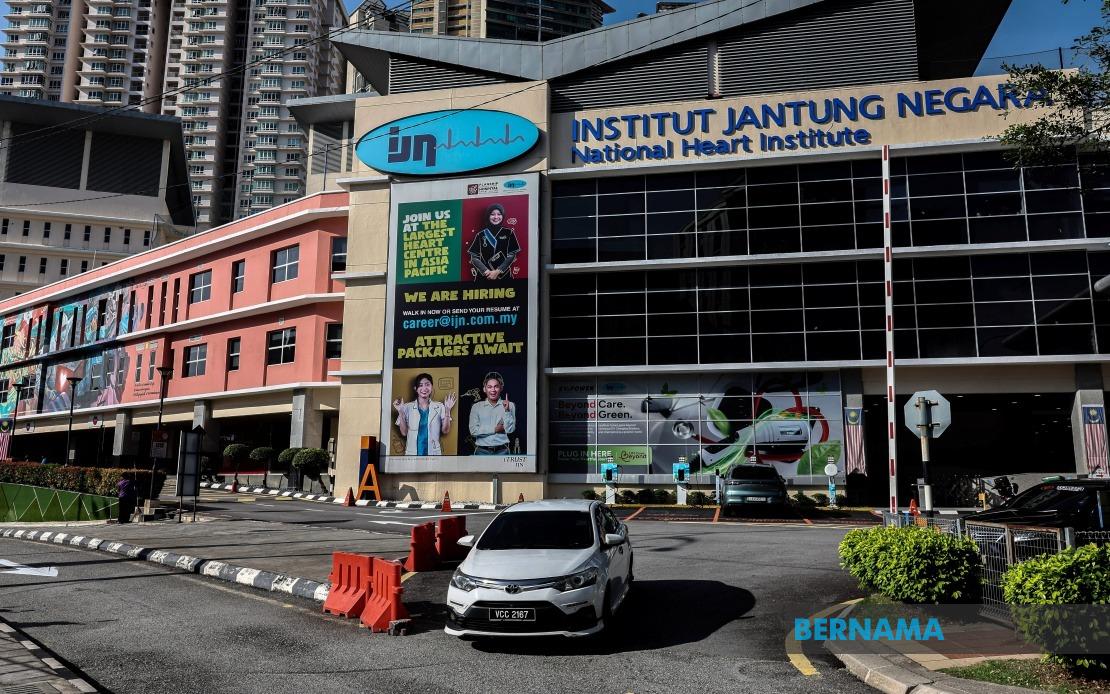
Prime Minister Datuk Seri Anwar Ibrahim and his wife Datuk Seri Dr Wan Azizah Wan Ismail made separate visits to two senior political figures currently receiving care at the National Heart Institute (IJN) in Kuala Lumpur, according to a statement posted on social media by the Prime Minister's office.
The dual visit underscores the significance placed by Malaysia's current leadership on checking in with high-ranking government officials during periods of medical treatment. Both Deputy Prime Minister Datuk Seri Fadillah Yusof and former Prime Minister Datuk Seri Ismail Sabri Yaakob are among the most prominent figures in the Malaysian political establishment, making their hospitalisation a matter of public concern and interest across the country's political landscape.
Regarding Deputy Prime Minister Fadillah's condition, Anwar reported encouraging news from their meeting, noting that observable improvements have been detected in his health status. The Prime Minister's carefully worded statement acknowledged the positive trajectory while remaining appropriately cautious, emphasising that Fadillah continues to require substantial rest as part of his prescribed treatment regimen. This measured approach reflects the delicate balance between maintaining public confidence in government leadership and respecting the genuine medical needs of an incapacitated senior minister.
The situation with former Prime Minister Ismail Sabri appears to require somewhat more extensive monitoring according to Anwar's assessment. The former leader, who held the nation's highest office from 2021 to 2022, continues to undergo treatment and remains under medical supervision at the same facility. Anwar and his wife made deliberate efforts to acknowledge Ismail Sabri's circumstances despite the two leaders having represented different political administrations, suggesting that such courtesy visits transcend partisan divisions in Malaysian politics.
The visit carries broader implications for government continuity and stability. With the Deputy Prime Minister requiring rest and recovery, questions naturally arise regarding the distribution of his responsibilities among the cabinet and senior civil service. While no formal statement addressed this administrative concern, such contingency arrangements are typically put in place when office holders are temporarily incapacitated. Malaysia's political system has developed mechanisms to ensure governmental functions continue uninterrupted during such periods.
For former Prime Minister Ismail Sabri, the hospitalisation marks another chapter in his post-premiership trajectory. His tenure as Prime Minister, while relatively brief, was characterised by significant domestic political challenges and the ongoing management of pandemic-related governance issues. The acknowledgment of his treatment by the current Prime Minister, despite their different political trajectories, reflects the respect often accorded to former heads of government in Malaysian political culture.
Anwar's public statement, issued through X (formerly Twitter), serves multiple communicative functions simultaneously. It provides factual updates to the Malaysian public regarding the health status of two important political figures, reassures government stakeholders about continuity, and demonstrates leadership's concern for the wellbeing of colleagues regardless of past political differences. The inclusion of both his wife and religious invocations in the statement adds a personal, humanistic dimension to what could otherwise be purely procedural political communications.
The National Heart Institute, where both officials are receiving treatment, is Malaysia's foremost specialised cardiac care facility. Its involvement in treating senior government figures reflects the serious nature of the medical conditions being addressed. Cardiac health issues among Malaysia's political leadership have occasionally necessitated extended medical leave or temporary transfers of powers in the past, and the current situation follows established precedent for how the nation manages such circumstances.
The visits themselves, rather modest in scale and fanfare compared to some state occasions, nonetheless carry symbolic weight in Malaysian political culture. They demonstrate continuing institutional respect and interpersonal relationships that persist beyond electoral cycles and party affiliation. This aspect of Malaysian governance, where courtesy and formal protocols remain observed even across political divides, distinguishes the country's political practice from some other democratic systems.
Looking forward, the public focus will likely remain on both officials' recovery trajectories. The cabinet and senior government officials will continue managing their respective portfolios, with additional support mechanisms activated as needed to compensate for Fadillah's temporary diminished capacity. The pace and completeness of both men's recoveries will be of considerable interest not only to their families and medical teams but to the broader Malaysian political establishment and the public who depend on the effective functioning of government.
Anwar's decision to publicise the visits and share health updates reflects contemporary expectations regarding government transparency. Rather than allowing rumours or speculation to circulate unchecked, the Prime Minister's office chose proactive communication, a strategy increasingly adopted by governments worldwide when senior officials face health-related absences from their duties.

