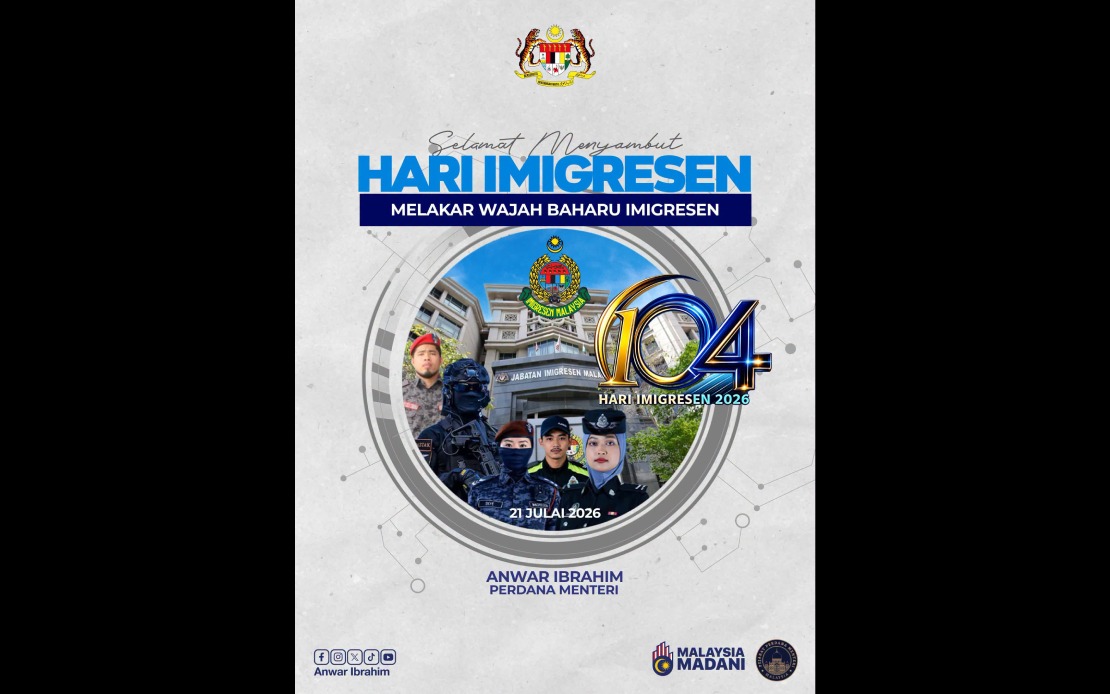
Prime Minister Datuk Seri Anwar Ibrahim has made a direct appeal to the entire Immigration Department workforce to demonstrate unwavering commitment to ethical conduct and transparency in their daily operations. Marking the nation's Immigration Day celebration, Anwar issued a forceful message against misconduct, calling on all personnel to resist the temptations of irregularities and corrupt practices that could undermine public confidence in the institution. The statement underscores growing governmental concern about maintaining institutional integrity across border management and citizen services, sectors traditionally vulnerable to administrative lapses.
Anwar's remarks extend beyond a simple anti-corruption directive, framing ethical conduct as central to the Immigration Department's broader mission of protecting national interests. The Prime Minister emphasised that personnel must approach their responsibilities with the highest degree of professionalism, recognising that their actions directly influence how Malaysia is perceived internationally. This messaging reflects an administration keen to reinforce standards across the civil service, particularly in departments handling sensitive functions like immigration control, visa processing, and border security.
The emphasis on compassion alongside integrity reveals a nuanced understanding of service delivery in the modern context. Rather than presenting the immigration service as a purely regulatory enforcement agency, Anwar advocated for a more humanistic approach where efficiency and courtesy accompany rigorous professional standards. This balancing act is particularly relevant for Malaysia, where immigration services interface daily with both citizens and the millions of foreign nationals—including migrant workers, tourists, and expatriate residents—who transit through the country's borders annually.
The 2026 Immigration Day theme, "Charting a New Face for Immigration," signals an institutional renewal effort within the department. This branding suggests the government envisions reformed operational practices, modernised procedures, and cultural transformation that prioritises service excellence and ethical governance. Such thematic framing often precedes substantive policy announcements or structural reforms, indicating potential strategic shifts in how the department functions and interacts with the public.
For Malaysian citizens and businesses, maintaining public confidence in immigration services carries tangible implications. Corruption within border management can delay legitimate travel and commerce, inflate unofficial costs for processing, and create systemic inefficiencies that discourage investment and tourism. Conversely, a professional, transparent immigration apparatus strengthens Malaysia's competitive positioning in attracting skilled workers, international businesses, and visitors throughout Southeast Asia.
The integrity message also resonates within broader regional contexts. Malaysia's immigration system serves as a critical hub for ASEAN mobility, labour migration, and security cooperation. When individual department members compromise standards through corrupt practices, the entire regional system becomes vulnerable. Neighbouring countries and international partners scrutinise Malaysian immigration administration's effectiveness and reliability, making institutional discipline directly relevant to foreign policy and trade relationships.
Anwar's public call to the department workforce functions as both motivational messaging and implicit warning. By publicly articulating expectations during an official celebration, the Prime Minister signals that immigration leadership will be held accountable for maintaining departmental standards. This public commitment creates a record and sets clear benchmarks against which future performance will be measured, potentially enabling civil society organisations and anti-corruption bodies to monitor implementation.
The reference to safeguarding national sovereignty carries weight in the Malaysian context, where border security remains a priority given maritime disputes, transnational crime, and irregular migration challenges. Immigration personnel serve as frontline guardians of this sovereignty, making their integrity directly consequential to national security. When these officials compromise standards, they potentially create vulnerabilities that adversarial actors could exploit.
The combination of institutional messaging, thematic branding, and direct ministerial intervention suggests a comprehensive approach to departmental reform. Beyond individual exhortations, such campaigns typically accompany training initiatives, whistleblower protections, and internal accountability mechanisms. The public dimension of Anwar's statement may also indicate that the government is addressing documented corruption cases or public complaints that prompted the need for visible leadership commitment.
For Malaysian observers, this statement arrives amid broader governmental efforts to strengthen public service standards across various departments. The immigration sector's particular vulnerability to corruption—stemming from discretionary decision-making, fee collection, and information asymmetries between officials and users—makes it a logical focal point for anti-corruption initiatives. Success in transforming immigration culture could establish a model for other departments facing similar integrity challenges.
Looking forward, translating the Prime Minister's exhortations into sustained institutional change requires complementary investments in technology, training, oversight, and compensation. Modern immigration administration increasingly relies on digital systems that reduce human discretion and create audit trails, potentially diminishing corruption opportunities. Whether accompanying investments materialise will determine whether Immigration Day 2026 messaging represents genuine institutional transformation or rhetorical commitment without implementation.

