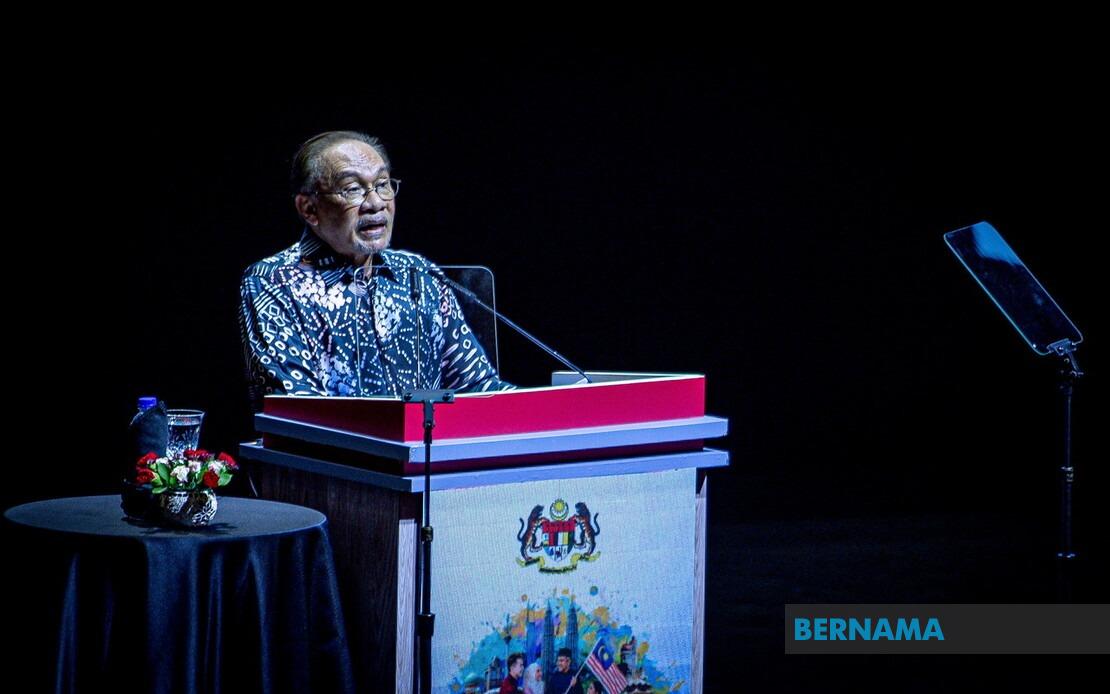
Prime Minister Datuk Seri Anwar Ibrahim unveiled six targeted interventions on August 30 aimed at easing the financial strain facing Malaysian households, with all measures set to commence on September 1. Speaking at the Putrajaya International Convention Centre during the 2026 National Day address, Anwar framed the package as a direct response to persistent public concerns about affordability and the mounting pressures of daily household expenses. The announcement comes as the government seeks to demonstrate concrete action on an issue that continues to resonate strongly among voters across income levels and demographic groups.
The six-pronged initiative spans multiple areas central to household budgets and access to essential services. Fuel subsidies form the cornerstone of the package, addressing one of the most visible and sensitive components of consumer spending in Malaysia. Beyond energy costs, the measures extend to educational infrastructure through enhanced school maintenance programmes, reflecting recognition that education quality and facility conditions directly affect family welfare. The inclusion of healthcare digitalisation initiatives signals government intent to streamline access to medical services and reduce out-of-pocket expenses for patients navigating the healthcare system. Additionally, the package incorporates support for artificial intelligence development, microfinancing schemes designed to boost entrepreneurship among lower-income groups, and e-Invoicing implementation to enhance business efficiency and transparency.
Anwar's characterisation of the package as "temporary relief" carries significant implications for public expectations and economic policy direction. The Prime Minister explicitly acknowledged that previous interventions, while substantial, had not fully addressed the underlying anxieties troubling ordinary Malaysians. His candid admission that neither he, the Deputy Prime Minister, nor the Cabinet entertained illusions of having solved all problems represents a departure from the triumphalist messaging sometimes employed during economic crises. This rhetorical stance attempts to establish credibility through humility while simultaneously justifying the need for ongoing policy adjustments. The timing, deliberately positioned ahead of National Day celebrations, suggests deliberate political calculation to capitalise on the patriotic sentiment surrounding the national observance.
The targeting of specific vulnerable groups—schoolchildren, youths, housewives and mothers—reflects an understanding of how cost pressures concentrate among those with limited income flexibility and responsibility for household management. School maintenance improvements address a longstanding complaint about infrastructure decay in many public institutions, where outdated facilities and inadequate maintenance detract from educational quality. This dimension appeals to parents concerned about their children's learning environment while signalling commitment to public education as a social investment rather than a residual service. Similarly, the emphasis on youth and mothers addresses demographics that frequently feature in government outreach and possess significant collective voting power during electoral cycles.
The healthcare digitalisation component addresses a growing challenge in Southeast Asian health systems: the need to improve service delivery efficiency while controlling costs. Digital health infrastructure can reduce administrative overhead, minimise unnecessary procedures through better information sharing, and enhance preventive care through data analytics. For Malaysian households already stretched by competing financial demands, more accessible and efficient healthcare translates to reduced time lost to medical appointments and lower transportation costs associated with seeking treatment. This measure also positions Malaysia as forward-thinking in health technology adoption, aligning with regional trends toward smart health systems.
Microfinancing support represents targeted intervention in entrepreneurship and income generation, particularly for those excluded from conventional banking services. By improving access to capital for small business ventures, the government attempts to address cost-of-living pressures not merely through subsidy or price control—often economically distortionary approaches—but through income expansion. This represents a slightly more market-oriented angle compared to traditional welfare expansion, appealing to different ideological constituencies while addressing the same underlying concern about household purchasing power.
The e-Invoicing initiative, while appearing more technical than consumer-facing, carries indirect benefits for ordinary Malaysians through improved business compliance and tax collection. Enhanced tax compliance theoretically expands the revenue base available for government programmes and services without raising rates, though the relationship between administrative efficiency and actual household benefit often proves indirect and time-delayed. Nonetheless, digitalisation of invoicing reduces compliance costs for small and medium enterprises, potentially translating to lower prices and increased business viability across the economy.
The presence of Deputy Prime Minister Datuk Seri Dr Ahmad Zahid Hamidi, Communications Minister Datuk Seri Fahmi Fadzil, and other senior cabinet figures underscored the announcement's significance within government hierarchy. This high-level presentation strategy elevates the policy package beyond routine administrative measures to matters of strategic importance requiring coordinated cabinet-level commitment. Such positioning influences media coverage and public perception of the government's seriousness regarding cost-of-living concerns, creating expectations that implementation will receive sustained attention and resources.
For Malaysian readers and regional observers, the announcement reflects the persistent tension between addressing immediate household financial stress and implementing structural economic reforms. Southeast Asian governments generally face similar pressures: populations struggling with inflation and rising living costs, limited fiscal space for subsidies or expanded transfer programmes, and the need to maintain policy credibility without appearing either neglectful or financially reckless. Malaysia's approach, combining targeted subsidies with efficiency measures and income-generation support, represents a pragmatic middle path attempting to thread these competing demands.
The September 1 implementation date provides a discrete timeframe for assessing initial impacts and adjusting course if necessary. This staged approach allows the government to monitor effectiveness while maintaining flexibility to introduce additional measures should public pressure intensify or economic conditions deteriorate. The package's relatively broad scope—spanning energy, education, healthcare, technology, and microfinance—suggests comprehensive thinking about cost-of-living drivers rather than narrow focus on single sectors or demographics. Whether these measures produce sufficient tangible relief to alter public perception of the government's economic management will become apparent in coming months as households experience the actual financial impacts.

