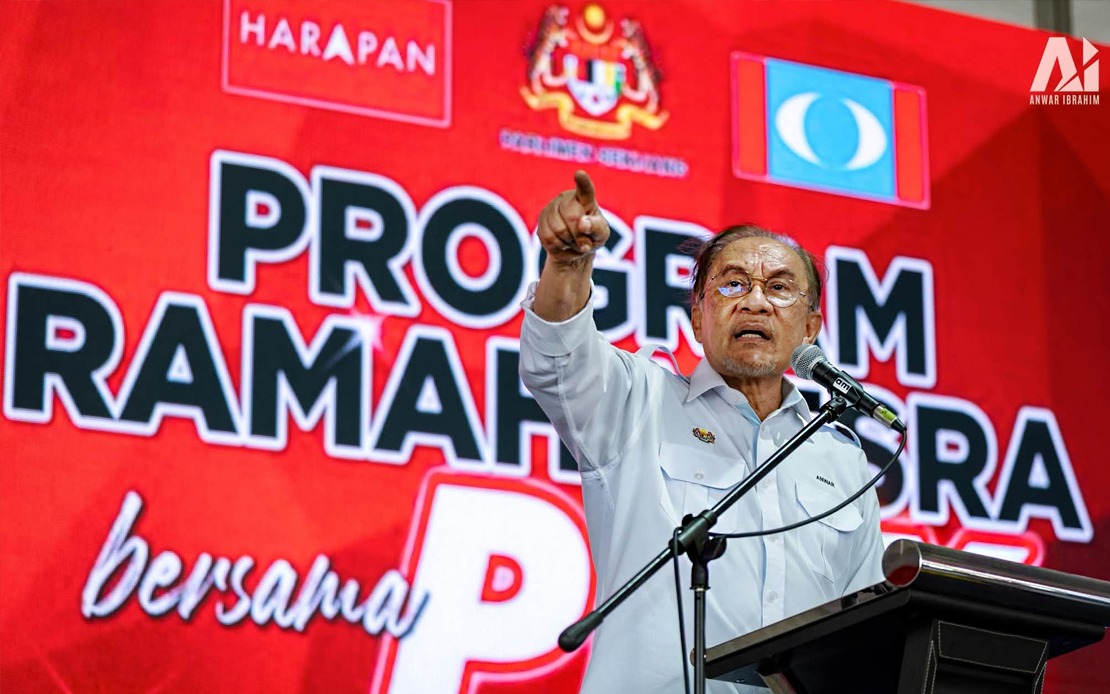
Prime Minister Datuk Seri Anwar Ibrahim has thrown his weight behind Malaysian durian farmers reeling from a sharp price collapse triggered by a compressed harvesting season across Peninsular Malaysia. During a community gathering in Gambir, Tangkak, Anwar pledged to leverage Malaysia's diplomatic channels with Beijing to unlock fresh export opportunities, signalling that the government recognises both the economic and political dimensions of the agricultural crisis affecting one of Malaysia's most valuable commodities.
The timing of Anwar's commitment matters considerably. When multiple regions produce durian simultaneously rather than staggering harvests, the domestic market becomes flooded, forcing farmers to accept depressed prices that barely cover production costs. This pattern has recurred in recent years, but the scale of this season's downturn has amplified calls for intervention. For smallholder growers in traditional durian belts like Johor and Pahang, collapsing prices translate directly into reduced household income at a moment when Malaysia's cost of living remains elevated across food, utilities, and transport.
China represents a strategically important outlet for Malaysian durian, though penetrating the Chinese market demands meeting stringent regulatory and quality standards that domestic producers sometimes struggle to satisfy. Anwar indicated his willingness to negotiate these barriers personally with Premier Li Qiang during his scheduled China visit next month. The approach reflects a pragmatic understanding that high-level political engagement can occasionally unlock trade pathways that purely technical negotiations cannot. By framing durian not merely as an agricultural commodity but as a symbol of Malaysia-China economic partnership, Anwar appears intent on elevating the issue beyond routine trade discussions.
The challenge for Malaysian durian exporters in China extends beyond formal tariffs or quotas. Chinese importers and distributors maintain exacting standards regarding pesticide residues, packaging compliance, cold-chain logistics, and certification documentation. Malaysian producers accustomed to selling primarily in domestic and Southeast Asian markets often lack the infrastructure and documentation systems to meet these demands consistently. Anwar's pledge to "negotiate" suggests the government may seek either Chinese flexibility on these standards or financial support to help Malaysian suppliers upgrade their compliance capabilities.
The political backdrop also warrants consideration. Anwar's visit to Gambir, a state constituency in Johor, occurred alongside Pakatan Harapan campaign activity, with the Deputy Natural Resources Minister and the PH candidate for the seat present. Rural and semi-rural constituencies in Johor depend significantly on agriculture, and farmer sentiment carries considerable electoral weight. By visibly addressing the durian crisis at a grassroots level while simultaneously pledging executive-level action, Anwar reinforces the government's responsiveness to agricultural constituencies—a traditional strength of Malaysian political messaging.
Beyond the durian question, Anwar used the same occasion to defend the government's fuel subsidy regime, asserting that Malaysia maintains the world's lowest retail petrol prices through deliberate state intervention. This claim requires context. While Malaysia's fuel prices are indeed heavily subsidised relative to global benchmarks, the assertion that prices are the lowest globally is debatable depending on how one measures and compares across currencies and purchasing power. Nevertheless, the broader point holds: Malaysian drivers pay significantly less than counterparts in most comparable economies, a consequence of deliberate Cabinet policy despite pressure from global oil price volatility.
Current pricing structures illustrate the magnitude of subsidy provision. The government permits retail prices of RM3.37 per litre for RON95 and RM3.97 per litre for diesel as of July, yet citizens who qualify under the BUDI MADANI scheme access discounted rates of RM1.99 and RM2.10 per litre respectively. This tiered system attempts to balance fiscal sustainability with targeted support for lower-income households. The tension between these goals remains acute: every month without price adjustment represents foregone fiscal revenue that could theoretically fund education, healthcare, or infrastructure, yet raising prices invites political backlash and potentially stokes inflation across the broader economy.
Anwar's framing of fuel subsidies as an act of solidarity with the poor reflects the coalition's political positioning. The Prime Minister emphasised that economic theory would mandate price increases given global supply pressures, particularly heightened geopolitical tensions involving Iran and the United States that create oil market uncertainty. By explicitly rejecting this economic logic in favour of social protection, Anwar signals that his government prioritises immediate voter welfare over macroeconomic orthodoxy. Whether such subsidies remain sustainable over the medium term remains contested among economists and policy analysts.
The intersection of agricultural support and fuel subsidies reveals broader tensions in Malaysian governance. Both represent significant fiscal commitments, both enjoy strong public support, and both create distortions that economists generally critique. Yet both also serve important political and social functions, particularly for rural constituents and lower-income Malaysians who form crucial voting blocs. Anwar's approach—combining targeted negotiation for specific commodities like durian with broad-based subsidy programmes—suggests a government calculating that electoral survival and social stability require policies that depart from textbook economic management.
For the durian industry specifically, Anwar's promised engagement with China addresses a genuine market opportunity. Chinese consumption of premium tropical fruit has expanded dramatically alongside rising incomes, and Malaysian durian's reputation for quality makes it attractive to affluent consumers and commercial buyers. However, realising this potential requires not only diplomatic opening but also coordinated effort among Malaysian exporters, agricultural bodies, and quality assurance agencies to meet Chinese standards consistently. The government's role in facilitating such coordination through subsidies for compliance upgrades or logistics improvements may prove as important as the diplomatic negotiation itself.
Looking forward, the success of Anwar's initiative with China will depend on concrete outcomes—expanded quotas, reduced tariffs, streamlined certifications, or enhanced market access that translates into increased export volumes and improved farm-gate prices. Farmers will assess whether the government's intervention actually alleviates their current crisis or merely represents symbolic gestures during a political campaign. Similarly, the sustainability of fuel subsidies and broader agricultural support will ultimately require either more efficient administration or difficult political choices about fiscal priorities. For now, Anwar's commitments signal that the government recognises both issues demand executive attention, though whether rhetoric converts into material relief for affected constituencies remains to be seen.

