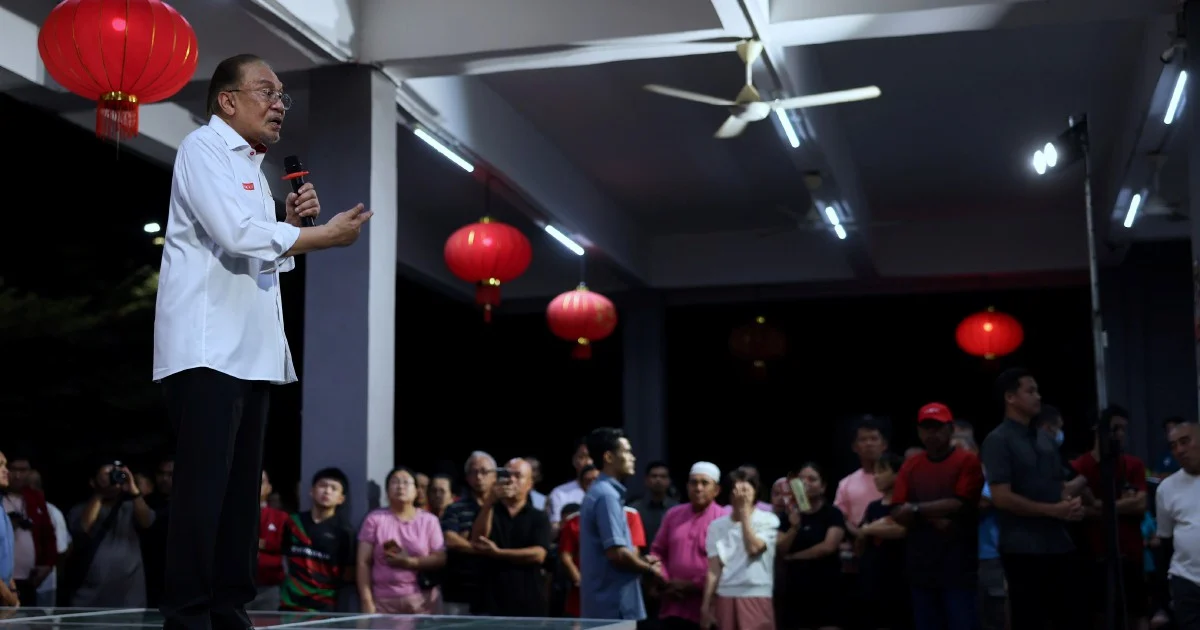
Prime Minister Datuk Seri Anwar Ibrahim has committed to placing the deteriorating situation of Malaysian durian prices squarely on the agenda during his forthcoming diplomatic mission to China next month, where he plans to engage directly with Chinese Premier Li Qiang on strategies to revitalise the export sector and alleviate the financial strain on domestic cultivators contending with excess supply across the nation.
The pledge, made while addressing concerns in his parliamentary constituency of Tangkak—itself a significant agricultural region—underscores the growing urgency surrounding Malaysia's durian industry, which has grappled with compressing margins as global market prices have retreated from the peaks achieved in recent years. This pivot toward high-level diplomatic intervention reflects the broader economic importance durian exports have assumed within Malaysia's agricultural portfolio, particularly given the fruit's status as a premium commodity commanding substantial export revenues.
China represents Malaysia's most critical market for durian exports, absorbing the overwhelming majority of the nation's annual supply destined for international markets. The purchasing power of Chinese consumers and the country's established infrastructure for importing and distributing Malaysian durians make bilateral trade relations paramount to any meaningful resolution of the current pricing pressures affecting producers. By engaging Premier Li Qiang directly, Anwar signals Malaysia's intention to approach this commercial challenge through sustained diplomatic channels rather than relying solely on market mechanisms.
The nationwide glut affecting Malaysian durian cultivation stems from multiple converging factors, including expanded production capacity among domestic growers responding to earlier market opportunities, the emergence of competing suppliers in Southeast Asia, and fluctuating demand patterns in key export destinations. This combination has created a situation where increased supply meets relatively stagnant or softening demand, compressing prices and squeezing profit margins for farmers operating on increasingly thin returns. For smallholder growers and family-operated orchards, the income implications have proven particularly acute, threatening the viability of operations that may have invested substantially in expansion during more buoyant market conditions.
The timing of Anwar's Beijing visit carries significance beyond the immediate durian discussion, as the broader Malaysia-China relationship encompasses considerable economic dimensions spanning trade, investment, and infrastructure collaboration. Leveraging a high-profile state visit to address a sectoral concern reflects how agricultural issues can intersect with wider diplomatic priorities, particularly when export-dependent industries face material pressures that risk social and economic disruption in rural communities. The Malaysian government's willingness to elevate this matter to premier-level discussions signals recognition that market-driven solutions may require governmental facilitation and policy coordination between trading partners.
For Chinese consumers and importers, Malaysian durians occupy a distinctive position within the market hierarchy, recognised for specific taste characteristics and quality attributes that distinguish them from durians sourced elsewhere in Southeast Asia. This differentiation has historically supported premium pricing, though recent market dynamics suggest that price sensitivity among buyers may be increasing, or that competing supplies have begun capturing segments of demand previously dominated by Malaysian product. Understanding these shifting consumer preferences and competitive dynamics will prove essential to any negotiated framework aimed at stabilising prices and market access.
The agricultural sector's challenges extend beyond pricing alone, encompassing broader questions of productivity, sustainability, and value addition within Malaysia's durian industry. While immediate price recovery represents an urgent concern, the longer-term competitiveness of Malaysian durian cultivation depends on factors including yield optimisation, post-harvest technology, and market positioning strategies that emphasise quality and consistency. Anwar's engagement with Chinese leadership offers an opportunity to explore not only short-term demand stimulation but also structural improvements to bilateral trade arrangements that might benefit Malaysian producers across the medium term.
For Malaysian policymakers, the durian situation exemplifies the vulnerabilities inherent in agricultural export dependency on limited markets. While China's enormous purchasing capacity and growing middle-class consumer base have historically supported robust demand, the concentration of Malaysia's durian exports in a single major destination creates exposure to demand fluctuations, competitive pressures, and policy changes that might affect import flows. Diversification efforts toward other markets, while valuable, proceed slowly relative to the immediate pressures facing growers confronting sub-optimal returns.
The diplomatic approach Anwar has adopted reflects broader trends in how developing economies increasingly leverage trade relationships and high-level political engagement to support specific economic interests. Agricultural sectors in Malaysia, as in many developing nations, command considerable political weight given their contribution to rural employment and regional economies, making them natural candidates for government advocacy at the highest levels. When commodity prices decline, governments frequently intervene to protect growers through various mechanisms, of which diplomatic negotiation represents one important instrument.
Assuming Anwar's Beijing discussions progress productively, potential outcomes might include enhanced tariff arrangements, expanded import quotas, joint promotion initiatives, or other mechanisms designed to stimulate demand and stabilise prices. The specific form of any agreement would likely reflect both nations' broader commercial interests and political considerations. For Malaysia's durian growers, the success of such diplomatic efforts could meaningfully affect their immediate financial circumstances and medium-term planning decisions regarding continued investment in cultivation and expansion.

