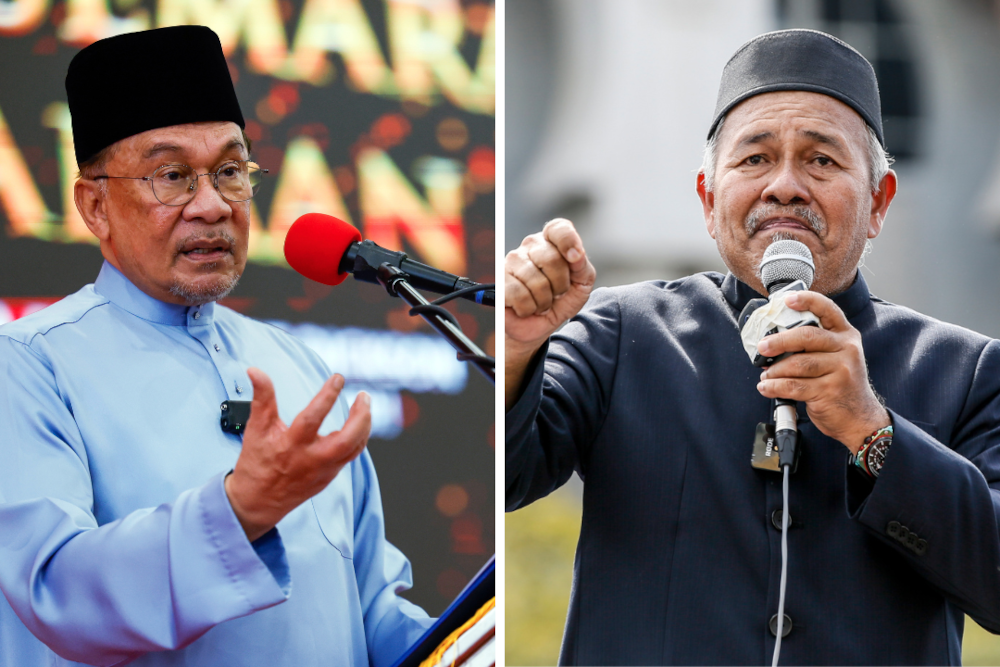
Prime Minister Datuk Seri Anwar Ibrahim's legal team has issued a formal warning to PAS deputy president Datuk Seri Tuan Ibrahim, signalling that defamation proceedings will commence if the latter does not provide a satisfactory response within 48 hours. The ultimatum represents an escalation in tensions between the federal leadership and the Islamic party, which has maintained a coalition relationship with Anwar's administration through the unity government framework established after the 2022 elections.
The demand centres on statements attributed to Tuan Ibrahim that Anwar's legal representatives characterise as defamatory and damaging to the Prime Minister's reputation. Such legal manoeuvres typically target public utterances or published material deemed to contain false or misleading information that undermines an individual's standing. The specific nature of the contested statements has become a focal point for political observers tracking the shifting dynamics within Malaysia's governing coalition.
Defamation law in Malaysia operates through both civil and criminal frameworks. A civil suit enables plaintiffs to seek monetary damages and court orders for retractions, while criminal defamation remains a tool—though increasingly controversial—under the Penal Code. For a sitting Prime Minister to invoke such measures signals both the seriousness with which his office regards the comments and the deteriorating rapport between coalition partners. The move also reflects the fragile nature of Malaysia's multi-party unity government, where tension management has become integral to governmental stability.
The 48-hour deadline creates a compressed timeframe that effectively forces Tuan Ibrahim into a reactive position. Responding adequately to complex legal allegations within two days presents substantial practical challenges, potentially putting the PAS leader in a difficult position regardless of the outcome. If he fails to respond satisfactorily, litigation becomes inevitable; if he complies, any statement risks being scrutinised as either inadequate or as admission of fault. This dynamic underscores the political calculations embedded within legal proceedings at the highest levels of governance.
PAS, as a component of the coalition government, holds several ministerial portfolios and maintains significant influence in Malaysian politics. The party has historically adopted confrontational stances toward other coalition members on matters of religious interpretation and governance philosophy. The defamation threat against a senior PAS figure therefore carries implications beyond the immediate dispute, potentially affecting coalition cohesion and the government's ability to manage parliamentary business effectively.
The timing of this legal action warrants consideration within the broader context of Malaysian political trajectories. Coalition governments in Malaysia have proven inherently unstable, with previous arrangements fragmenting when constituent parties perceived threats to their interests or ideological positioning. Legal confrontations between coalition partners can accelerate such deterioration by forcing public declarations of antagonism and establishing precedents for direct confrontation.
Anwar's administration, formed through the unusual unity government arrangement, has navigated competing demands from secular and religious-oriented parties while managing persistent challenges to its legitimacy from opposition forces. The unity framework itself has attracted criticism from various quarters, with detractors arguing that accommodating diverse political interests creates governance inefficiency. Legal disputes between coalition members provide ammunition to such critics and undermine the narrative that cooperation serves national interest.
For Malaysian observers, the defamation threat illustrates how political disputes increasingly migrate toward courtrooms rather than remaining contained within parliamentary or party forums. This judicalisation of political conflict creates novel risks, as court outcomes become variables in political calculations. Legal victories or defeats reshape power dynamics within coalitions and can influence public perceptions of which parties bear responsibility for governance failures.
The broader Southeast Asian context adds further dimensions to this development. Regional democracies have grappled with similar patterns wherein legal mechanisms become weaponised within political competition. The Malaysian situation reflects both the strengths and vulnerabilities of governance systems that depend upon volatile coalitions and where institutional checks on executive power remain contested terrain.
Response options available to Tuan Ibrahim include issuing a public statement, engaging through legal counsel, or pursuing parallel action. Each approach carries strategic implications for PAS's positioning within the coalition and its public standing. The party faces pressure to defend its deputy president while simultaneously avoiding actions that could fracture the unity government and precipitate fresh elections.
Malaysian political analysts note that such confrontations frequently conclude through negotiated settlements or public reconciliations rather than proceeding to full litigation. The 48-hour deadline may therefore function as leverage aimed at forcing direct negotiations rather than an inexorable march toward court proceedings. However, the public nature of the ultimatum complicates such behind-scenes resolution by establishing public positions that become difficult to retreat from without apparent capitulation.
The incident ultimately reflects the structural fragility of Malaysia's current political arrangement and the challenges inherent in maintaining stable government through coalitions comprising ideologically diverse parties. Whether this particular dispute resolves through negotiation or litigation, it demonstrates the persistent tensions that underlie formal coalition arrangements and suggests that governing Malaysia remains a delicate balancing act vulnerable to rupture over seemingly discrete disputes.

