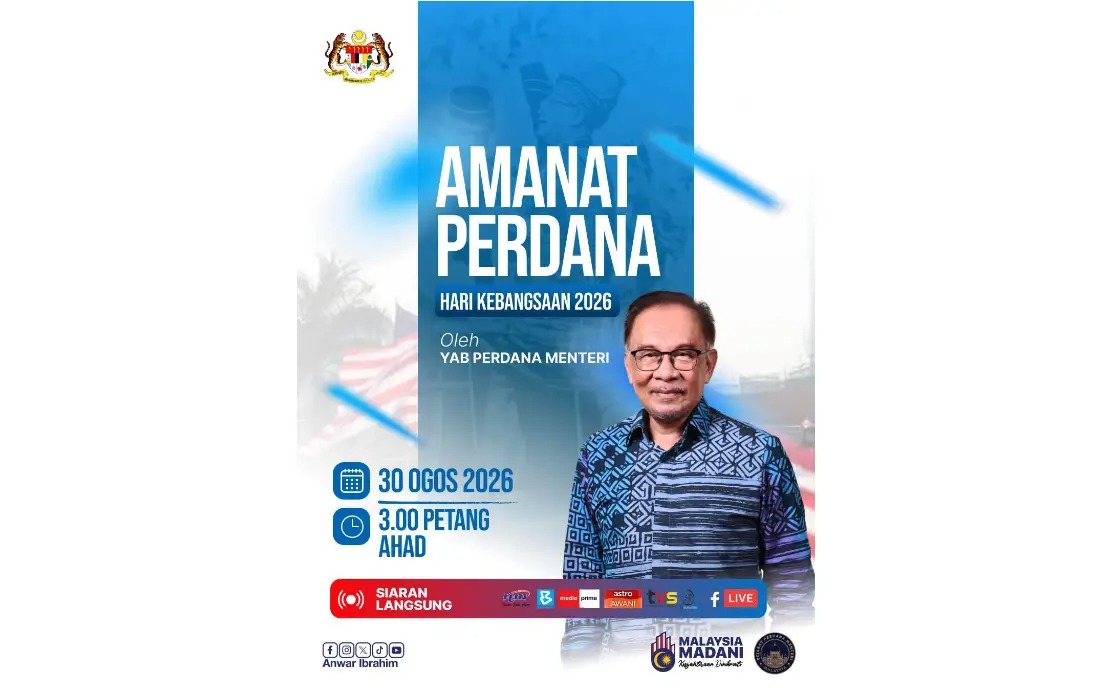
Prime Minister Datuk Seri Anwar Ibrahim will use Malaysia's National Day ceremony tomorrow afternoon as a platform to introduce several significant policy initiatives, according to an announcement made through his official social media channels. The address, scheduled for delivery at the Putrajaya International Convention Centre, is expected to address pressing concerns facing ordinary Malaysians and frame the nation's development agenda around themes of generational stewardship and collective responsibility.
The timing of these announcements carries particular weight for the government. With nearly seven decades having elapsed since Malaysia achieved independence, Anwar has positioned the address as an occasion for reflection on how previous generations sacrificed and struggled to establish the nation's sovereignty. He emphasised that Malaysians should acknowledge the efforts of those who laid the foundation for contemporary freedoms, a historical perspective that frames current governance challenges within a longer arc of national development.
Beyond ceremonial acknowledgment of the past, however, Anwar's statement signals an intention to connect historical memory with contemporary action. The Prime Minister suggested that the address would tackle substantive issues directly affecting household circumstances and community welfare, rather than remaining confined to patriotic rhetoric. This approach suggests the government recognises that public engagement with National Day observances hinges on demonstrating tangible commitment to improving living standards and addressing economic pressures facing working Malaysians.
The emphasis on generational responsibility introduces a forward-looking dimension to the celebration. By framing independence not merely as a historical achievement but as an ongoing trust that must be renewed and reaffirmed by each generation, Anwar implicitly positions current leaders as custodians of a legacy requiring active stewardship. This framing may signal policy announcements related to youth employment, educational advancement, or long-term economic transformation that will shape Malaysia's trajectory beyond the near term.
Crucially, Anwar used the pre-address statement to underscore the centrality of social cohesion to Malaysia's stability and progress. He called upon all Malaysians to deliberately cultivate unity across racial and religious lines during the National Day period, explicitly urging citizens to reject divisive rhetoric and incitement that could fracture community bonds. This appeal appears designed to establish a moral framework for addressing sectarian tensions that periodically complicate Malaysian politics and governance.
The Prime Minister's focus on preserving peace and protecting collective well-being reflects broader concerns about polarisation in the Malaysian public sphere. By positioning anti-divisive messaging as integral to National Day observance, Anwar frames national unity not as aspirational sentiment but as an active daily practice requiring consistent vigilance. For Malaysian readers, this emphasis signals that preserving social stability remains a foundational requirement for implementing any substantive policy agenda, regardless of the specific initiatives to be announced.
From a regional Southeast Asian perspective, Malaysia's emphasis on managing multicultural coexistence through deliberate cultivation of unity has broader resonance. The region faces recurring tensions between majority-minority communities, resource competition, and identity-based political mobilisation across multiple countries. Malaysia's experience—which has successfully maintained constitutional arrangements protecting ethnic and religious minorities despite recurring pressures—offers both an example and a cautionary tale for neighbouring democracies grappling with similar challenges.
The announcement's timing, coming just before the National Day ceremony itself, allows the government to frame its governance narrative around themes of patriotism and shared national purpose. By introducing policy initiatives within this ceremonial context, the administration can potentially enhance public receptivity to structural changes or economic measures that might encounter resistance if announced through conventional parliamentary or media channels. This strategic deployment of the National Day platform reflects sophisticated understanding of how ceremonial occasions can amplify policy messaging in democratic systems.
For observers following Malaysian politics, these announcements may signal shifts in government priorities or responses to emerging challenges in the economic and social landscape. The specific initiatives Anwar will reveal remain undisclosed, but the emphatic framing suggests matters of sufficient importance to warrant National Day-level prominence. Potential areas might include employment generation, skills development, affordability measures, or institutional reforms designed to demonstrate responsive governance.
The appeal to reject racial and religious incitement also carries implicit political dimensions. By establishing unity and social harmony as non-negotiable national values requiring active defence, Anwar positions sectarian or identity-based political agitation as fundamentally un-Malaysian. This rhetorical stance may constrain certain opposition strategies or delegitimise particular forms of political competition, while simultaneously creating expectations that the government will deliver tangible improvements in governance and economic performance to justify continued citizen commitment to national unity over alternative political alignments.
Malaysian citizens can expect tomorrow's National Day address to serve multiple functions simultaneously: ceremonial affirmation of national identity, policy announcement vehicle, and moral framework for public conduct around sensitive communal issues. The combination of historical reflection, contemporary policy focus, and explicit calls for unity suggests the government is attempting to construct a comprehensive narrative linking Malaysia's past achievements, present challenges, and future aspirations into a coherent governing agenda. The specific initiatives announced will ultimately determine whether this rhetorical architecture translates into substantive improvements in how Malaysian governance addresses citizen concerns.

