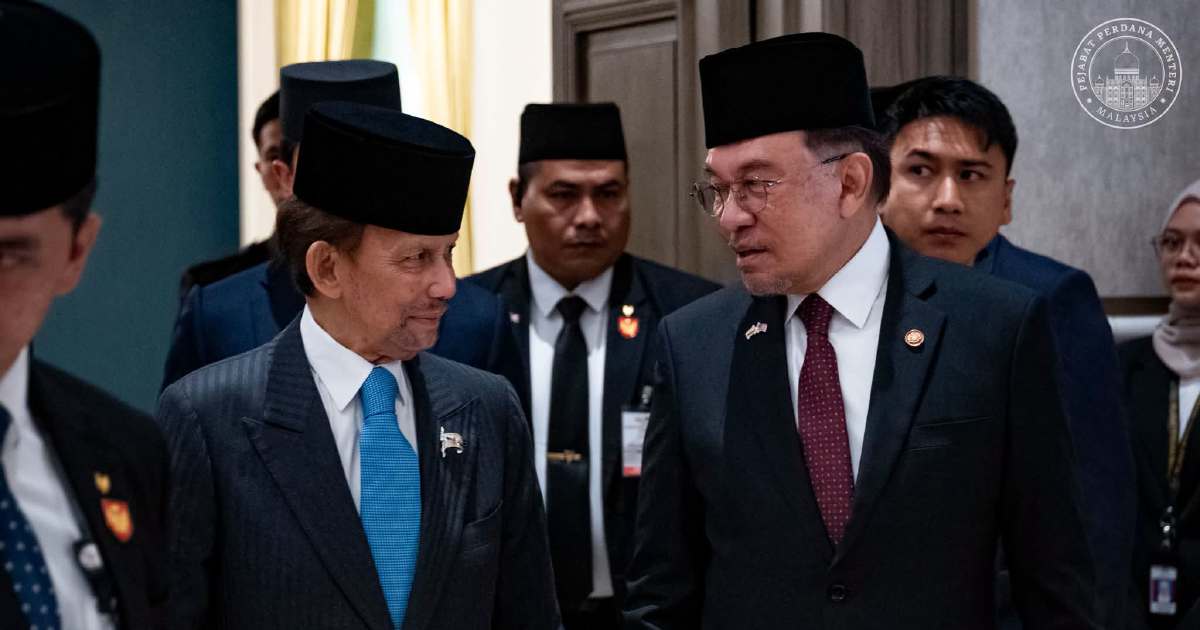
Prime Minister Datuk Seri Anwar Ibrahim is scheduled to undertake a high-level diplomatic visit to neighbouring Brunei next week, where he will engage in the 27th Annual Leaders' Consultation with Sultan Hassanal Bolkiah. The meeting represents a continuation of the structured bilateral engagement framework that has characterised Malaysia-Brunei relations for more than two decades, underscoring the importance both governments place on regular face-to-face dialogue at the highest level.
The Annual Leaders' Consultation format has evolved into a cornerstone mechanism for advancing Malaysia-Brunei cooperation, serving as a platform for the two leaders to discuss matters of mutual concern and strategic importance. These annual summits provide opportunities to review the implementation of previous agreements, identify new areas of collaboration, and address any outstanding issues that may require direct intervention from the top leadership. The longevity of this consultation framework demonstrates the stability and maturity of bilateral relations between Kuala Lumpur and Bandar Seri Begawan.
The consultation will take place in Bandar Seri Begawan, Brunei's capital, reinforcing the practice of alternating venues between the two nations' capitals. This diplomatic convention serves both symbolic and practical purposes, allowing each side to showcase its governance structures and national priorities while ensuring equitable representation in the hosting arrangements. The choice of venue also provides an opportunity for Anwar to strengthen personal rapport with Sultan Hassanal Bolkiah, a relationship critical to maintaining stable and productive bilateral interactions.
Malaysia and Brunei share extensive historical, cultural, and economic ties that extend across multiple sectors. Both nations are members of the Association of Southeast Asian Nations and maintain close coordination on regional issues. The two countries have collaborated on numerous fronts, including trade, defence, maritime security, and people-to-people exchanges. Regular consultation at the leaders' level ensures that these diverse areas of cooperation remain aligned with evolving national interests and regional developments.
The 27th iteration of this consultation reflects nearly three decades of sustained diplomatic engagement. Such consistency in bilateral mechanisms is relatively uncommon in Southeast Asian international relations, highlighting the particular importance Malaysia and Brunei attach to their partnership. The durability of this format also suggests that both governments have found tangible value in these regular high-level meetings, whether in resolving disputes, coordinating positions on regional matters, or simply maintaining the personal connections essential to effective governance partnerships.
Broadly speaking, bilateral consultations of this nature typically address a wide spectrum of issues. These may include trade statistics and economic performance, investment flows between the two nations, progress on infrastructure projects, maritime boundary management, and transnational challenges such as security threats, immigration matters, and disaster preparedness. Additionally, the leaders often use such meetings to discuss regional and international developments that have implications for both Brunei and Malaysia, ensuring coordinated approaches within ASEAN and on the global stage.
For Malaysian readers and policymakers, this visit underscores the government's commitment to maintaining strong ties with all neighbouring nations. Brunei, though smaller than Malaysia, represents a strategically important partner in Southeast Asia. The sultanate's wealth, derived primarily from energy exports, gives it considerable influence in regional economic and political discussions despite its modest population. Brunei also serves as an important dialogue partner in managing maritime issues in the region and in ensuring stability in Southeast Asia more broadly.
The timing of the consultation also carries significance within Malaysia's broader foreign policy agenda. As Kuala Lumpur navigates complex regional dynamics involving major powers and manages its own domestic priorities, maintaining robust relationships with immediate neighbours becomes increasingly important. These regular consultations demonstrate that Malaysia's strategic approach extends beyond grand gestures to include consistent, routine engagement with regional partners.
From a Southeast Asian perspective, the Malaysia-Brunei consultation framework contributes to regional stability and predictability. When neighbouring nations establish and maintain formal mechanisms for regular dialogue, they reduce the likelihood of misunderstandings escalating into serious disputes. This mature approach to bilateral relations serves as a model for other ASEAN partnerships, particularly those involving nations with complex historical relationships or competing interests.
The upcoming meeting will likely yield a joint statement or communiqué outlining areas of agreement and shared commitment. Such official outputs serve multiple purposes: they demonstrate to domestic audiences that their governments are actively pursuing national interests through diplomatic engagement, they provide written records of commitments that can guide implementing agencies, and they send signals to the international community about the health and trajectory of bilateral relations.
Looking ahead, the continuation of this consultation series suggests that Malaysia and Brunei will maintain their steady approach to bilateral management. Rather than relying on sporadic high-level visits or crisis-driven diplomacy, the two nations have chosen to institutionalise their dialogue at the highest level. This approach has proven effective in sustaining positive relations and ensuring that leadership changes or shifting domestic priorities do not destabilise the broader partnership framework.

