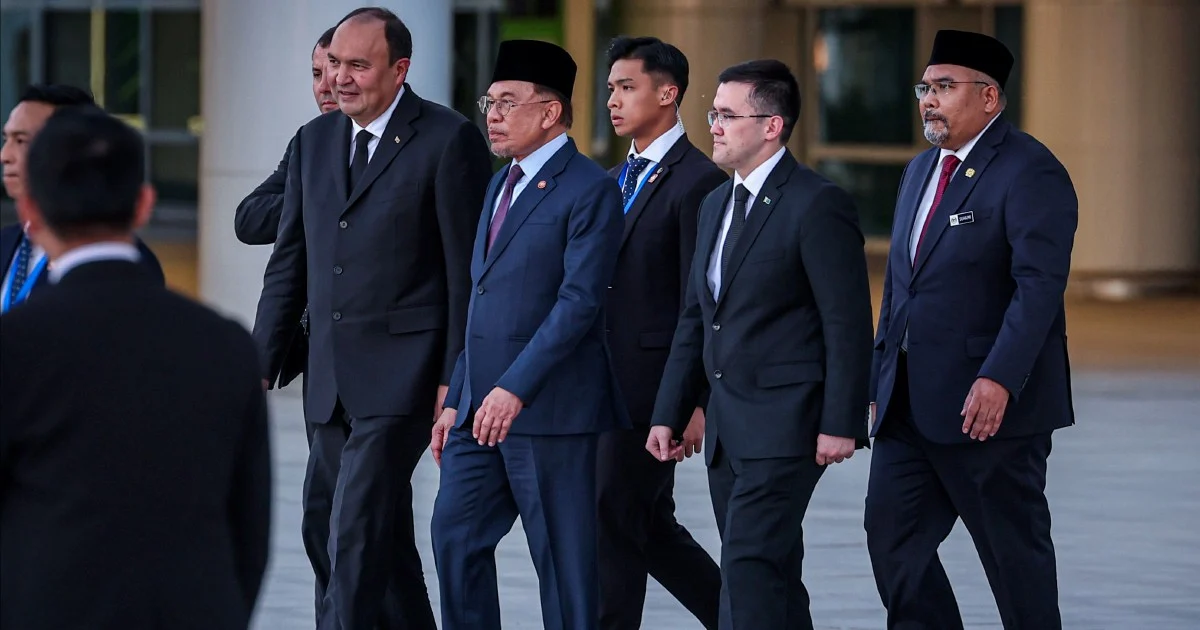
Prime Minister Datuk Seri Anwar Ibrahim is set to complete his official visit to Turkmenistan with an intensive schedule of diplomatic and economic engagements, reflecting Malaysia's growing strategic interest in Central Asia and the broader region surrounding the Caspian Sea. The final day of his visit carries particular significance as it brings together key stakeholders from both nations to chart pathways for expanded economic cooperation.
Turkmenistan, strategically positioned along the eastern shores of the Caspian Sea, represents an important diplomatic and commercial opportunity for Malaysia as it seeks to diversify its international partnerships beyond its traditional spheres of engagement. The country serves as a critical gateway between Europe and Asia, with substantial natural resource wealth and growing infrastructure development that could benefit Malaysian investors and businesses looking to expand into Central Asian markets.
The scheduled talks between Anwar and the Turkmen president are expected to focus on bilateral trade frameworks and investment opportunities that could unlock mutual economic benefits. Both nations stand to gain from closer cooperation, particularly as Malaysia increasingly positions itself as a knowledge-based economy with expertise in finance, technology, and Islamic finance solutions that could appeal to Turkmenistan's development agenda.
Central Asia has emerged as an increasingly important region for Malaysian policymakers, particularly given the strategic corridor it represents for Belt and Road initiatives and regional connectivity projects. Turkmenistan's role as an energy-rich nation with significant hydrocarbon resources and growing manufacturing capacity makes it an attractive partner for Malaysian firms seeking to establish regional hubs or secure supply chain partnerships.
The timing of Anwar's visit underscores Malaysia's commitment to strengthening ties with non-traditional partners. While Malaysia has historically focused on Southeast Asian integration through ASEAN, expanding engagement with Central Asian nations demonstrates a more globally oriented approach to trade and diplomatic relationships. This diversification strategy helps reduce economic dependency on traditional markets and opens new avenues for Malaysian businesses.
Bilateral trade between Malaysia and Turkmenistan remains modest compared to Malaysia's engagement with other regions, suggesting substantial untapped potential. Increased diplomatic contact at the highest levels often precedes significant business developments, as government-to-government relationships create the policy framework and institutional confidence necessary for private sector expansion.
Turkmenistan's recent focus on modernizing its infrastructure and attracting foreign direct investment aligns well with Malaysian capabilities in construction, engineering, telecommunications, and financial services. Malaysian companies have demonstrated expertise in developing smart cities, logistics networks, and digital transformation initiatives that could address Turkmenistan's development priorities.
The Central Asian nation's neutral foreign policy stance and non-aligned position in regional geopolitics make it a valuable partner for Malaysia, which similarly maintains balanced relationships across different global power centers. This shared diplomatic orientation could provide a foundation for deeper cooperation on regional issues and multilateral forums.
Investment protection agreements and streamlined business registration processes are likely to feature prominently in discussions, as Malaysian investors require clear legal frameworks and transparent regulations before committing significant capital to new markets. The establishment of clear dispute resolution mechanisms and consistent regulatory environments will be crucial for attracting Malaysian business interest.
Future collaboration might extend beyond traditional trade to encompass areas such as halal industry development, Islamic finance solutions, and technical education partnerships. Malaysia's established halal certification framework and Islamic finance ecosystem could provide valuable services and expertise as Turkmenistan develops its own capabilities in these growing global sectors.
The visit also reflects broader regional dynamics in Central Asia, where multiple powers compete for influence and partnership opportunities. Malaysia's engagement, while modest in comparison to larger powers, offers an alternative partnership model based on mutual respect and economic complementarity rather than strategic rivalry.
Successful outcomes from this visit could encourage Malaysian investment in Turkmenistan's energy sector, telecommunications infrastructure, and emerging technology industries. Such developments would create employment opportunities in both nations and generate tax revenues that support government services and development programs.
Looking ahead, establishing regular diplomatic channels and business forums between Malaysia and Turkmenistan could facilitate sustained relationship-building beyond this visit. Business delegations, student exchange programs, and government-sponsored trade missions would deepen mutual understanding and create networks that generate tangible commercial opportunities for enterprises in both nations.

