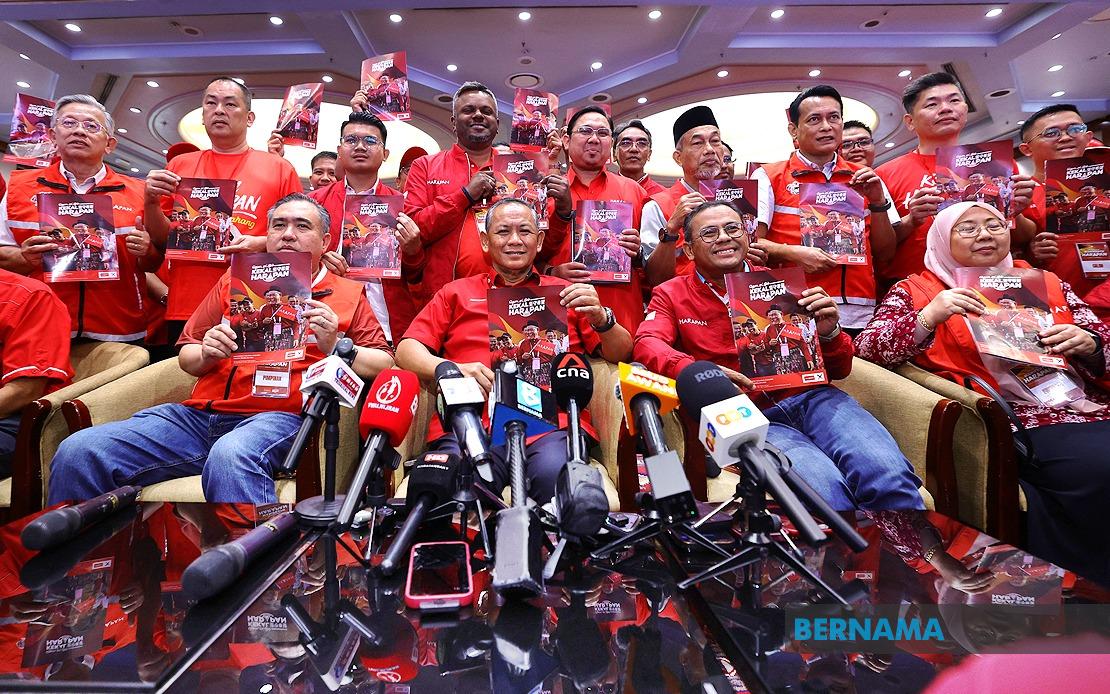
Prime Minister Datuk Seri Anwar Ibrahim will hit the campaign trail in Negeri Sembilan this Wednesday, joining a series of Pakatan Harapan events across the state as the 16th state election approaches. The announcement came from PH Negeri Sembilan chairman Datuk Seri Aminuddin Harun, who confirmed that the premier would be present for major campaign activities scheduled in both Sikamat and Paroi, appearing alongside senior party officials and the coalition's election machinery.
Anwar's participation marks a significant show of support for PH's bid to retain control of the central Malaysian state. His presence on the campaign trail signals the coalition's determination to mobilise voter support ahead of polling day on August 1, with early voting scheduled for July 28. The timing of his visit coincides with a crucial phase of the election campaign, when parties typically intensify grassroots engagement and public outreach.
Aminuttin, who is also the PH candidate contesting the Linggi seat, brushed aside questions about the prime minister's absence from Wednesday evening's manifesto launch in Seremban. Rather than viewing it as a setback, Aminuddin framed Anwar's planned Wednesday visit as a more strategic deployment of his time, allowing the PM to conduct direct campaigning with voters rather than remaining confined to the launch event itself.
The PH manifesto, unveiled by Aminuddin following days of internal deliberation, outlines an ambitious agenda spanning multiple policy domains critical to Negeri Sembilan voters. The document emphasises administrative stability as a foundation for governance, coupled with initiatives aimed at enhancing citizen welfare and fostering economic competitiveness. Education ranks prominently in the coalition's platform, reflecting its commitment to investing in human capital development across the state.
Housing policy constitutes another major plank of the manifesto, addressing chronic affordability challenges that have affected middle and lower-income households throughout Malaysia. The coalition has pledged to tackle this pressing issue through targeted initiatives, acknowledging that property accessibility remains a defining concern for many families. Youth development also features centrally in PH's vision, with the party recognising the electoral significance of younger demographics and their distinct policy priorities.
Gender-focused initiatives permeate the manifesto, with specific sections devoted to women's empowerment and family strengthening programmes. PH's emphasis on these areas reflects contemporary political awareness that gender equality and family welfare increasingly influence voting patterns. Tourism and heritage conservation also receive dedicated attention, acknowledging Negeri Sembilan's cultural significance and economic potential within Malaysia's broader tourism sector.
Modern agriculture represents another pillar of the manifesto, signalling PH's recognition that rural livelihoods remain economically significant despite Malaysia's predominantly urban character. Strategic infrastructure investments feature prominently, indicating the coalition's commitment to improving connectivity and public facilities across the state. The document concludes with a section addressing social unity and harmony, emphasising PH's commitment to maintaining communal peace across Negeri Sembilan's ethnically diverse population.
Several senior opposition figures participated in the manifesto launch, underscoring the campaign's hierarchical importance within the broader PH structure. DAP secretary-general and Chennah seat candidate Anthony Loke attended alongside Selangor Menteri Besar Datuk Seri Amirudin Shari, who also serves as PH's election director. PKR secretary-general Datuk Dr Fuziah Salleh and Amanah vice-president Datuk Dr Mohd Hatta Md Ramli also graced the occasion, demonstrating the multiparty coalition's unified messaging approach.
Aminuttin's rhetoric at the launch reflected PH's confidence in its electoral prospects and policy readiness. His assertion that the manifesto represents concrete promises rather than hollow pledges suggested an implicit critique of opposition proposals, positioning PH as a pragmatic, deliverable-focused alternative. The emphasis on delivery capability addresses a persistent vulnerability for ruling coalitions, where voter scepticism about implementation remains commonplace.
Negeri Sembilan's 2024 state election carries significance extending beyond the state's borders. As a competitive electoral battleground where PH has faced challenges in recent years, the outcome will influence perceptions of coalition strength ahead of potential federal realignment. A strong PH performance would reinforce Anwar's leadership credentials within the government, whereas setbacks might embolden opposition voices questioning coalition cohesion.
The state election's timing also reflects Malaysia's evolving electoral calendar, with multiple state polls scheduled across consecutive years. This compressed voting schedule places enormous demands on party machinery and voter engagement capacity, requiring sophisticated campaign operations to maximise electoral impact. PH's deployment of Anwar for Wednesday's campaign events represents a calculated resource allocation decision, concentrating leadership attention on key constituencies where battleground contests are expected.
Voter participation will prove critical to determining election outcomes. The early voting arrangement on July 28 provides flexibility for eligible voters unable to cast ballots on the main polling day, potentially expanding overall turnout. Historical patterns suggest that engaged electorates produce less predictable results, potentially favouring parties that successfully mobilise grassroots support through direct candidate engagement and community presence.
Looking ahead to August 1, Negeri Sembilan voters will decide not merely their state government but also send signals about coalition viability and governance priorities. Anwar's Wednesday campaign presence underscores PH's investment in securing a favourable mandate, with the prime minister's personal involvement intended to energise supporters and demonstrate leadership commitment to the state's future.

