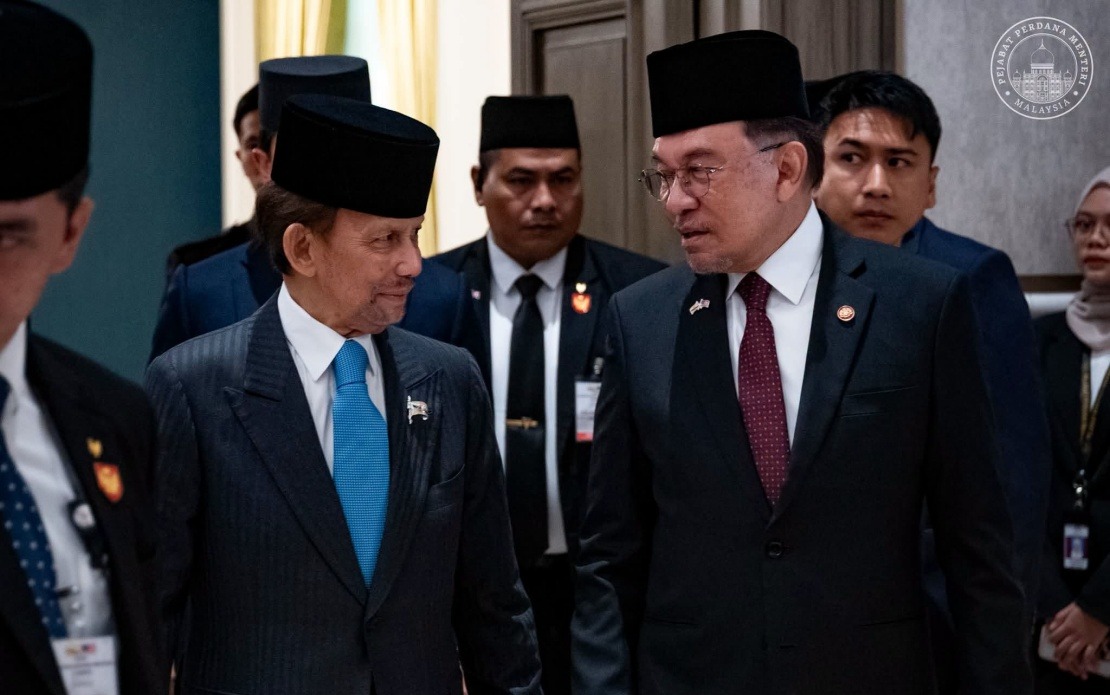
Prime Minister Datuk Seri Anwar Ibrahim has acknowledged a gesture of goodwill from Sultan Hassanal Bolkiah of Brunei Darussalam, who telephoned to enquire about the Malaysian leader's condition and offer prayers for his recovery. The Brunei monarch's outreach comes weeks after Anwar underwent a surgical intervention for a para-umbilical hernia, demonstrating the warmth of diplomatic ties between the two neighbouring Southeast Asian nations that share deep historical, cultural, and economic bonds.
Through a social media statement, Anwar reciprocated the Sultan's sentiments, thanking him for the prayers and expressing concern for the Brunei leader's own wellbeing. The exchange illustrates the personalised nature of bilateral relations at the highest level, where leaders maintain direct communication channels that extend beyond formal diplomatic protocols. Such interactions underscore the significance of personal relationships in shaping regional cooperation and stability in Southeast Asia.
Anwar revealed that he would travel to Bandar Seri Begawan in the coming week to meet Sultan Hassanal Bolkiah in an official capacity. This visit coincides with the 27th Annual Leaders' Consultation between Malaysia and Brunei, a structured dialogue mechanism that has served as a cornerstone for strengthening partnership across multiple sectors including defence, trade, education, and cultural exchange. The meeting will provide an opportunity for both leaders to discuss bilateral matters and regional issues affecting the Asean community.
The Malaysian Prime Minister's medical situation had dominated national headlines after he underwent an elective laparoscopic procedure to address the para-umbilical hernia condition last Monday. Medical specialists have kept him under rigorous observation to ensure a smooth recovery, with the minimally invasive surgical technique chosen to minimise recovery time and allow him to resume full duties swiftly. Such proactive healthcare measures by sitting leaders often draw public attention in Malaysia, where concerns about the wellbeing and availability of senior government figures carry implications for policy continuity and market confidence.
The Sultan's personal call represents more than a courtesy gesture; it reflects established protocols of mutual respect and solidarity that characterise Malaysia-Brunei relations. Both nations, as founding members of Asean and participants in various regional mechanisms, maintain regular high-level interactions that sustain their partnership. These relationships become particularly evident during moments requiring individual expressions of concern, whether related to health matters or other significant events affecting leadership stability.
Brunei Darussalam, led by Sultan Hassanal Bolkiah for over five decades, holds considerable influence within Asean circles despite its small population and geographical size. The sultanate's strategic location along the Strait of Malacca shipping lanes and its significant petroleum reserves grant it disproportionate regional importance. Brunei's engagement with Malaysia through regular consultation forums helps coordinate positions on regional security, economic integration, and diplomatic challenges, making leadership continuity in both nations a shared concern.
The scheduled meeting next week will occur amid a period of heightened regional focus on bilateral cooperation. Malaysia and Brunei have historically collaborated on maritime boundary matters, cross-border economic initiatives, and cultural preservation, with both nations sharing significant Muslim populations and Islamic institutional frameworks. The Annual Leaders' Consultation provides a formal venue to advance these multifaceted relationships and address emerging challenges in areas such as cybersecurity, supply chain resilience, and digital economy development.
Anwar's rapid recovery trajectory and continued engagement with international counterparts signal his fitness to discharge presidential duties, an important consideration for domestic stakeholders monitoring his health status. The Malaysian Prime Minister has maintained an active schedule despite recent medical intervention, demonstrating resilience and commitment to his portfolio. Such demonstrations of continuity reassure markets, government institutions, and the general public about administrative stability during periods of leadership vulnerability.
The bilateral dynamics between Malaysia and Brunei reflect broader patterns of statecraft in Southeast Asia, where small nations like Brunei leverage strategic partnerships with larger neighbours to amplify their regional voice and protect their interests. Regular consultations and personal relationships between leaders provide mechanisms for addressing disputes, coordinating on transnational challenges, and building coalitions around shared positions in multilateral forums. The upcoming meeting in Bandar Seri Begawan will likely produce joint statements reaffirming commitment to the Asean Charter, maritime security cooperation, and economic integration initiatives that benefit both populations.
For Malaysian observers, the international response to their Prime Minister's health situation illustrates the respect Anwar commands among regional peers and the importance placed on stable, predictable leadership in the broader ecosystem. Sultan Hassanal Bolkiah's intervention demonstrates that personalised diplomacy remains central to Southeast Asian international relations, where informal networks and direct communication between rulers continue to shape policy outcomes alongside formal institutional mechanisms. As both leaders prepare for their upcoming consultation, the occasion presents an opportunity to deepen cooperation on issues ranging from trade facilitation to joint security operations in shared waters.

