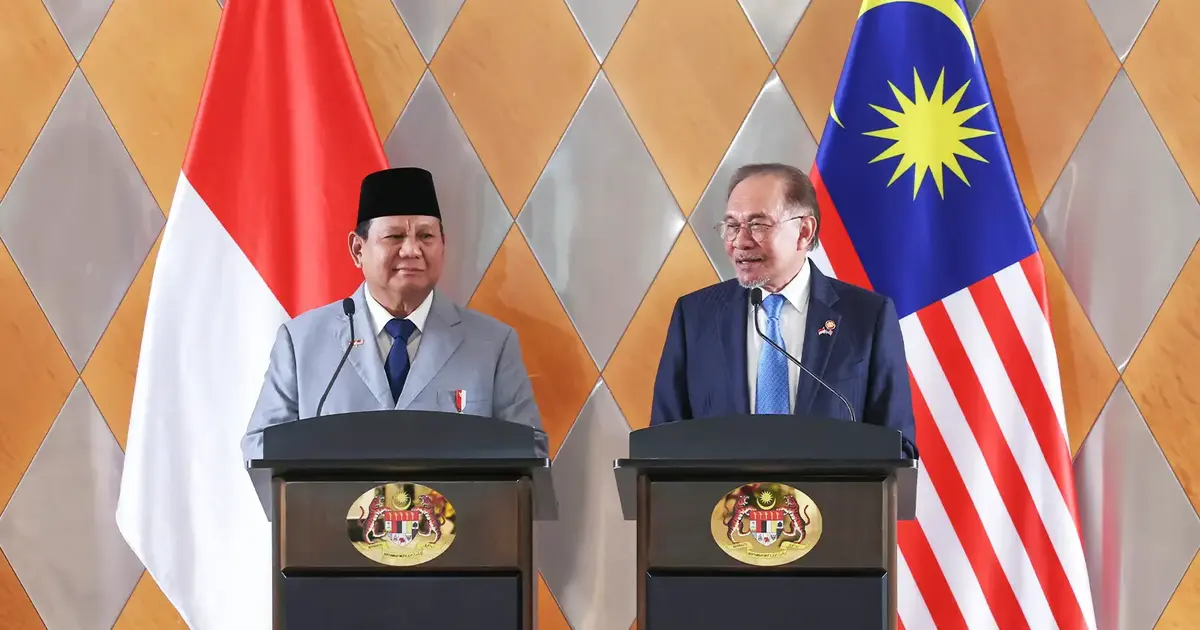
Prime Minister Anwar Ibrahim has escalated concerns about the Felda Global Ventures Group's troubled RM2 billion Eagle High investment by directly appealing to Indonesian President Prabowo Subianto for assistance. The correspondence represents a significant diplomatic effort to resolve what has become a critical financial liability for Malaysia's largest palm oil producer and a matter affecting thousands of smallholder settlers who depend on the organization for their livelihoods.
The Eagle High venture has emerged as a substantial drain on Felda's resources, with Prime Minister Anwar warning that the organization faces the prospect of losing more than RM2 billion should the situation continue to deteriorate without proper intervention and resolution. In the most pessimistic scenario, Felda would be able to recover only RM200 million from its initial investment, representing a potential loss of approximately 90 percent of its capital commitment to the project. This stark assessment underscores the urgency with which the Malaysian government is treating the matter and explains why the Prime Minister has felt compelled to seek high-level diplomatic engagement with Indonesia.
Felda's involvement in the Eagle High project reflects the organization's historical strategy of diversifying beyond traditional palm oil cultivation and export activities. However, the investment appears to have encountered significant operational or market challenges that have prevented it from generating the returns initially anticipated when the commitment was first made. The specifics of what has driven the venture's underperformance remain a matter of ongoing scrutiny, particularly given the scale of capital involved and the implications for Felda's financial health and its ability to deliver benefits to its settler communities.
The decision to involve President Prabowo directly highlights the bilateral nature of the Eagle High investment and suggests that Indonesian interests or entities form a significant component of the venture. By bringing the matter to the presidential level, Anwar Ibrahim is signalling both the seriousness with which Malaysia regards the situation and the expectation that Indonesia's government can exercise influence over the project's trajectory. This approach reflects standard diplomatic practice when major cross-border commercial interests face significant difficulties that might strain bilateral relations if left unresolved.
For Felda itself, the Eagle High situation represents one of several challenges facing the organization in recent years. The Federal Land Development Authority has historically played a crucial role in rural Malaysian development and settler welfare, managing vast landholdings and generating employment for tens of thousands of smallholders. However, like many traditional commodity-dependent organizations, Felda has struggled to adapt to modern market conditions, fluctuating commodity prices, and the pressure to deliver consistent returns to its stakeholder communities while maintaining operational efficiency.
The potential loss of over RM2 billion carries implications that extend well beyond Felda's corporate balance sheet. Thousands of settler families depend on Felda for their primary source of income and social services, including healthcare and education support. A significant deterioration in Felda's financial position could ultimately affect the level of returns distributed to these communities or reduce the organization's capacity to invest in maintaining and upgrading its infrastructure and services. This dimension makes the Eagle High situation not merely a corporate finance matter but also a rural welfare concern of considerable political sensitivity.
The relatively low recovery figure of RM200 million mentioned by Prime Minister Anwar suggests that the Eagle High project may have limited salvage value or that attempts to liquidate or restructure the venture would result in significant haircuts for creditors and investors. This scenario would typically involve difficult negotiations with any other parties holding stakes in the project, operational losses during wind-down or transition phases, and potentially legal challenges if the venture is structured in ways that create competing claims to remaining assets.
Geographically and strategically, Malaysia-Indonesia economic cooperation has historically been extensive, particularly in the agricultural and natural resources sectors. The Eagle High investment likely formed part of this broader regional integration, reflecting how Malaysian companies and organizations have sought to expand into Indonesian markets and leverage opportunities across the ASEAN region. The current difficulties may prompt both governments to reassess how such cross-border ventures are structured, monitored, and managed to prevent similar situations in the future.
The communication between Anwar and Prabowo also occurs within the context of Indonesia's political transition and the new presidential administration's priorities. Prabowo Subianto's government may view high-profile interventions in troubled Malaysian investments as either an opportunity to demonstrate effectiveness in regional economic problem-solving or potentially as a complicated issue requiring careful navigation of competing interests. How the Indonesian government responds to Anwar's appeal will likely influence the timeline and outcome for the Eagle High resolution.
For Malaysian investors and organizations considering substantial cross-border ventures in Southeast Asia, the Eagle High situation serves as a cautionary example of the importance of thorough due diligence, robust governance structures, regular performance monitoring, and clear escalation mechanisms when investments begin to underperform. The scale of potential losses suggests that inadequate risk management or oversight failures may have contributed to allowing the situation to deteriorate to its current state.
Resolution of the Eagle High matter through Indonesian government assistance could involve several pathways, including negotiated restructuring of the venture, finding strategic buyers for all or portions of the investment, operational improvements to increase returns, or managed exit strategies that minimize further losses. The involvement of two governments at the presidential level indicates that multiple stakeholders are now focused on finding a solution that preserves value while maintaining the bilateral relationship and protecting the interests of affected communities and investors.
The broader context of this dispute also reflects how Malaysia's traditional rural development organizations must modernize and adapt to remain viable in an increasingly complex global economy. Felda's future will likely require not only resolving the Eagle High situation but also developing a more diversified and resilient business model that can generate sustainable returns for its settler communities while maintaining the organization's relevance and effectiveness as an instrument of rural development policy.

