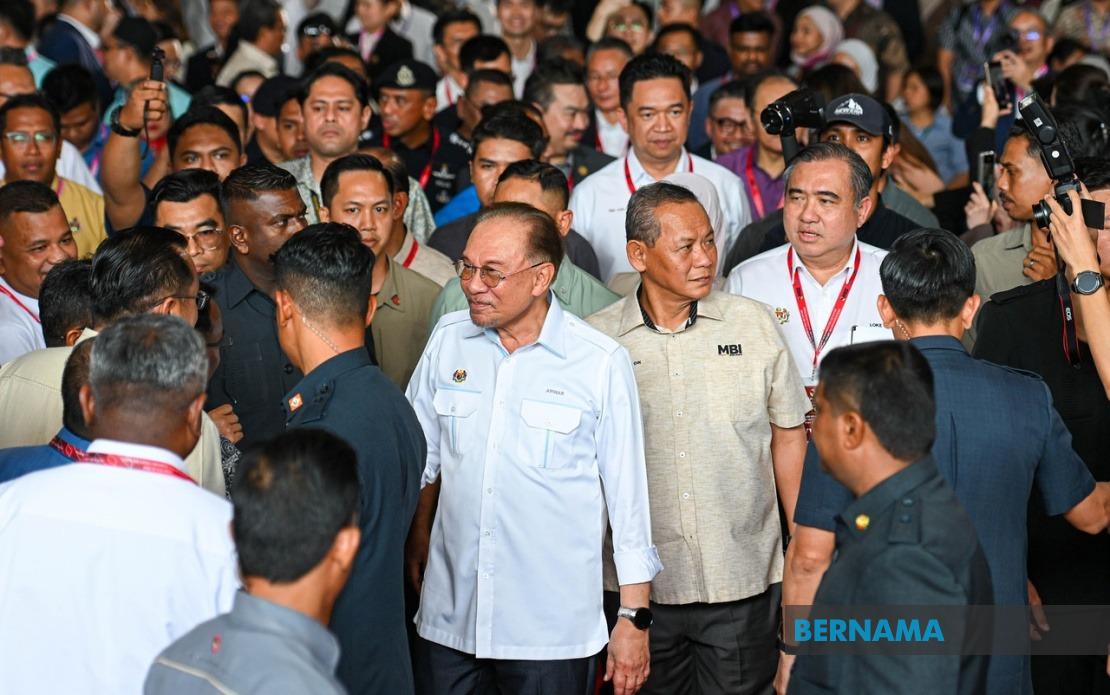
Prime Minister Datuk Seri Anwar Ibrahim has appealed to Melaka DAP to suspend its planned departure from the state government administration, arguing that maintaining coalition unity is essential for continued development efforts in the state. Speaking in Port Dickson on July 14, Anwar stressed the importance of keeping the focus on public welfare and economic progress rather than allowing internal party disagreements to destabilise governance. As both prime minister and chairman of Pakatan Harapan, Anwar positioned himself as a broker seeking to resolve the escalating friction between coalition partners before the situation becomes irreversible.
The controversy erupted after Melaka's state assembly approved amendments to the State Constitution permitting the appointment of nominated assemblymen—a move that Melaka DAP fundamentally opposes on democratic grounds. Melaka DAP chairman Khoo Poay Tiong announced the party's immediate withdrawal from the state government in response, characterising the constitutional changes as fundamentally at odds with democratic principles and the sanctity of electoral outcomes. This decision represents a significant rupture in the Melaka administration, where DAP had held several ministerial positions and played an active role in state governance.
Anwar indicated he has already engaged directly with both Anthony Loke, DAP's secretary-general, and Melaka Chief Minister Datuk Seri Ab Rauf Yusoh to encourage further dialogue before any irreversible steps are taken. The Prime Minister's personal intervention underscores the gravity of the situation and the potential cascading effects a DAP withdrawal could have on Pakatan Harapan's broader coalition architecture. By appealing for postponement rather than immediately acceding to DAP's demands, Anwar is attempting to buy time for behind-the-scenes negotiations that might resolve the constitutional amendment issue or broker a compromise that allows DAP to remain in government without abandoning its democratic principles.
In his public remarks, Anwar acknowledged that disagreements among coalition parties are an inevitable feature of multi-party governments, but he argued such differences should not become obstacles to delivering essential services and development projects. He drew a distinction between ideological or procedural disagreements on one hand and fundamental policy commitments on the other, suggesting that Pakatan Harapan partners can afford to differ on specific issues provided they maintain alignment on core economic and welfare initiatives. This framing attempts to contextualise the constitutional amendment dispute as a significant but ultimately manageable difference rather than an existential threat to the coalition.
The Melaka government, comprising representatives from multiple Pakatan Harapan parties, has pursued infrastructure and economic development projects that require stable governance and sustained policy implementation. A sudden departure by DAP would create an institutional vacuum in state administration precisely at a moment when maintaining continuity matters most. Anwar's push for postponement reflects concern that premature withdrawal could compromise the state government's capacity to function effectively and potentially trigger broader instability within the coalition framework.
From a Malaysian perspective, this episode highlights the persistent tensions between principles and pragmatism that characterise coalition governance in the country. DAP's principled opposition to the constitutional amendments reflects its longstanding commitment to electoral democracy and opposition to appointed positions that bypass the ballot box. However, this principled stance creates practical governance challenges when coalition partners disagree fundamentally on constitutional matters. The Melaka case thus exemplifies a recurring dilemma in Malaysian politics: how to balance ideological consistency with the operational requirements of ruling coalitions.
The timing of this dispute is particularly significant given the proximity of the next general election. Anwar's appeal for postponement until after the election suggests confidence that an electoral verdict might shift the political dynamics in Melaka, potentially creating conditions for a more amicable resolution. Alternatively, the prospect of facing voters as a fractured coalition likely motivated his appeal for unity. For voters in Melaka, the spectacle of coalition partners quarrelling over constitutional amendments while governance continues presents a troubling message about the stability and cohesion of the administration they elected.
The constitutional amendment controversy also reflects deeper questions about how Malaysia's political system accommodates nominated positions. Opponents argue that such appointments undermine the principle of representation and create opportunities for political manipulation outside the democratic process. Supporters contend that nominated representatives bring valuable expertise and can address minority community concerns. This fundamental disagreement has no easy resolution, and the Melaka case suggests it will continue generating friction within multiethnic, multi-party coalitions.
For Southeast Asia's broader political trajectory, the Melaka situation offers lessons about the challenges facing coalition governments across the region. In Malaysia, Indonesia, Thailand, and other nations with complex party systems, sustaining coalitions while respecting individual parties' core values remains persistently difficult. Anwar's attempt to balance these competing pressures—acknowledging DAP's principled objections while emphasising coalition necessity—represents pragmatic if imperfect statesmanship. The outcome will likely influence how future disputes within Malaysian coalitions are handled and may set precedents for managing intra-coalition conflicts during the remainder of the current electoral cycle and beyond.

