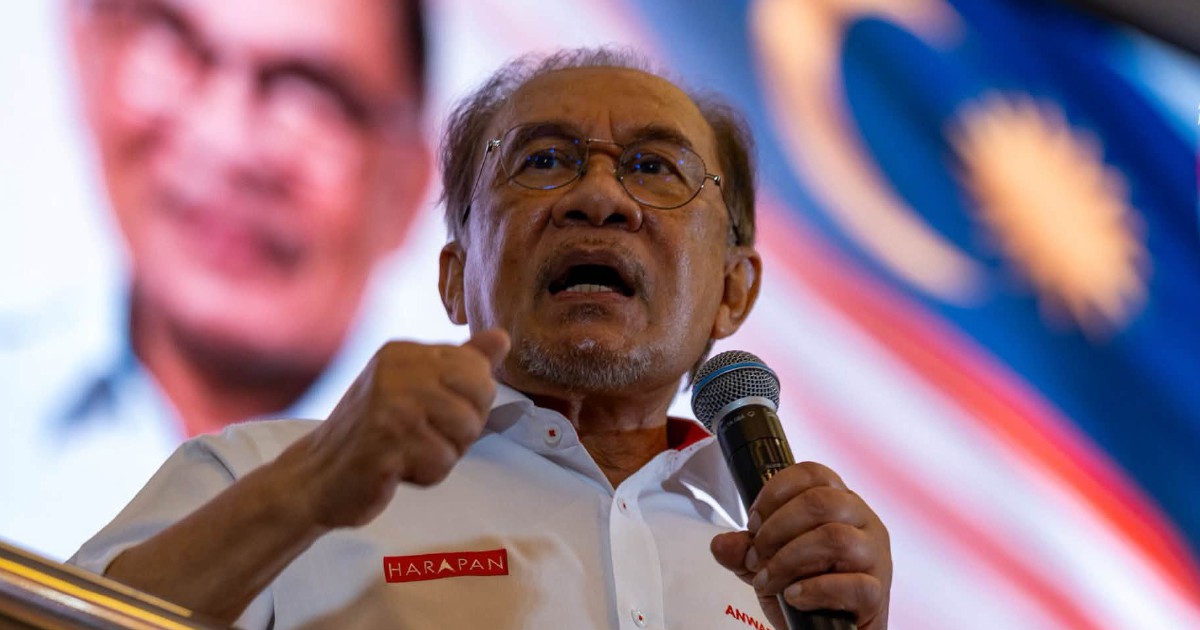
Prime Minister Datuk Seri Anwar Ibrahim has made clear that Malaysia will pursue no arrangement with Singapore to allow Malaysians employed across the Causeway to cast ballots during the forthcoming Johor state election scheduled for July 11. The statement addresses speculation about potential diplomatic efforts to accommodate the region's significant cross-border workforce, a constituency that has grown substantially over recent decades as economic integration between Malaysia and Singapore deepens.
The Johor state election represents a significant political event for the nation, as the southern state has traditionally served as a bellwether for broader electoral trends. The timing of Anwar's clarification suggests anticipation of questions from voters and media regarding accessibility measures for workers employed in Singapore, many of whom maintain voter registration in their home constituencies across the Causeway. The decision to forego any formal request to Singapore reflects considerations regarding electoral administration, sovereignty, and practical implementation challenges that any such arrangement would entail.
Thousands of Malaysian citizens commute daily to Singapore for employment, while others maintain longer-term work arrangements in the city-state. This workforce represents a demographic segment with particular interest in Malaysian electoral outcomes, given their stake in homeland developments through family ties, property ownership, and future retirement plans. The absence of voting facilities in Singapore could effectively disenfranchise some eligible voters, raising ongoing questions about how electoral systems adapt to contemporary patterns of regional labour mobility.
Anwar's decision underscores the complexity of electoral logistics in a cross-border context. Establishing satellite voting locations would require coordination on multiple fronts, including security protocols, verification of Malaysian citizenship and electoral eligibility, and the physical infrastructure to administer ballots within a foreign jurisdiction. Singapore, as an independent nation-state, would need to grant consent to host such arrangements on its territory, a decision involving considerations beyond mere administrative convenience.
Historically, Malaysian elections have operated under a traditional system where voters must cast ballots in their registered constituencies. This territorial arrangement reflects long-standing principles of electoral administration tied to the constituencies system and the constitutional framework governing state and federal elections. Proposals to establish alternative voting mechanisms have emerged periodically, particularly as the cross-border workforce has expanded, but implementation has remained limited to specific circumstances rather than systematic provision.
The Johor election carries significance beyond the immediate state-level contest, as performance in this affluent and historically important state often influences perceptions of broader political trajectories. The state has demonstrated its capacity to swing between different political alignments, making it a closely watched indicator of voter sentiment. Any discussion of voting access thus carries implications for representation and participation that extend beyond purely technical considerations.
For Malaysian workers in Singapore facing the prospect of remaining unable to vote during the July 11 election, the decision means maintaining reliance on postal voting mechanisms or requesting unpaid leave to return physically to their home constituencies. Postal voting, while available, involves advance planning and cannot always accommodate sudden electoral announcements or timing constraints. The practical implications differ depending on individual employment contracts and personal circumstances, with some workers finding alternative voting methods feasible while others face genuine barriers to participation.
Anwar's position also reflects broader diplomatic considerations between Malaysia and Singapore, where bilateral relations encompass numerous sensitive domains including trade, maritime boundaries, water supply agreements, and shared security concerns. Electoral arrangements would introduce new areas requiring negotiation and agreement, potentially opening discussions on topics both governments might prefer to leave unexamined. Maintaining separate electoral systems entirely within national territory arguably simplifies diplomatic management while preserving each nation's autonomy over its own political processes.
The decision stands within a pattern of Malaysian electoral practice favouring traditional voting methods despite technological advancement and workforce migration. Previous elections have similarly proceeded without establishing expatriate voting locations in other destination countries where Malaysian workers concentrate, including in the Middle East and other Asian economies. This consistency suggests a deliberate policy orientation rather than mere oversight, reflecting institutional preferences within Malaysia's electoral administration framework.
Looking toward the July 11 election, Malaysian electoral authorities have presumably made arrangements through standard channels to accommodate voters to the extent current systems permit. Workers planning to participate will need to factor travel logistics, leave arrangements, and timing into their preparations. The broader policy question of how electoral systems should evolve to address workforce migration patterns remains unresolved, with Anwar's latest statement indicating no imminent shift toward cross-border voting infrastructure for this particular contest.
The clarification from the Prime Minister's office provides certainty for election planning while potentially disappointing voters hoping for enhanced accessibility. It demonstrates the practical constraints and policy considerations that shape electoral administration even as migration and cross-border employment become increasingly normal features of the Southeast Asian labour landscape.

