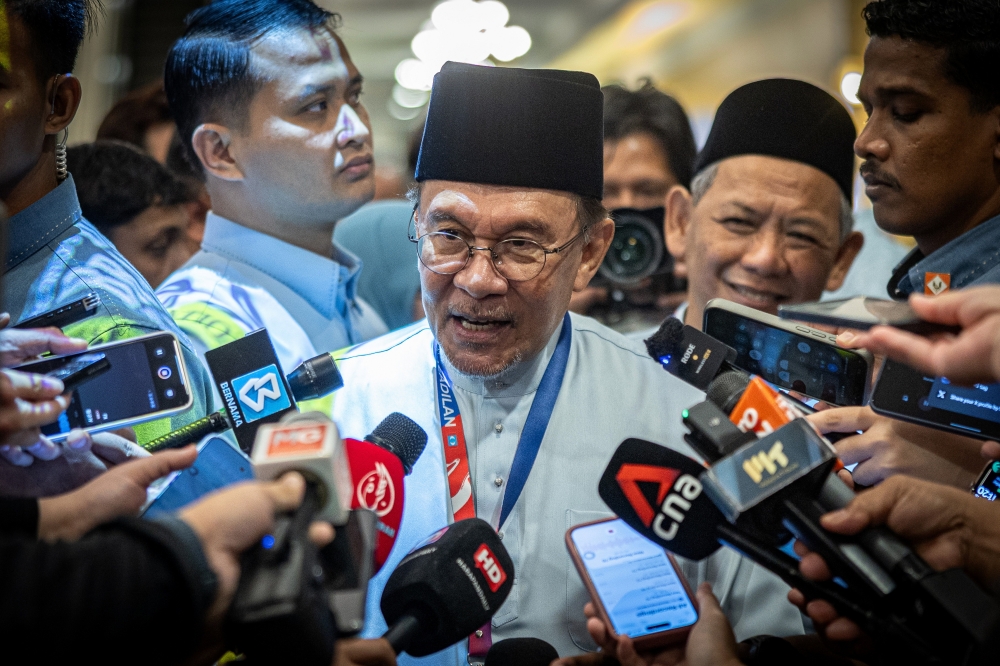
Prime Minister Datuk Seri Anwar Ibrahim has moved decisively to quash suggestions of discord within the country's ruling coalition, reaffirming his commitment to collaborative governance and dismissing recent remarks made by former Health Minister Khairy Jamaluddin. Speaking in Melaka, Anwar underscored his consistent approach of pursuing peaceful resolution to political differences, a philosophy he has maintained throughout his extensive career navigating Malaysia's complex political landscape.
The Prime Minister's remarks appear designed to counter narrative building around alleged tensions between his administration and Deputy Prime Minister Datuk Seri Zahid Hamidi, who leads Umno's parliamentary bloc. Rather than engaging directly with the substance of Khairy's claims, Anwar chose to emphasise the stability mechanisms underpinning the current administration and his personal commitment to measured dialogue. This rhetorical strategy reflects a broader pattern of coalition management where leaders prioritise public unity messaging over acknowledgment of internal fractures.
Khairy's intervention into coalition dynamics carries particular significance given his prominent role within the Malaysian Medical Association and his previous ministerial responsibilities. His decision to voice concerns about potential rifts suggests underlying anxieties among party members regarding the sustainability of current power-sharing arrangements. However, Anwar's dismissal indicates the Prime Minister remains confident in his capacity to maintain the coalition's structural integrity through dialogue rather than confrontation.
The timing of these exchanges occurs against a backdrop of Malaysia's complex political environment, where coalition governments depend on the active cooperation of multiple parties with sometimes divergent agendas. The Pakatan Harapan-led administration relies on critical support from Umno and other partners, creating interdependencies that require careful management. Anwar's emphasis on the "peaceful path" reflects his understanding that overt displays of internal conflict could undermine investor confidence and complicate policy implementation.
For Malaysian readers, these developments carry practical implications regarding government continuity and policy direction. Coalition stability directly affects the administration's capacity to pursue legislative initiatives, manage economic challenges, and maintain regulatory predictability. When political leaders signal commitment to collaborative governance, they provide assurance that institutional frameworks will function reliably—a consideration particularly important for businesses and ordinary citizens reliant on consistent governmental performance.
Zahid Hamidi's position as Deputy Prime Minister represents a significant accommodation within Malaysia's power structure, reflecting the necessity of balancing between Pakatan's urban-oriented constituencies and Umno's traditional rural support base. Suggestions of tension between Anwar and Zahid thus carry implications extending beyond personal relations between leaders. They potentially signal deeper questions about resource allocation, ministerial appointments, and policy prioritisation that affect how government serves different demographic segments.
Anwar's reiteration of his preference for peaceful resolution mechanisms demonstrates his awareness that coalition governments succeed through continuous negotiation rather than imposed hierarchy. This approach contrasts with more confrontational political styles that periodically surface in Malaysian politics, where leaders occasionally attempt to consolidate power through exclusionary tactics. By explicitly championing dialogue, Anwar positions himself within a tradition of pragmatic coalition leadership while signalling to Umno and other partners that their participation carries genuine influence.
The broader Southeast Asian context illuminates why Malaysia's coalition arrangements warrant regional attention. Neighbouring Indonesia, Thailand, and the Philippines have all experienced government instability stemming from coalition fragmentation and inter-party conflict. Malaysia's comparatively stable democratic institutions depend significantly on elite willingness to maintain negotiated settlements even when underlying interests diverge. Anwar's messaging thus reflects not merely domestic political calculation but recognition of regional patterns demonstrating the fragility of multi-party governance systems.
Khairy's emergence as a voice raising coalition concerns reflects generational dynamics within Malaysian political parties. Younger leaders sometimes demonstrate less patience with arrangements older colleagues have negotiated, creating potential fissures where ambition confronts established power distributions. Anwar's response appears calibrated to acknowledge younger leaders' aspirations while discouraging them from publicly destabilising the governing arrangement through criticism of existing partnerships.
Moving forward, observers should monitor whether such tensions manifest in tangible disputes over ministerial portfolios, budget allocations, or legislative priorities. Coalition governments typically experience periodic friction that remains manageable so long as leaders maintain functional communication channels and perceive participation as preferable to opposition status. Anwar's emphasis on peaceful dialogue suggests his administration intends preserving such arrangements through addressing grievances before they crystallise into irreconcilable positions.
The Prime Minister's confident dismissal of coalition rupture claims reflects calculations that his leadership remains indispensable to current power arrangements. Whether this assessment proves accurate will depend on upcoming policy decisions, resource distributions, and external economic conditions that could either reinforce coalition cohesion or reveal deeper fractures beneath the surface of official unity messaging. For now, Anwar's commitment to the "peaceful path" represents the administration's preferred operating model—one that permits substantial disagreement so long as it remains contained within negotiation frameworks rather than public confrontation.

