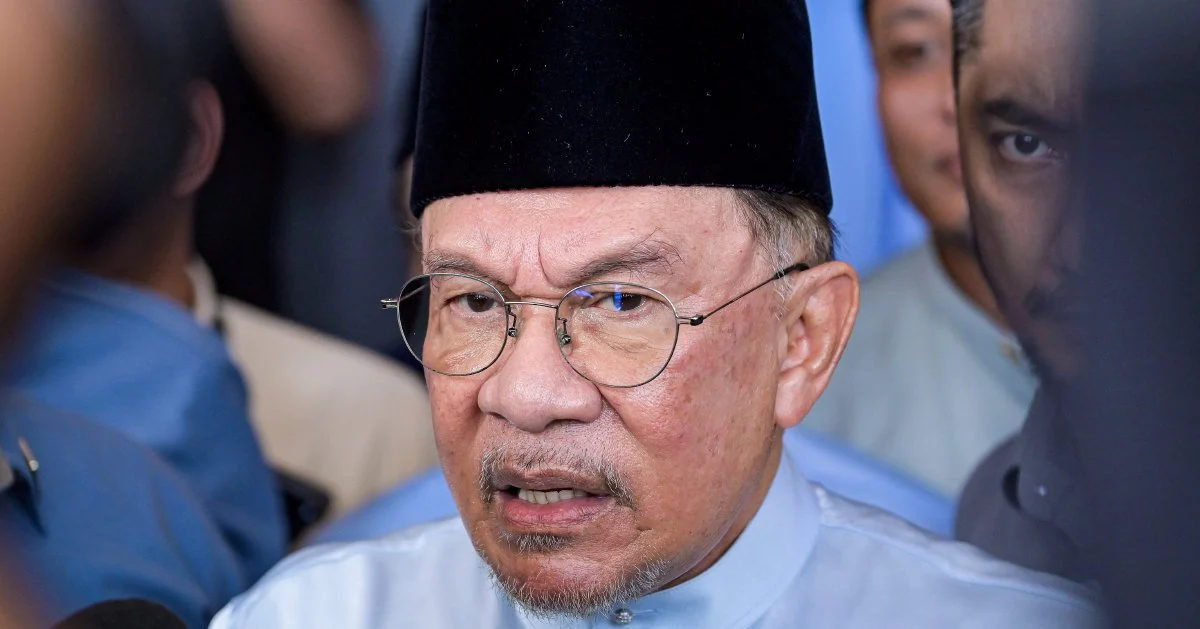
Prime Minister Datuk Seri Anwar Ibrahim has categorically denied reports suggesting that caretaker Johor Menteri Besar Datuk Onn Hafiz Ghazi was deliberately prevented from attending an official engagement at Felda settlements. Speaking at Dengkil, Anwar characterised the claims as baseless, pushing back against what appears to be an escalating dispute over access to state development projects and official events.
The denial comes at a particularly sensitive time for Johor politics, where the state faces the prospect of fresh elections following recent political realignments. The controversy surrounding Onn Hafiz's alleged exclusion reflects deeper tensions within the political hierarchy in Malaysia's southernmost peninsula state, where questions about authority, protocol, and resource management have become increasingly contentious in recent weeks.
Anwar's explicit rejection of these allegations signals the federal government's position on the matter, though the underlying dynamics that prompted such claims warrant closer examination. The incident highlights how official functions at development agencies like Felda, which manages large agricultural settlements and employs thousands of Malaysians, can become flashpoints for broader political disagreements between federal and state-level officials.
Onn Hafiz, who continues in a caretaker capacity pending electoral outcomes, carries significant political weight in Johor given his position and influence within the state apparatus. Any restrictions on his participation in official state events would be unusual and potentially raise constitutional and procedural questions about the respective jurisdictions of federal and state leadership, particularly during a transitional political period.
The Felda organisation itself operates under federal oversight, though it maintains close working relationships with state governments. Felda settlements are distributed across multiple states including Johor, and these communities depend heavily on coordinated governance between federal and state authorities. Disruptions to collaborative engagement could theoretically affect service delivery to settler families and smallholder farmers who rely on the organisation's support systems.
The broader political context is significant here. Malaysia has experienced considerable shifts in state-level administrations over the past few years, and Johor has been particularly notable as a bellwether state. Tensions between different political factions can manifest in institutional ways, including through access to official platforms and engagement with development-focused agencies. How such disputes are resolved carries implications for governance coherence across the federal system.
For Malaysian observers, particularly those in Johor and other states navigating complex political transitions, this incident underscores the importance of institutional professionalism during periods of electoral uncertainty. The manner in which caretaker arrangements function, and the protocol governing participation in official activities, directly affects how effectively government operates between elections.
Anwar's intervention suggests the federal executive is taking a position on the matter, though neither the Prime Minister nor other officials have provided detailed explanations of how such alleged instructions might have originated or who might have issued them. This measured but firm denial appears designed to de-escalate what could become a more damaging public dispute while reaffirming proper administrative procedures.
The incident also reflects ongoing conversations about federalism in Malaysia, where the balance between federal and state authorities, particularly over regional development initiatives, occasionally generates friction. Felda's operations span state boundaries and its policies are set nationally, yet implementation requires state-level cooperation. Conflicts about participation in Felda events therefore touch on these broader questions of governance architecture.
For Johor's business community and agricultural interests, continuity and smooth administration matter considerably. Felda settlements support significant portions of the state's rural economy, and uncertainty about the coherence of governance there could create anxiety. Anwar's denial, therefore, serves not only a political function but also aims to reassure stakeholders that institutional functioning remains intact.
The coming period will be crucial in determining whether this matter is resolved and administrative normalcy restored, or whether it reflects deeper dysfunction that may resurface. How federal and state leaders navigate such disagreements sets precedents for Malaysia's political culture, particularly as states increasingly assert their prerogatives while operating within a federal framework.
Moving forward, clear communication between federal and state authorities about access to development agencies, participation protocols, and the coordination required during electoral transitions will be essential. The Anwar administration's position on this issue suggests a commitment to maintaining these institutional channels, though the specifics of what occurred and how it will be prevented in future remain to be fully clarified.

