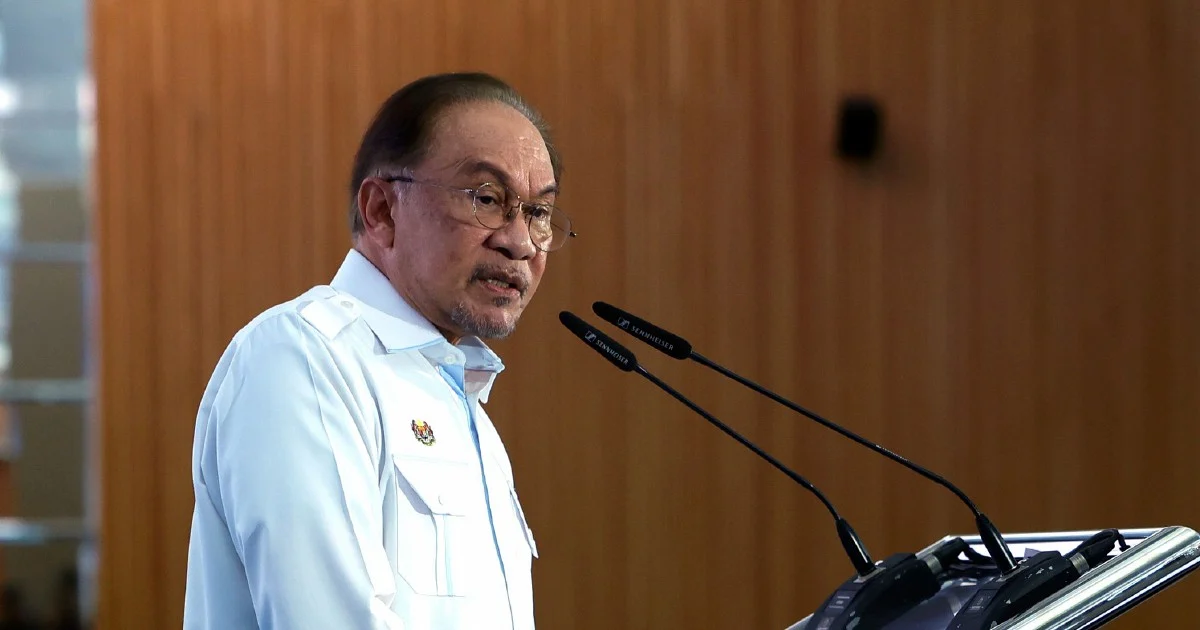
Prime Minister Datuk Seri Anwar Ibrahim has firmly rejected claims that federal development allocations are being distributed unequally across Malaysia's states, a contention that touches on longstanding concerns about regional economic disparities and the fairness of central government spending decisions.
The dismissal comes at a time when questions about equitable resource distribution remain sensitive in Malaysian politics, particularly given the country's diverse state-level administrations and varying levels of economic development across regions. Opposition lawmakers and state governments have occasionally raised questions about whether their constituents receive proportionate shares of federal infrastructure and development budgets, making Anwar's statement a significant pushback against such criticism.
Equitable federal funding mechanisms have historically been a point of contention in Malaysian governance. States with different political alignments from the federal government, as well as less developed regions, have periodically raised concerns about potentially receiving smaller allocations for roads, schools, hospitals, and other critical infrastructure projects. The distribution of development resources has long been intertwined with political considerations, creating perceptions—whether justified or not—that ruling coalition states benefit disproportionately from national budgets.
Anwar's assertion that the government employs fair distribution processes suggests an attempt to address these perceptions head-on and reassure all states that federal resources flow according to objective criteria rather than political favour. The Prime Minister's office would likely argue that allocation formulas are based on factors such as population size, state development indices, infrastructure gaps, and strategic national priorities, rather than partisan considerations.
The timing of these remarks reflects broader governance debates occurring within Malaysia's current political landscape. With the government navigating coalition complexities involving multiple political parties and state administrations, maintaining perceived fairness in resource allocation has become increasingly important for political stability and legitimacy. Any perception of bias could fuel opposition rhetoric and undermine the government's development agenda.
Malaysia's federal system inherently creates tensions around resource distribution, as states compete for investments that can generate jobs, attract businesses, and improve living standards. Larger, wealthier states may argue they require less central government assistance, while economically disadvantaged regions push for targeted development programmes to narrow income gaps and provide equal opportunity to their citizens. Balancing these competing interests while maintaining political cohesion across a diverse federation remains a constant challenge.
For Southeast Asia's context, Malaysia's approach to federal funding transparency and equity matters beyond its borders. Regional investors and development partners monitor whether member states practice accountable, fair governance in resource allocation, as this reflects institutional quality and predictability. Countries that successfully manage inter-regional equity tend to achieve better long-term stability and economic growth compared to those perceived as playing regional favourites.
The Prime Minister's rejection of these allegations also carries implications for civil service autonomy and institutional credibility. If federal agencies responsible for disbursing development funds are perceived as politically compromised, their effectiveness diminishes and public trust erodes. Anwar's statement appears designed to reinforce that these agencies operate within established frameworks that prioritise need-based allocation rather than political calculation.
Future scrutiny will likely focus on whether the federal government provides detailed, transparent breakdowns of development spending by state. Public access to comprehensive data on infrastructure projects, their costs, their locations, and their completion rates would objectively demonstrate whether distribution follows stated principles. Transparency itself becomes a powerful tool for dispelling allegations of unfairness, as stakeholders can verify actual spending patterns against claims.
The controversy also reflects broader governance expectations among Malaysian voters, who increasingly demand evidence-based policy decisions and transparent resource management. Younger generations and urban populations particularly expect governments to justify spending decisions with data, not merely political rhetoric. This shifts the burden on federal authorities to substantiate claims of fair distribution rather than simply asserting it.
Moving forward, the federal government may need to establish independent mechanisms for monitoring and evaluating whether development allocations achieve stated equity objectives. Regular public reporting on these metrics would preempt future allegations and demonstrate genuine commitment to fair resource distribution. Such institutional reforms signal confidence in the fairness of current processes while addressing legitimate public concerns about governance.
Anwar's dismissal of these claims represents his government's position that federal spending decisions reflect sound policy rather than political bias. However, given Malaysia's political history and the sensitivity surrounding regional resource allocation, this statement alone is unlikely to silence all critics. The burden shifts to demonstrating through concrete data and sustained policy implementation that federal development resources reach all states according to need, capacity, and national priorities rather than partisan affiliation.

