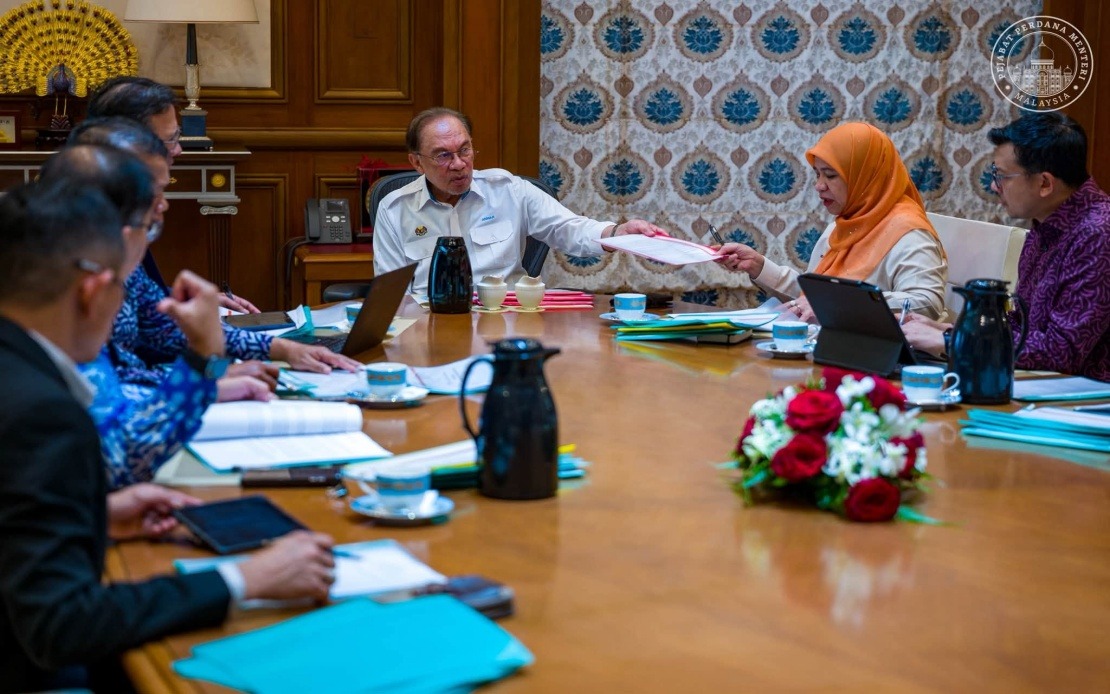
Prime Minister Datuk Seri Anwar Ibrahim has called for the Federal Land Development Authority to accelerate its approach toward resolving entrenched difficulties confronting settlers, with particular emphasis on second-generation housing provisions and land ownership clarifications. Through a social media announcement, Anwar stressed that these challenges require immediate and substantive intervention rather than indefinite postponement, signalling his administration's determination to place settler welfare at the centre of FELDA policy reform.
The issues facing FELDA communities have accumulated over decades, creating complex legal and administrative tangles for residents seeking to secure housing and clarify ownership rights. Second-generation beneficiaries—children of original FELDA participants—have faced particular difficulty establishing their entitlements, as the original settlement frameworks did not adequately anticipate inheritance and succession complications. These challenges have resulted in prolonged uncertainty for families hoping to pass assets to their children or secure formal title to their properties.
Anwar's intervention reflects broader recognition within government that FELDA's structures require modernisation to address contemporary settlement realities. The Authority, established to facilitate agricultural development and rural settlement, now manages a portfolio encompassing hundreds of thousands of residents across multiple generations, many of whom are no longer primarily agricultural workers. This demographic and economic evolution has exposed gaps in the original legislative and administrative architecture.
In his statement, Anwar emphasised the necessity of thorough problem analysis preceding solution implementation. He advocated for a methodical approach whereby each difficulty receives careful examination before structured remedies are developed and deployed. This framing suggests government recognition that ad hoc interventions have proven insufficient, and that sustainable resolution demands comprehensive policy recalibration rather than incremental adjustments.
The MADANI Government's platform has positioned FELDA settler welfare as a priority, particularly among constituencies where agricultural communities maintain significant influence. Approximately 110,000 FELDA families occupy settlement schemes across Peninsular Malaysia and Sabah, representing a substantial electoral constituency with historical connections to ruling coalitions. Housing instability and property ownership uncertainty within this demographic carries both humanitarian and political dimensions.
Second-generation land ownership represents perhaps the most technically complex issue within this suite of challenges. Many original FELDA schemes were allocated on life-tenancy or conditional ownership bases, with reversion clauses or succession provisions that failed to account for familial aspirations spanning decades. When first-generation settlers pass away, their descendants frequently discover that promised inheritance rights are either unclear, statutorily limited, or contingent upon conditions they cannot satisfy. This legal uncertainty has prevented many families from accessing credit, securing formal mortgages, or making long-term housing investments.
Housing deficiencies compound ownership complications. Numerous FELDA residential structures, constructed during earlier development phases, have deteriorated substantially or become inadequate for contemporary family requirements. Renovation and reconstruction options have historically been constrained by unclear tenure arrangements and limited funding mechanisms. Residents face a paradox: they lack secure enough ownership to justify major capital investment, yet inadequate housing undermines their quality of life and economic productivity.
The Prime Minister's public commitment indicates that FELDA reform will receive elevated bureaucratic attention in coming months. Resolving these issues demands coordination across multiple government agencies, including the Land and Mines Office, the Ministry of Agriculture and Food Security, state authorities, and FELDA administration itself. Successfully navigating this institutional complexity requires clear directives from political leadership and sustained commitment despite competing government priorities.
For Malaysian and regional observers, FELDA's predicament illustrates broader questions about sustainability and equity within rural development frameworks. Many Southeast Asian nations operate similar settlement schemes designed to redistribute land and facilitate rural livelihood improvement. As these programmes mature and beneficiary populations age, similar succession and ownership complications will likely emerge elsewhere across the region, making Malaysia's approach instructive for policymakers elsewhere.
Implementing practical solutions will require balancing multiple objectives: protecting settler interests, maintaining FELDA's institutional sustainability, respecting legislative frameworks, and managing government resource constraints. Options potentially under consideration might include revised succession provisions allowing clearer hereditary transfers, equity buyback mechanisms permitting government acquisition of settler interests at fair valuations, enhanced housing improvement financing, or hybrid ownership models combining individual title with community stewardship arrangements.
The timing of Anwar's intervention suggests government awareness that FELDA stakeholder patience has limits. Settler organisations have periodically mobilised to demand policy reform, and unresolved grievances have accumulated across multiple electoral cycles. By positioning FELDA resolution as a cabinet priority, Anwar signals both recognition of historical neglect and intention to demonstrate governance effectiveness through tangible settler-focused outcomes.
Successful FELDA reform would represent a significant policy accomplishment, affecting hundreds of thousands of rural households while addressing both immediate hardship and longer-term structural issues within agricultural settlement frameworks. The coming months will reveal whether government commitment translates into concrete mechanisms and timely implementation.

