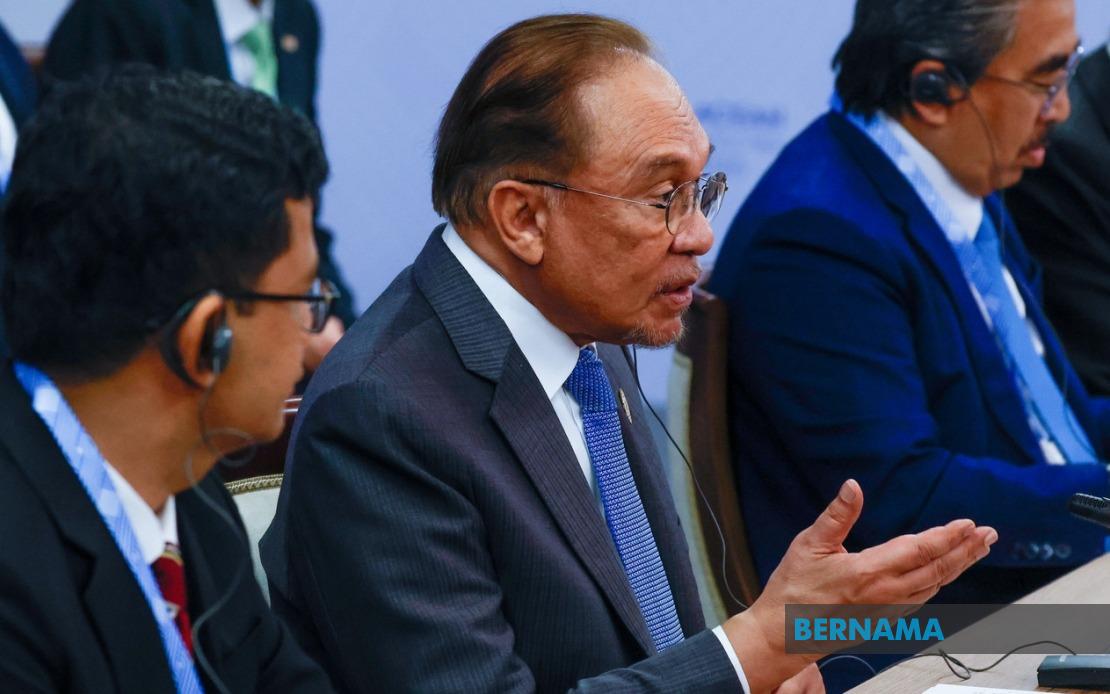
Prime Minister Datuk Seri Anwar Ibrahim has publicly acknowledged Russian President Vladimir Putin's foreign policy approach during high-level discussions held in Kazan this week, signalling Malaysia's respect for Moscow's handling of two of the most contentious Middle Eastern questions facing the international community. The bilateral meeting underscored the strengthening relationship between Kuala Lumpur and Moscow at a time when global powers are increasingly divided over regional conflicts and strategic partnerships in Asia and beyond.
During his opening remarks at Wednesday night's engagement, Anwar specifically highlighted Russia's steadfast commitment to supporting a ceasefire in Gaza and its diplomatic approach to the Iranian situation. He characterised these positions as both principled and consistent, qualities he suggested were increasingly rare in contemporary international relations where expedient shifts in policy often reflect domestic political pressure or shifting economic interests. The Malaysian leader's choice to single out these issues publicly suggests that Kuala Lumpur views alignment with Moscow's perspective as strategically important for its own regional positioning.
Anwar went further by extending his commendation beyond Malaysia's borders, noting that many nations and their peoples similarly valued Putin's demonstrated conviction and tenacity on these matters. This rhetorical move positioned Malaysia not as an outlier but as part of a broader international consensus that appreciates Russia's refusal to compromise its stated principles for short-term diplomatic convenience. Such language carries weight in multilateral forums and bilateral relationships, where perceptions of principled leadership can enhance a nation's credibility and influence.
The Gaza conflict, which has dominated international headlines and diplomatic agendas for months, remains a litmus test for nations' foreign policies and their relationships with major powers. Russia has consistently advocated for immediate humanitarian access to Palestinian territories and a negotiated end to hostilities, positions that resonate with Malaysia's own historical stance on Palestinian rights and its non-aligned foreign policy tradition. Moscow's refusal to align with Western pressure on the issue has made it an important reference point for nations seeking to chart independent diplomatic courses.
Iran similarly represents a crucial focal point in regional geopolitics, with Russia maintaining its strategic partnership with Tehran while simultaneously calling for dialogue rather than military escalation. This balancing act requires careful diplomacy and clear strategic vision, qualities that Anwar appeared to acknowledge in his remarks. For Malaysia, Russia's approach offers a template for how regional powers might engage with complex security challenges without being drawn into zero-sum confrontations orchestrated by larger global players.
The bilateral meeting in Kazan carries broader implications for Malaysia's place within emerging power networks and non-aligned coalitions. By publicly endorsing Russia's diplomatic stances, Malaysia reinforces its commitment to independent foreign policymaking and its resistance to pressure from Western powers to adopt particular positions on Middle Eastern affairs. This alignment does not indicate uncritical support but rather reflects a shared interest in preserving space for nations to develop their own foreign policy frameworks based on national interest rather than external pressure.
Russia has invested considerable diplomatic capital in maintaining its position on Gaza, including through vetoes at the United Nations Security Council and sustained messaging through international forums. The consistency Anwar praised is not accidental but reflects Moscow's long-term strategic calculations about its role in global affairs and its relationships with major actors in the Middle East, including both Arab states and Iran. For smaller nations like Malaysia, observing how larger powers maintain principled positions despite countervailing pressure offers valuable lessons in diplomatic resilience.
The humanitarian dimension underlying both the Gaza and Iran issues cannot be overstated. Malaysia, a Muslim-majority nation with significant diaspora communities and economic interests throughout the Middle East, has clear humanitarian imperatives driving its foreign policy on these questions. Russia's advocacy for humanitarian corridors and protection of civilian populations aligns with Malaysian values and concerns, creating natural points of convergence in bilateral and multilateral discussions.
Anwar's public appreciation during the bilateral meeting also reflects Malaysia's broader diplomatic strategy of cultivating relationships with multiple power centres. As Western influence faces questions and evolving challenges in Asia-Pacific affairs, Malaysia seeks to maintain productive relationships with Russia while preserving its partnerships with other major players. The careful articulation of shared values and consistent positions serves this balancing act, allowing Malaysia to engage substantively with Moscow without appearing to break ranks with other important partners.
The timing of this bilateral engagement also matters within the context of evolving regional dynamics and the roles various powers play in shaping Southeast Asia's future. Malaysia's willingness to publicly endorse Russia's diplomatic approach signals to regional partners and global audiences that Kuala Lumpur takes seriously the need for multipolar approaches to international challenges. The Gaza and Iran situations serve as testing grounds for whether international law, humanitarian principles, and genuine dialogue can prevail over military might and economic coercion.
Looking forward, Anwar's remarks are likely to influence how Malaysia engages on these issues within ASEAN forums, the UN, and bilateral relationships with other nations. By establishing clear alignment with Russia's principled positions, Malaysia strengthens its hand when advocating for particular outcomes in multilateral negotiations. This diplomatic move also serves domestic constituencies in Malaysia that feel strongly about Palestinian rights and regional stability.
The bilateral meeting between Anwar and Putin represents more than a ceremonial exchange; it reflects genuine strategic calculations about how Malaysia can best serve its national interests while contributing to more balanced and equitable international governance. Russia's willingness to maintain consistent positions on Gaza and Iran, despite significant international pressure and economic consequences, provides a model that appeals to nations seeking to exercise genuine foreign policy autonomy. Malaysia's public recognition of this approach strengthens ties between the two countries while positioning Kuala Lumpur as a serious actor capable of independent diplomatic judgment in increasingly complex global circumstances.

%22%2F%3E%3C%2Fpattern%3E%3C%2Fdefs%3E%3Crect%20width%3D%22100%25%22%20height%3D%22100%25%22%20fill%3D%22url(%23ph1354vg)%22%2F%3E%3Crect%20width%3D%22100%25%22%20height%3D%22100%25%22%20fill%3D%22url(%23ph1354vp)%22%2F%3E%3Ctext%20x%3D%2250%25%22%20y%3D%2250%25%22%20text-anchor%3D%22middle%22%20dominant-baseline%3D%22central%22%20fill%3D%22rgba(255%2C255%2C255%2C0.95)%22%20font-family%3D%22Georgia%2C%20'Times%20New%20Roman'%2C%20serif%22%20font-weight%3D%22700%22%20font-size%3D%22320%22%20letter-spacing%3D%22-0.02em%22%3EGRS%3C%2Ftext%3E%3C%2Fsvg%3E)