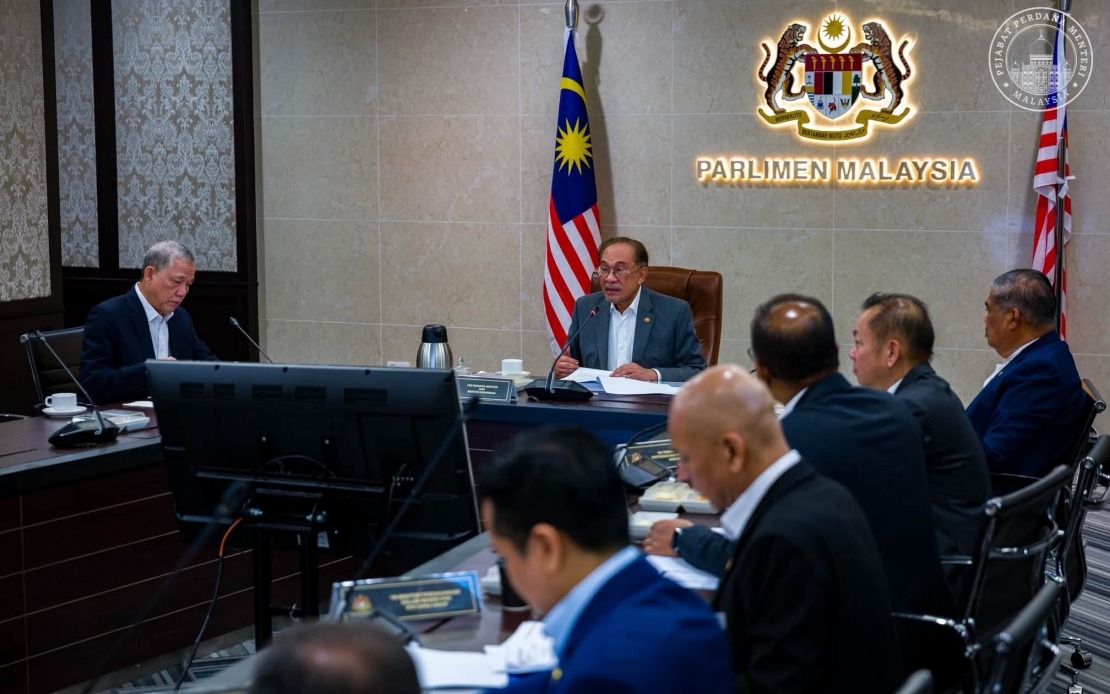
Prime Minister Datuk Seri Anwar Ibrahim has launched a comprehensive government response to the looming Super El Niño phenomenon, directing the Ministry of Agriculture and Food Security to develop and implement protective measures before the climatic event arrives in November. The directive comes amid growing international concern over the weather phenomenon's potential to disrupt agricultural output across the Asia-Pacific region, with Malaysia facing particular vulnerability given its reliance on seasonal monsoons for crop cultivation and fisheries production.
The urgency of the Prime Minister's intervention reflects the scale of the challenge ahead. El Niño episodes typically trigger prolonged dry spells, elevated temperatures, and altered precipitation patterns that can devastate crop yields and livestock productivity. A super-strength version of this phenomenon carries amplified risks, potentially compounding the difficulties faced by smallholder farmers and fishing communities who operate with thin profit margins and limited adaptive capacity. By commissioning preparation ahead of the anticipated November onset, the government signals its commitment to proactive rather than reactive crisis management.
During the inaugural National Food Security Council Meeting of 2026, which Anwar chaired, the government emphasised the interconnected nature of contemporary food security challenges. The council's discussions ranged beyond drought mitigation to encompass bilateral fisheries cooperation with Thailand, recognising that food security in Malaysia depends partly on cross-border resource management and trade relationships. This holistic approach acknowledges that domestic production alone cannot guarantee food availability, particularly when external supply chains face disruption.
The Prime Minister explicitly instructed the agriculture ministry to accelerate the finalisation of mitigation proposals through established governmental channels while maintaining rigorous standards for food safety and quality. This dual mandate reflects a delicate balancing act: the government must act decisively to protect farmers' incomes and national production levels, yet cannot compromise on the safety and integrity of Malaysia's food supply. Such standards matter not only for consumer protection but also for export market access, as many international buyers impose stringent traceability and safety requirements.
Engagement with the fishing community emerged as a particular priority during council deliberations. Anwar stressed the necessity of sustained dialogue with fishermen to ensure their catch meets prescribed standards, indicating that compliance with international norms will remain essential even as the government supports industry resilience. For Malaysia's aquaculture and marine fisheries sectors, which contribute significantly to both domestic consumption and export revenues, maintaining quality standards during potential climate stress becomes strategically crucial.
Beyond immediate crisis response, the council addressed longer-term structural improvements to Malaysia's agrifood competitiveness. The government recognises that weathering El Niño requires not only temporary relief measures but also fundamental shifts in production methodology. This encompasses technology adoption, from precision irrigation systems and climate-resilient crop varieties to digital monitoring platforms that help farmers optimise resource use during water-scarce periods. Innovation in agricultural practices promises to enhance productivity while reducing vulnerability to climatic shocks.
The emphasis on best practices and technological advancement reflects global agricultural trends. Regions from India to the Philippines have successfully deployed drought-resistant seeds, soil moisture sensors, and data-driven farming techniques to mitigate El Niño impacts. Malaysia's agrifood sector, still heavily dependent on conventional methods in many areas, stands to benefit from systematic adoption of such approaches. The government's endorsement signals that public resources will likely flow toward farms and enterprises embracing modernisation.
For Malaysia's farming community—encompassing padi growers, livestock breeders, and plantation operators—the government's intervention provides some reassurance that their interests are prioritised at the highest policy level. However, the success of mitigation measures will ultimately depend on implementation speed and resource availability. Farmers typically require advance notice of new assistance schemes and sufficient preparation time to modify planting calendars or adopt new techniques. Delays in rolling out support could undermine their effectiveness.
The Super El Niño threat arrives as Malaysia navigates broader agricultural challenges, including labour shortages, land fragmentation, and price volatility in international markets. Climate stress will compound these existing pressures, potentially accelerating rural-to-urban migration if farming becomes increasingly unviable. Strategic investments in resilience today could therefore have broader economic and social ramifications, supporting rural communities' ability to sustain livelihoods in the face of mounting environmental pressures.
Regionally, Malaysia's preparations also have implications for Southeast Asian food security coordination. El Niño typically affects multiple countries simultaneously, creating region-wide supply constraints and price spikes. Thailand, Vietnam, and Indonesia face similar risks, and coordinated responses—such as the fisheries cooperation Anwar mentioned—become more valuable when individual nations pursue complementary strategies rather than competing desperately for scarce resources.
The government's timeline remains condensed, with only months before the November onset. The Ministry of Agriculture and Food Security must translate the Prime Minister's directive into concrete programmes, including possible input subsidies, insurance mechanisms, credit facilities for affected farmers, and accelerated adoption of climate-smart technologies. Success will require not only clear policy frameworks but also effective coordination between federal and state agricultural agencies, reliable financing channels, and farmer participation in planning and implementation processes.
Ultimately, Anwar's intervention exemplifies the imperative facing Southeast Asian governments as climate variability increases. Static agricultural systems prove increasingly inadequate; maintaining food security now demands anticipatory governance, investment in resilience, and sustained engagement with producer communities. Malaysia's response to the Super El Niño will test whether such principles can translate into measurable protection for the nation's farmers and food supply.

