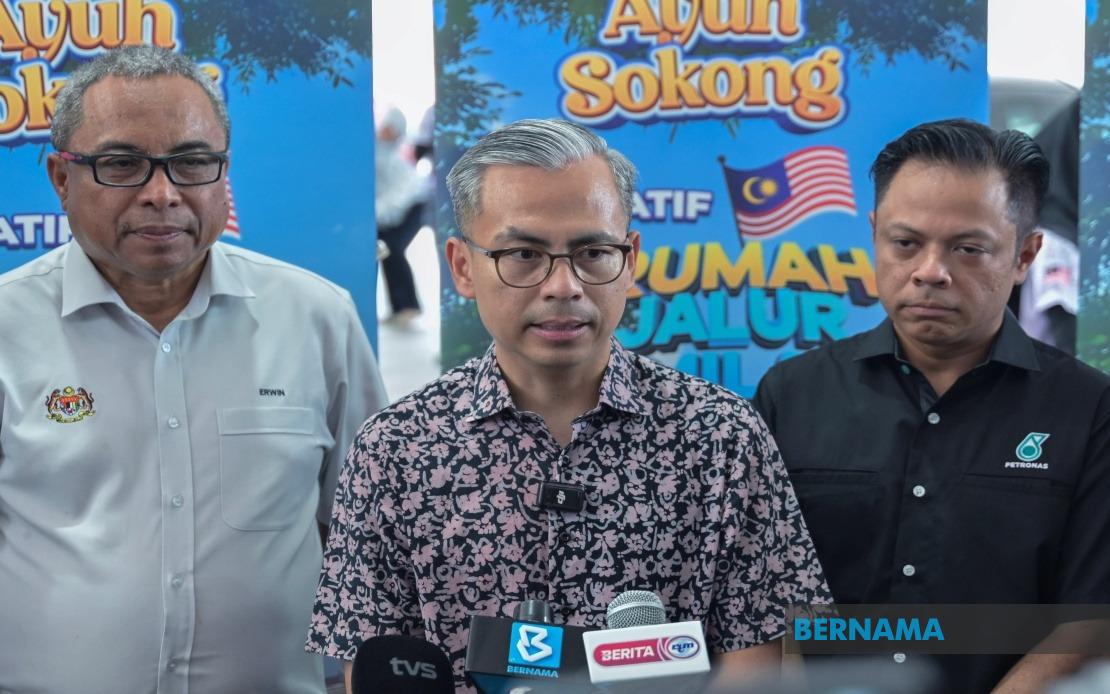
Prime Minister Datuk Seri Anwar Ibrahim has tasked the Election Commission with preparing an updated report on the anticipated redelineation of Sarawak State Legislative Assembly constituencies, signalling the MADANI Government's determination to push forward with expanding the chamber's composition. Government spokesman Datuk Seri Fahmi Fadzil disclosed that the Premier raised the matter during a recent Cabinet session, underscoring his personal commitment to seeing the proposal through to completion.
The redelineation initiative aims to add 17 new seats to the Sarawak State Legislative Assembly, increasing its total membership from 82 to 99 seats. This significant expansion represents one of the most substantial electoral boundary adjustments the state has witnessed in recent years and would reshape the political landscape of Malaysia's largest state by land area. The proposal was formally tabled through the Sarawak State Legislative Assembly (Composition of Membership) Bill 2025, which received initial backing from state leadership.
Fahmi clarified during his remarks to the press that while the Prime Minister has demonstrated clear resolve to execute the redelineation, no specific implementation timeline has been communicated to the Cabinet. The spokesman attributed this delay to outstanding information that remains pending from the Election Commission, suggesting the administrative machinery is still processing technical details necessary to proceed. This cautious approach reflects the complexity of redistricting exercises, which require careful demographic analysis, boundary mapping, and consultation with relevant stakeholders.
The initiative gained fresh momentum when two Cabinet ministers—Datuk Seri Nancy Shukri, the Minister of Women, Family and Community Development, and Datuk Seri Alexander Nanta Linggi, the Minister of Works—jointly advocated for the redelineation during the Cabinet deliberation. Their dual sponsorship underscores cross-party support for the measure and suggests it has secured backing beyond a single political faction, though the underlying motivations for the expansion remain subject to political speculation across Malaysia's fractious coalition landscape.
For Sarawak, the expansion holds tangible implications. Increasing legislative seats from 82 to 99 would ostensibly allow for more granular representation of the sprawling state's diverse constituencies, particularly in rapidly developing urban and semi-urban areas where demographic shifts have outpaced existing boundary configurations. The 17 additional seats would provide new opportunities for political representation and could potentially alter the competitive dynamics in future state elections, currently dominated by longstanding power structures that have governed Sarawak for decades.
The redelineation also reflects broader trends in Malaysian electoral management, where federal and state governments periodically undertake boundary reviews to ensure constituencies remain roughly equal in population and reflect contemporary settlement patterns. Such exercises often generate controversy, as opposition parties frequently allege that redistricting exercises favour incumbent administrations through gerrymandering—the deliberate manipulation of electoral boundaries to advantage specific political factions. However, proponents argue that timely redelineation ensures democratic representation remains equitable and responsive to demographic change.
Parallel to the Sarawak matter, Fahmi disclosed that his ministry is coordinating extensive preparations for the forthcoming Melaka state election, including logistical and technological infrastructure. The Communications and Multimedia Commission has been enlisted to collaborate with the Election Commission in mapping internet connectivity requirements at each polling station throughout Melaka. This coordination builds on institutional experience gained from recent elections in Johor and Negeri Sembilan, where similar digital infrastructure was established to facilitate reporting and election operations.
The emphasis on internet access at polling centres reflects modern electioneering standards, enabling faster data transmission, enhanced security protocols, and real-time coordination between polling stations and central election management authorities. For voters, reliable internet infrastructure supports smoother voting procedures and reduces administrative bottlenecks that could compromise the efficiency of the electoral process. For election observers, it facilitates independent monitoring and documentation.
The interweaving of the Sarawak redelineation initiative with active preparations for the Melaka state election illustrates the relentless electoral cycle characterizing Malaysian politics. Between federal, state, and occasional local elections, the country's political machinery remains in near-perpetual motion. The Anwar administration's simultaneous management of multiple electoral undertakings reflects the demanding administrative burden imposed by Malaysia's frequent electoral contests and the necessity for coordinated planning across numerous government agencies.
Looking ahead, observers will scrutinize the Election Commission's forthcoming report on Sarawak's redelineation proposal. The timing of any implementation could carry significant political weight, particularly if a state election in Sarawak coincides with or precedes the formal boundary changes. The interaction between demographic realities, administrative procedures, and political calculations will likely determine whether the expansion proceeds smoothly or encounters obstacles from parties questioning the exercise's equity and legitimacy.
The Sarawak redelineation remains emblematic of contemporary challenges in Malaysian electoral governance—balancing the technical imperatives of fair representation against the political sensitivities that inevitably accompany boundary adjustments. The Prime Minister's personal commitment and the Cabinet's engagement suggest the federal government views the matter as sufficiently important to warrant leadership-level attention, even as bureaucratic processes grind toward completion.

