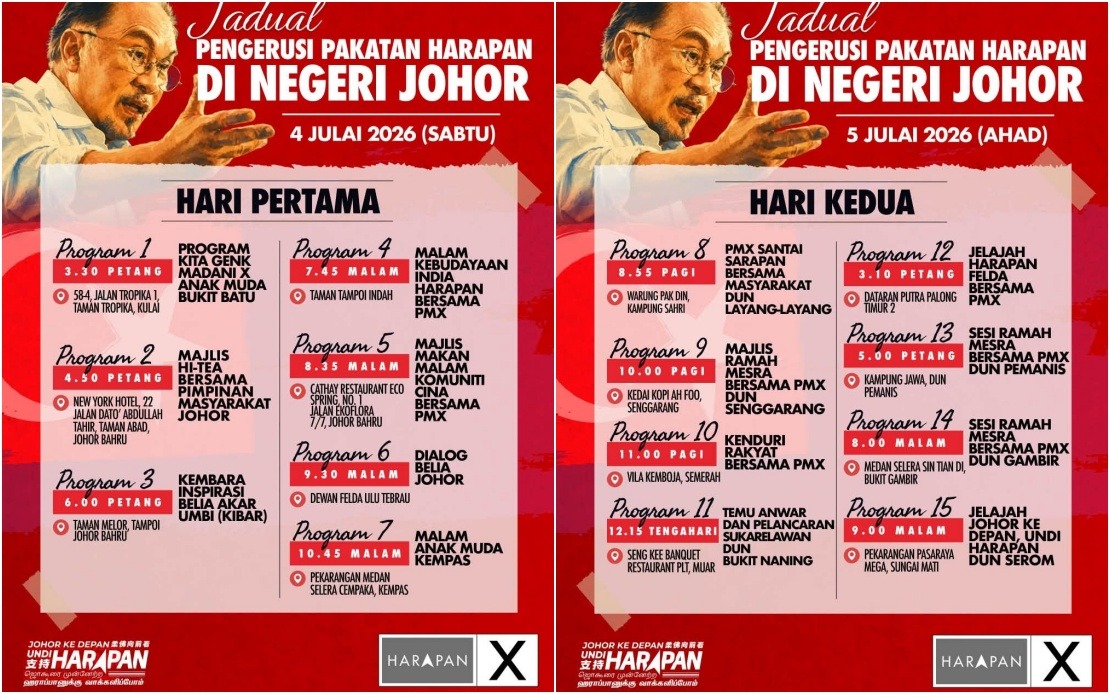
Pakatan Harapan chairman Datuk Seri Anwar Ibrahim is mounting an aggressive campaign push in Johor, committing to 15 separate events over the coming weekend as the coalition seeks to consolidate support ahead of the July 11 state election. The packed itinerary underscores the strategic importance of Johor, Malaysia's second-largest state by population and a traditional stronghold of opposition politics, where Anwar will personally champion 56 PH candidates vying for seats in the 16th state assembly.
The intensity of Anwar's weekend schedule reflects the high stakes surrounding the Johor contest. By appearing at community gatherings, cultural events, and grassroots dialogues across the state, the PH chairman aims to energise party machinery while reaching diverse constituencies—from Indian and Chinese community groups to youth assemblies and rural constituents. This multi-pronged approach demonstrates how contemporary Malaysian election campaigns increasingly rely on direct personal engagement by party leaders to build momentum in key battlegrounds.
Anwar's Saturday programme begins in the morning with a youth-focused initiative in Kulai, followed by a series of afternoon and evening commitments that span different demographic segments. The schedule demonstrates careful strategic planning, with cultural events—including an Indian cultural night and Chinese community dinner—interspersed with youth dialogues and grassroots engagement forums. This sequencing allows Anwar to address distinct voter blocs while maintaining media visibility throughout the day, ensuring comprehensive news coverage across different community-focused outlets.
The Sunday itinerary continues this strategic diversity, commencing with an early breakfast session with Layang-Layang constituents and progressing through meet-and-greet sessions, community feasts, and volunteer mobilisation events. Notably, several events specifically target Felda settlers, an economically vulnerable demographic that has historically swung between coalitions based on bread-and-butter concerns. By dedicating multiple programme slots to Felda communities in constituencies such as Semerah and various Felda settlement areas, PH signals its commitment to addressing rural economic anxieties—a persistent vulnerability for the coalition in past elections.
The geographical spread across Johor constituencies reveals PH's targeting strategy. Events concentrated in areas such as Kulai, Tampoi, Kempas, Senggarang, Semerah, and Serom suggest these represent either marginal seats where the coalition believes it can gain ground or safer territories requiring reinforcement. The inclusion of specific reference to volunteer launches and youth dialogue sessions indicates that beyond mere candidate endorsement, PH is attempting to rebuild grassroots organisational capacity—a critical factor in Malaysian state elections where ground-level mobilisation often determines close contests.
Anwar's personal investment of time across 15 events over just two days carries symbolic weight within Malaysian politics. As party chairman and de facto coalition leader, his direct participation signals confidence in PH's prospects while simultaneously elevating the profile of individual candidates who might otherwise struggle for media attention. For voters in smaller constituencies and rural areas, a visit from the national party leadership can substantially boost local candidate viability and party enthusiasm among volunteer networks.
The early voting scheduled for July 7 creates an additional strategic consideration for Anwar's weekend campaign blitz. With some voters casting ballots before the official polling day, the timing of these 15 events aims to capture maximum impact during the critical final weekend before early voting commences. This compressed timeline means the campaign intensity Anwar is deploying now represents a concentrated effort to peak PH momentum at precisely the moment when voters' minds are most focused on the upcoming election.
Johor's electoral significance extends beyond state-level implications. As Malaysia's largest opposition-governed state during certain periods, it serves as a barometer for broader peninsular political sentiment. The coalition's performance in Johor often signals the trajectory of subsequent federal-level political dynamics. A strong showing would boost PH's national morale and organisational confidence, while disappointing results could raise questions about coalition cohesion and electoral strategy heading into future contests.
The broad-based nature of Anwar's weekend schedule—encompassing youth, seniors, cultural minorities, rural communities, and volunteer networks—reflects lessons PH absorbed from previous electoral contests. Rather than concentrating solely on urban centres or specific demographic groups, the coalition is attempting comprehensive coverage of Johor's diverse voter base. This inclusive approach also serves to demonstrate PH's multiethnic credentials to an electorate increasingly conscious of representation and inclusion across Malaysia's plural society.
For Southeast Asian observers of Malaysian politics, Anwar's intensive weekend campaign illustrates how personal leadership visibility remains crucial even in an era of digital media and social networking. Despite Facebook invitations and online coordination platforms, the decision to conduct 15 in-person events demonstrates that traditional retail politics—handshakes, shared meals, personal remarks to community groups—continues to influence voter behaviour in Malaysian elections. This hybrid approach, combining digital reach with physical presence, has become standard practice among ambitious politicians across the region.
The campaign calendar shows Anwar maximising available time before polling day arrives. With voting set for July 11 and early polling on July 7, the coalition has compressed its final campaign window. Anwar's personal commitment to 15 events across weekend days suggests high-level confidence in PH's organisational capacity to rapidly mobilise events, arrange logistics across dispersed constituencies, and ensure media coverage keeps pace with the whirlwind schedule. Such operational capability reflects institutional maturity within the coalition.
Ultimately, Anwar's weekend blitz represents more than mere candidate support. It embodies a fundamental political message: that PH remains energised, organised, and confident enough in its prospects to deploy the coalition chairman's time across numerous grassroots encounters. For party workers and candidate volunteers, such visible commitment from top leadership can significantly enhance morale and sustained effort during the final campaign stretch. For voters undecided between coalitions, Anwar's personal presence at community events offers opportunity for direct interaction and impression formation that no media advertisement can fully replicate.

