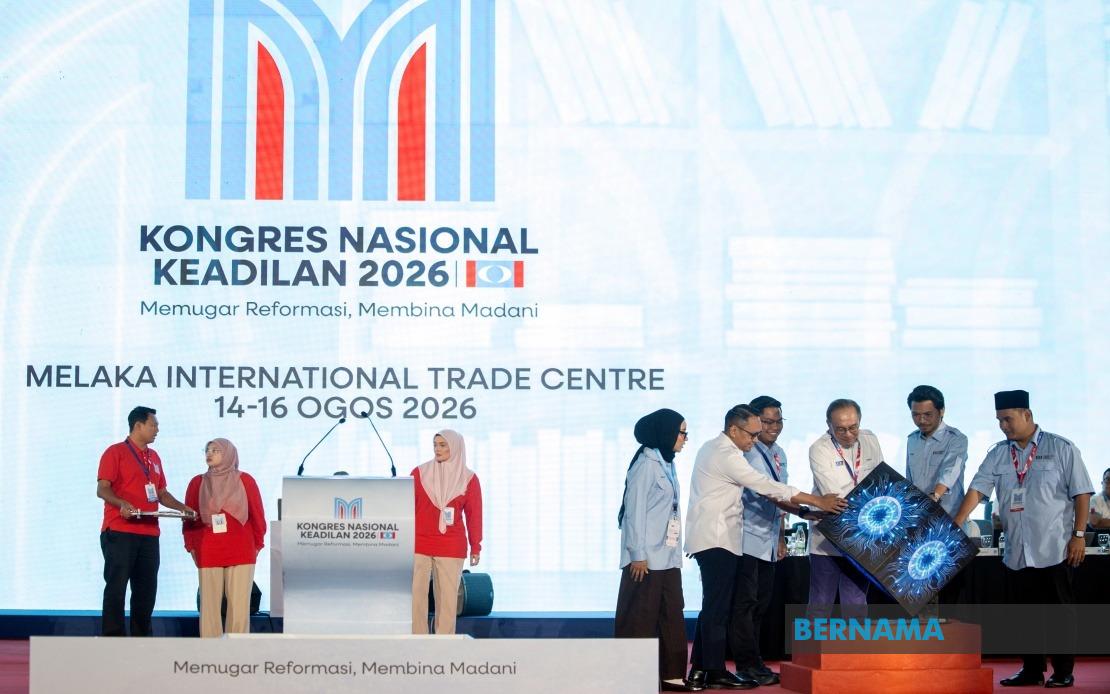
Prime Minister Datuk Seri Anwar Ibrahim has unveiled a comprehensive 113-page publication authored by Anak Muda Keadilan (AMK) in Melaka, positioning the resource as a crucial tool for developing principled party cadres grounded in the PKR's reformasi vision. The launch represents an effort by Malaysia's ruling coalition to institutionalise party ideology and transmit core values to younger members who will shape the country's political landscape in coming decades.
Authored collaboratively by AMK chief Muhammad Kamil Ahmad Munim and executive committee member Ashraf Ahmad Hadi, the publication addresses how the party's youth wing intends to grapple with the complex challenges facing contemporary Malaysia. Rather than offering superficial political messaging, the document attempts to articulate a substantive intellectual framework that connects historical struggle, ideological commitment, and practical governance approaches. This reflects broader efforts within PKR to distinguish itself from purely transactional politics by anchoring its work in deeper principles.
In his remarks at the launch, Anwar characterised the publication's timing as particularly significant, coinciding with important institutional developments within the party. He framed the initiative not as technical policy prescription or campaign rhetoric that might fade after electoral cycles, but as part of a broader project of civilisational renewal. This language suggests an ambition to reshape how Malaysia conducts national development by recentring human dignity and ethical considerations rather than treating governance as merely technical administration detached from moral moorings.
The Prime Minister issued a pointed challenge to young party members, reminding them that their current positions represent not privileges to be enjoyed but responsibilities demanding rigorous self-examination. He articulated a vision of youth leadership rooted in spiritual discipline and moral accountability rather than mere accumulation of power. This messaging appears designed to guard against the cynicism that has periodically afflicted Malaysian politics, where younger politicians have sometimes abandoned reform commitments upon gaining office.
Anwar emphasised that reconstructing a nation damaged by historical injustices and systemic leakages demands more from the younger generation than conventional political engagement. He called for extraordinary creativity, intellectual boldness, and spiritual fortitude, implying that superficial reforms or incremental adjustments will prove insufficient. This framing elevates the stakes of youth participation within PKR beyond normal party activity to something approaching a civilisational mission.
The publication serves multiple institutional functions within AMK and the wider party structure. Primarily, it functions as a cadre-building instrument intended to transmit party history, foundational principles, and ideological commitments to members who may lack deep engagement with PKR's origins during the reformasi movement. By creating a structured educational resource, the party attempts to ensure consistent messaging and ideological coherence across different wings and geographic locations.
Critically, the document encourages members to develop nuanced historical consciousness about the reformasi movement and its continuing relevance. Rather than allowing that history to become abstract or merely ceremonial, the publication pushes activists to understand how past struggles illuminate present challenges. This educational approach reflects a conviction that durable political movements require members grounded in movement history and committed to honouring the sacrifices of earlier reformers.
The emphasis on internalising the meaning of reformasi represents an implicit acknowledgement that the concept risks becoming diluted or instrumentalised as PKR has consolidated power within government. By investing in youth education around this core concept, party leadership appears concerned with maintaining ideological integrity and preventing the movement from becoming indistinguishable from the established political machinery. This tension between reformist origins and current governing role has long animated Malaysian politics.
For Malaysian political observers and Southeast Asian analysts, the publication highlights how regional political movements attempt to bridge the gap between idealistic founding missions and the pragmatic requirements of governance. PKR, having evolved from a civil resistance movement into a major governing party, faces persistent questions about whether reform commitments survive contact with ministerial office. The decision to systematically educate younger members in party ideology suggests leadership recognition that this challenge requires deliberate institutional effort rather than assuming continuity will occur naturally.
The framing of national development around humanisation rather than technocratic efficiency offers an implicit critique of previous governing approaches and positions PKR as offering alternative governance philosophy. Whether the party can operationalise these principles across diverse policy domains—from economic development to digital governance to environmental stewardship—will significantly influence both its internal cohesion and broader political legitimacy. The publication essentially charts aspirational terrain that the party will be measured against.
Youth movements within Southeast Asian political parties frequently struggle with questions of authentic commitment versus organisational convenience. AMK's effort to create structured ideological education suggests recognition that maintaining reformist energy within an aging political establishment requires intentional investment. Whether such initiatives can genuinely shape member behaviour or primarily serve symbolic functions remains an open question that Malaysian political development will help illuminate.

