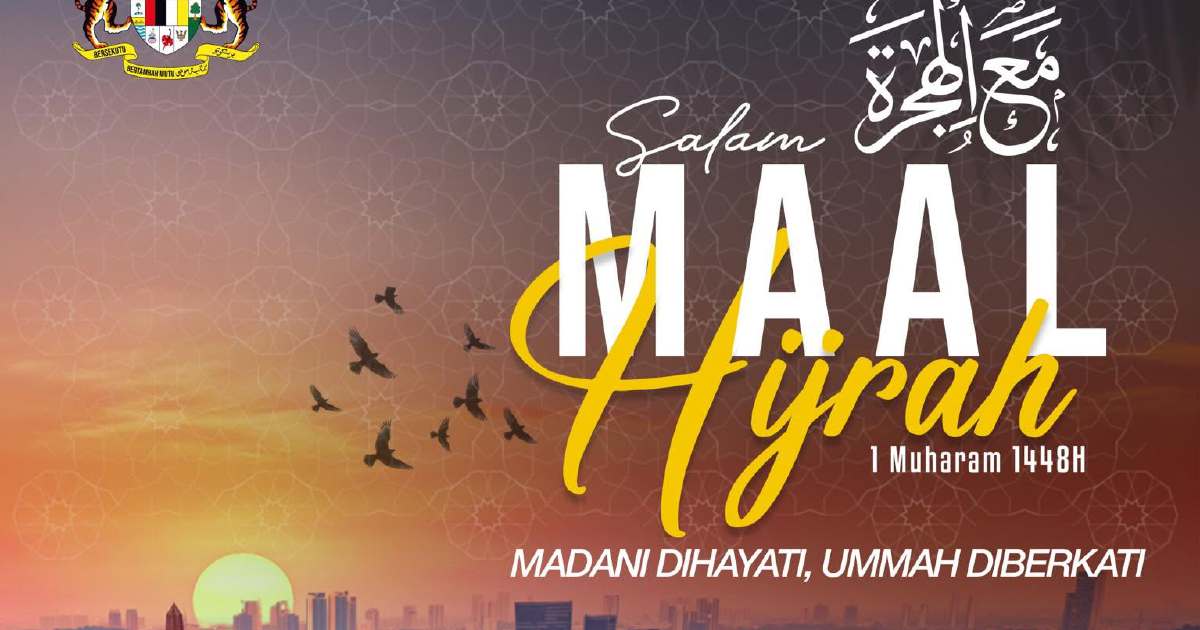
Prime Minister Datuk Seri Anwar Ibrahim has made a fresh appeal for Malaysians to adopt the spiritual and moral framework of Hijrah, positioning the concept as central to the nation's progress. The Islamic principle of Hijrah, traditionally understood as Prophet Muhammad's migration from Mecca to Medina in 622 CE, has been reinterpreted in contemporary Malaysian discourse as a metaphor for positive transformation and moral renewal. Anwar's articulation of this concept carries particular weight given Malaysia's multi-faith composition and his role as a leading voice in moderate Islamic governance within the Southeast Asian context.
The Prime Minister's invocation of Hijrah reflects an attempt to galvanise national unity around shared values rather than divisive sectarian lines. By emphasising truth, prosperity and security as the cornerstone virtues of this spiritual framework, Anwar appears to be constructing a narrative that transcends purely religious identity and speaks to fundamental human aspirations. The emphasis on truth resonates with ongoing concerns about misinformation and governance accountability in Malaysian public discourse, while prosperity addresses the economic anxieties that have dominated national conversation following years of challenging economic headwinds and cost-of-living pressures.
The invocation of security as a core Hijrah value takes on added significance in the current regional environment. Southeast Asia faces multifaceted security challenges ranging from transnational terrorism and maritime disputes to cyber threats and organised crime networks. By anchoring security within a spiritual and moral framework rooted in Islamic tradition, Anwar's framing offers a distinctive approach to nation-building that does not rely solely on military or law enforcement mechanisms. This approach acknowledges that genuine security encompasses social cohesion, institutional trust and cultural resilience—elements that require consensus and shared commitment across diverse communities.
The timing of this call warrants attention within Malaysia's political economy. The country continues recovering from the institutional disruptions of the preceding political era, marked by scandals and governance failures that eroded public confidence. Anwar's repeated emphasis on truth as a foundational value appears designed to contrast with that historical period and establish moral authority for his administration's renewal agenda. For Malaysian readers navigating headlines about corporate accountability, political reformation and judicial independence, this framing positions ethical conduct as non-negotiable rather than aspirational.
The concept of Hijrah also carries implications for how Malaysia positions itself within regional and global contexts. As ASEAN nations grapple with economic competition from larger powers and pressure to maintain the region's strategic autonomy, the invocation of transformation-oriented spiritual values provides a cultural counterpoint to purely material or geopolitical analysis. This approach is particularly relevant for Malaysia, which seeks to maintain its influence as a bridge between Islamic and Western-oriented societies while advancing its development agenda.
Prosperity, the second pillar of Anwar's framing, addresses concrete challenges facing Malaysian households. Inflation, employment volatility and asset price inflation have strained purchasing power across income groups. By linking prosperity to the Hijrah framework, the Prime Minister attempts to recast economic policy and business conduct as matters of spiritual obligation rather than technical management. This rhetorical move implicitly suggests that achieving prosperity requires moral consistency and ethical behaviour from political leaders, business actors and citizens alike—a more demanding but potentially more durable foundation than purely technocratic approaches.
The emphasis on security gains additional resonance given regional developments. Southeast Asia's trade corridors, financial systems and digital infrastructure face coordinated pressures from state and non-state actors. Framing security as rooted in moral and spiritual foundations rather than solely in military capability acknowledges that genuine stability depends on social trust, institutional legitimacy and shared cultural understanding. For Malaysia specifically, which hosts diverse communities and has experienced communal tensions in its history, this approach offers a unifying narrative that does not privilege any single identity group.
Anwar's appeal also reflects his established theological and intellectual tradition. His previous extensive engagement with Islamic jurisprudence, interfaith dialogue and progressive interpretations of Islamic governance provides intellectual depth to what might otherwise appear as abstract rhetoric. This background lends credibility to his invocation of Hijrah as something beyond political symbolism—it reflects considered thought about how Islamic principles can inform inclusive governance in a plural democracy. For Malaysians accustomed to seeing Islam deployed in narrower or more divisive ways, this framing offers an alternative model with potential broader appeal.
The call to embrace Hijrah values extends beyond governmental action to encompass societal transformation. By positioning the concept at a cultural and spiritual level rather than purely at policy level, Anwar invites broad segments of Malaysian society—business leaders, educators, community organisers, civil servants and citizens—to participate in the renewal effort. This distributed responsibility for upholding truth, prosperity and security creates a more participatory vision of national development than top-down policy implementation alone. For a nation seeking to rebuild institutional trust following years of governance turbulence, such cultural mobilisation may prove as important as any single policy initiative.

%22%2F%3E%3C%2Fpattern%3E%3C%2Fdefs%3E%3Crect%20width%3D%22100%25%22%20height%3D%22100%25%22%20fill%3D%22url(%23ph1354vg)%22%2F%3E%3Crect%20width%3D%22100%25%22%20height%3D%22100%25%22%20fill%3D%22url(%23ph1354vp)%22%2F%3E%3Ctext%20x%3D%2250%25%22%20y%3D%2250%25%22%20text-anchor%3D%22middle%22%20dominant-baseline%3D%22central%22%20fill%3D%22rgba(255%2C255%2C255%2C0.95)%22%20font-family%3D%22Georgia%2C%20'Times%20New%20Roman'%2C%20serif%22%20font-weight%3D%22700%22%20font-size%3D%22320%22%20letter-spacing%3D%22-0.02em%22%3EGRS%3C%2Ftext%3E%3C%2Fsvg%3E)