%22%2F%3E%3C%2Fpattern%3E%3C%2Fdefs%3E%3Crect%20width%3D%22100%25%22%20height%3D%22100%25%22%20fill%3D%22url(%23ph31yw6g)%22%2F%3E%3Crect%20width%3D%22100%25%22%20height%3D%22100%25%22%20fill%3D%22url(%23ph31yw6p)%22%2F%3E%3Ctext%20x%3D%2250%25%22%20y%3D%2250%25%22%20text-anchor%3D%22middle%22%20dominant-baseline%3D%22central%22%20fill%3D%22rgba(255%2C255%2C255%2C0.95)%22%20font-family%3D%22Georgia%2C%20'Times%20New%20Roman'%2C%20serif%22%20font-weight%3D%22700%22%20font-size%3D%22272%22%20letter-spacing%3D%22-0.02em%22%3EAnwar%3C%2Ftext%3E%3C%2Fsvg%3E)
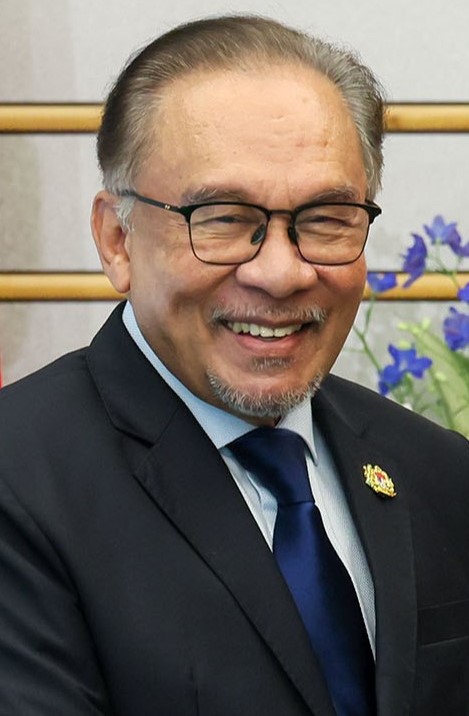
Prime Minister Anwar Ibrahim took centre stage on 22 June 2026 to introduce Pakatan Harapan's complete slate of candidates for the 16th Johor State Election at Padang Bukit Gambir Extreme Park. The evening gathering represented a pivotal moment in the coalition's campaign strategy, signalling its readiness to contest every state seat and mobilize its organizational machinery ahead of polling day. The event's timing and venue selection underscored the coalition's determination to make a forceful case to Johor voters, a state that has historically been politically contested and strategically significant for Malaysia's ruling coalition.
The announcement ceremony centred on themes of renewal and accountability, with coalition leaders framing the coming election as a referendum on governance standards and economic delivery. Anwar articulated a vision in which political parties exist fundamentally to serve constituents rather than entrench institutional power, a rhetorical positioning that carries particular resonance in Johor where voters have demonstrated willingness to shift allegiance based on performance perceptions. The prime minister's emphasis on strengthening communities and creating tangible opportunities for youth reflected broader concerns within the state about economic mobility and the quality of available employment for younger generations facing inflationary pressures and cost-of-living challenges.
The Malaysia Madani framework served as the intellectual scaffolding for Pakatan Harapan's campaign messaging, with organizers emphasizing four interconnected pillars: unity, integrity, compassion, and progress. This formulation attempts to position the coalition as transcending narrow partisan interests in favour of a comprehensive national vision that resonates across demographic lines. For Malaysian observers, the invocation of this framework signals continuity with Anwar's broader governance agenda while allowing the coalition to differentiate itself from potential opposition narratives that might emphasize divisiveness or self-interested politics.
Johor's political significance extends beyond its size or electoral representation. As Malaysia's southernmost state and home to major industrial and port infrastructure, its governance trajectory influences perceptions of federal policy effectiveness and coalition cohesion. Voters in Johor have demonstrated sophisticated political judgment, punishing incumbent governments perceived as complacent and rewarding those offering credible reform agendas. The comprehensive candidate announcement represented Pakatan Harapan's attempt to project organizational confidence and demonstrate that it had developed a deep bench of capable administrators ready to serve at the state level.
The emphasis on inclusive governance carried particular importance given Malaysia's ongoing navigation of plural democracy and the necessity of maintaining coalition unity across parties with distinct constituencies and policy preferences. Johor presents a microcosm of this challenge, containing diverse urban centres, manufacturing hubs, agricultural communities, and fishing villages, each with distinct economic interests and political expectations. Pakatan Harapan's candidates would need to articulate how the coalition's platform addressed these varied concerns while maintaining coherent policy direction.
Anwar's framing of political service around youth opportunity creation resonated with demographic realities facing Johor and Malaysia broadly. Youth unemployment, wage stagnation relative to cost inflation, and limited affordable housing have emerged as persistent grievances capable of shifting electoral outcomes. The coalition's messaging on this front positioned it as solution-oriented, though delivering tangible results would require sustained commitment beyond campaign rhetoric and would demand coordination between state and federal authorities operating under different political parties in some districts.
The integrity dimension of the Malaysia Madani platform carried implicit acknowledgment of past controversies surrounding political funding, corporate patronage networks, and allegations of governmental capture by narrow interests. By centering integrity in its Johor campaign, Pakatan Harapan sought to reclaim moral authority on anti-corruption positioning while accepting the burden of proving its own adherence to stated standards. Johor voters, having experienced various administrations, possessed the experiential basis to assess claims against actual governance performance.
The candidate announcement event also functioned as a mobilization exercise for party machinery and grassroots supporters. Unveiling the full slate publicly allowed activists to begin targeted engagement with voters in specific constituencies, permitted candidates to establish their local profiles, and created momentum around coalition activity that could sustain itself through the election campaign period. The scale of the gathering demonstrated organizational capacity and conveyed confidence to both supporters and potential swing voters.
Looking toward the election itself, Pakatan Harapan faced the dual challenge of consolidating existing support while expanding its coalition in Johor. The state had previously swung between ruling coalitions, indicating that electoral outcomes remained genuinely competitive. The candidate announcement represented the coalition's formal declaration of intent to contest comprehensively for state control, backed by what organizers positioned as the strongest available talent and a coherent vision aligned with national governance frameworks. Whether this positioning would prove persuasive to Johor voters would ultimately depend on how effectively individual candidates translated campaign commitments into tangible improvements in their constituencies during the election period and the broader policy environment surrounding the contest.