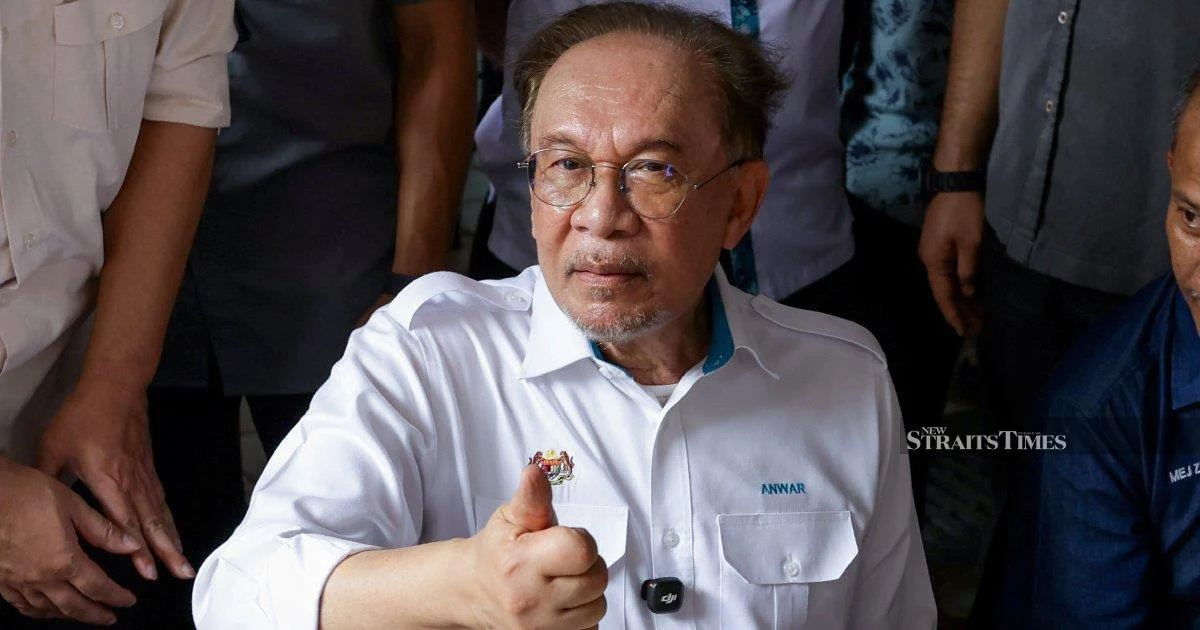
Prime Minister Datuk Seri Anwar Ibrahim has consolidated his position as Malaysia's most popular political leader, commanding the strongest approval ratings in the latest Merdeka Centre public opinion survey. The findings underscore a significant gap between the premier and other senior figures in the political establishment, reflecting broader public sentiment toward his administration's performance and leadership trajectory.
The Merdeka Centre survey captures voter sentiment at a critical juncture for Malaysia's government, which faces mounting pressure from economic headwinds, cost-of-living concerns, and the complex task of managing coalition politics. For Anwar, these positive approval metrics provide important political capital as his administration navigates internal pressures from coalition partners and prepares for what many analysts expect could be electoral contests in coming years. The strength of his personal standing appears somewhat insulated from the day-to-day challenges facing his government, suggesting his appeal transcends party lines.
Where polling data becomes particularly revealing is in the comparative rankings among top leaders. The survey demonstrates that support is heavily concentrated at the apex of the political hierarchy, with substantial differences emerging between the prime minister and other cabinet-level figures. These disparities highlight the personalised nature of Malaysian politics, where individual leader popularity can fluctuate independently of institutional approval or party support. The concentration of approval around Anwar suggests voters may be responding to his personal attributes, experience, and perceived leadership qualities rather than distributing support more evenly across the government.
The positioning of Deputy Prime Minister Datuk Seri Zahid Hamidi at the lower end of the rankings warrants particular scrutiny. Zahid, a senior figure in the ruling coalition with his own substantial political constituency within UMNO, appears to have struggled in public perception. This divergence between his formal authority and public esteem raises questions about the effectiveness of his communications strategy, the impact of his historical legal challenges, or potential friction within the cabinet that may be registering with voters. For UMNO specifically, the gap between Anwar's and Zahid's ratings suggests the prime minister may be attracting support from constituencies beyond his PKR base.
Merdeka Centre surveys have traditionally served as reliable indicators of public sentiment in Malaysia, and this latest iteration carries weight precisely because it captures real-time reactions to government performance. The timing of such polls matters enormously in Malaysia's political calendar, influencing calculations about election readiness, coalition stability, and leadership contests within parties. If Anwar's dominance in approval ratings persists, it strengthens his negotiating position within the Pakatan Harapan-UMNO-BN coalition and potentially shields his leadership from internal challenges.
From a regional perspective, Malaysia's leadership approval dynamics offer insights into how Southeast Asian voters respond to government action. Anwar's high ratings despite economic challenges suggest that Malaysian voters may be rewarding perceived stability, personal competence, or comparative performance relative to expectations rather than absolute economic outcomes. This pattern aligns with voting behaviour observed in other ASEAN nations, where leadership personality often matters as much as policy delivery in determining electoral support.
The survey results also carry implications for Malaysia's political opposition. The Democratic Action Party, Amanah, and other Pakatan Harapan components benefit from association with a popular prime minister, though the concentration of approval around Anwar personally rather than his coalition may constrain benefits to individual party members. For the opposition, these findings underscore the challenge of building an alternative narrative when the government's principal figurehead commands broad public backing. The opposition may need to pivot toward policy differentiation rather than character-based attacks on the prime minister.
Cabinet composition and ministerial effectiveness often correlate with leader approval ratings, yet the Merdeka Centre data suggests uneven distribution of public confidence. This disparity could reflect several dynamics: the visibility and media coverage different ministers receive, their perceived competence in their portfolio areas, or lingering reputational concerns. For the government's legislative and policy agenda, the concentration of approval around Anwar potentially means citizens are more willing to support initiatives bearing his personal endorsement than those championed by lower-rated colleagues.
The political economy of these approval ratings deserves consideration. Malaysia faces persistent inflation, wage stagnation in certain sectors, and inequality concerns that have animated political discourse. Anwar's relatively strong positioning despite these headwinds suggests voters may be giving credit for perceived efforts to address structural problems, or that his administration has successfully managed expectations and blame allocation. Alternatively, the ratings may reflect a "honeymoon period" that could erode if economic conditions deteriorate further.
Looking forward, the Merdeka Centre findings establish a baseline for monitoring whether Anwar's approval trajectory remains stable, climbs further, or begins declining. In Malaysian politics, such shifts often precede significant political events—election calls, leadership contests, or coalition reshuffles. The current survey thus represents a snapshot of sentiment that will likely inform strategic calculations by all major political players in coming months.

