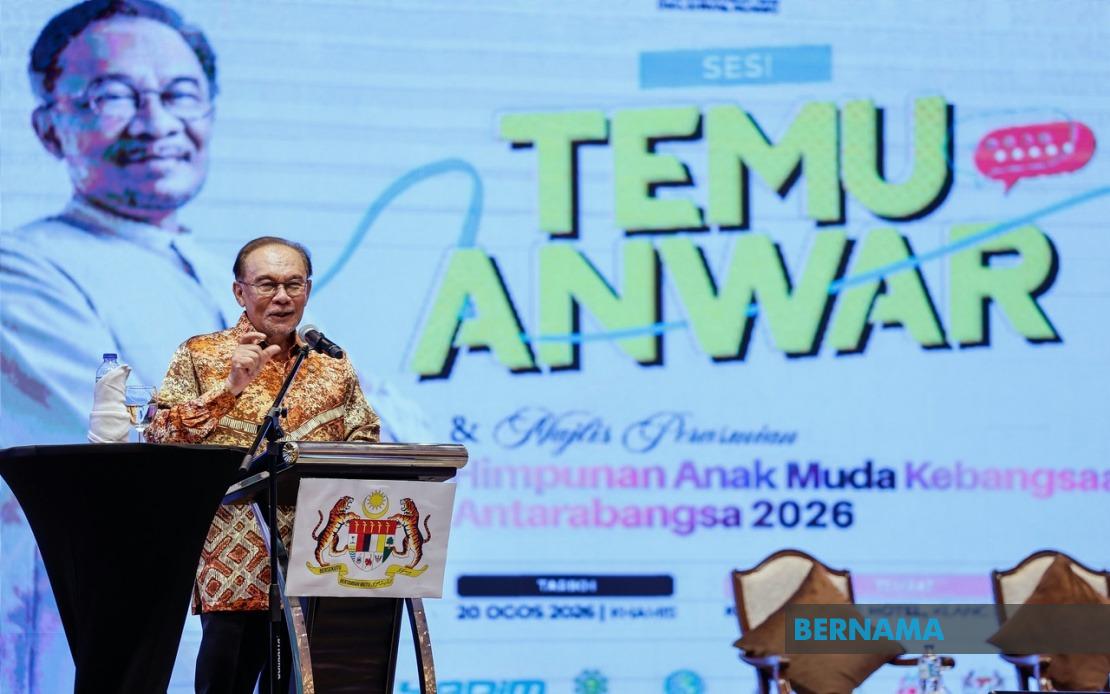
Prime Minister Datuk Seri Anwar Ibrahim has signalled that major policy announcements are in the pipeline, with three distinct occasions set for revealing government initiatives across the coming weeks. Speaking at a youth engagement session in Klang on Wednesday, the Prime Minister indicated that an announcement would precede the National Day celebrations on August 30, a second would coincide with Malaysia Day festivities on September 16, and a third would accompany the Budget presentation in early October. The timing of these reveals, clustered around significant national occasions, suggests the government is strategically framing its policy direction around moments of national reflection and unity.
The Prime Minister did not elaborate on the specifics of these announcements, maintaining an air of anticipation rather than disclosure. His remarks came during the Temu Anwar session held in conjunction with the opening ceremony of Himpunan Anak Muda Antarabangsa, commonly known as HAMKA 2026. The sequential nature of these announcements indicates a phased rollout of government priorities, with the Budget presentation likely to crystallise the financial commitments underlying the earlier policy statements. This approach mirrors previous government strategies of building momentum through carefully timed revelations rather than comprehensive disclosure.
The immediate context for these announcements stems from growing concerns about youth welfare, particularly those engaged in the gig economy. A student participant at the session raised questions about government efforts to protect workers in the informal and platform-based economy, a segment that has grown substantially across Malaysia and the wider region. The gig economy now encompasses millions of workers ranging from ride-share drivers and food delivery personnel to freelance professionals and digital service providers. The government's commitment to this demographic carries political significance, as young voters increasingly depend on such work arrangements for their livelihoods.
The government has already moved to establish the Malaysian Gig Economy Commission, known as SEGiM, as a dedicated institution to address the sector's unique challenges and protections. Complementing this institutional framework, a new bill concerning small businesses is under development, which is expected to provide clearer regulatory structures and protections for those operating in informal economic spaces. These measures reflect an acknowledgment that traditional labour frameworks, designed for permanent employment relationships, are inadequate for workers in the gig economy. The commission's establishment indicates the government is taking a structured approach rather than ad hoc policymaking.
However, Anwar acknowledged that existing assistance mechanisms for gig economy workers remain insufficient in the eyes of many beneficiaries. This candid assessment reflects the tension between government capacity and the scale of demand from a rapidly growing workforce segment. The recognition that current support falls short suggests that future announcements may include enhanced social protections, insurance schemes, or income support mechanisms designed to provide financial security for gig workers. Such measures would be particularly relevant for Malaysian readers, as the country's gig economy has expanded dramatically post-pandemic, with an estimated two million workers engaged in platform-based work.
For young entrepreneurs seeking to launch businesses, the government has indicated it will expand access to financing through existing mechanisms like the National Entrepreneurial Group Economic Fund, commonly referred to as TEKUN. The Prime Minister specifically highlighted that the current requirement for applicants to demonstrate an existing business track record before accessing financing should be reconsidered. This prerequisite, while intended to reduce lending risk, effectively excludes fresh graduates and young first-time entrepreneurs who lack prior commercial experience. Removing or easing this barrier would align government policy with international best practices, where startup financing is explicitly designed to bootstrap early-stage ventures without requiring historical performance data.
Anwar's statement that the government would "listen and look into the matter" suggests that policy adjustments on financing accessibility are under active consideration. The Prime Minister framed this within a broader acknowledgment that economic conditions and employment trends have shifted since existing frameworks were established. This contextual approach indicates sensitivity to the gap between policy design and economic reality. For Malaysia's growing startup ecosystem and younger workforce, changes to TEKUN's eligibility criteria could unlock significant capital for entrepreneurial ventures, potentially stimulating job creation and economic diversification in sectors beyond traditional manufacturing and services.
The sequencing of announcements around August 30, September 16, and early October appears deliberate. The eve of National Day traditionally carries symbolic weight, making it an appropriate moment for announcements affecting national prosperity and citizen welfare. Malaysia Day on September 16 commemorates the formation of the federation and carries particular resonance in East Malaysia, making it suitable for announcements affecting regional development or unity-focused initiatives. The Budget presentation in early October provides the fiscal anchor for turning policy promises into budgetary allocations, ensuring that announced measures have concrete financial backing.
The government's emphasis on youth welfare and economic participation reflects demographic realities across Southeast Asia. Malaysia's population remains relatively young, with nearly forty percent under the age of thirty. This demographic dividend can translate into economic dynamism only if young people have genuine opportunities for stable employment or entrepreneurship. The focus on gig economy protections and startup financing addresses two critical pain points: the precarity of platform-based work and the barriers young people face when launching enterprises. Both issues resonate strongly with regional concerns about inclusive growth and equitable opportunity distribution.
Anwar's willingness to engage directly with youth through the HAMKA session also signals a shift in government communication strategy. Rather than delivering pronouncements through formal channels, the Prime Minister opted for a direct dialogue format where questions could be raised and concerns aired. This approach suggests the government recognises that policy legitimacy among younger voters depends on demonstrating responsiveness and willingness to adapt frameworks that no longer serve contemporary economic realities. For a region where youth unemployment and underemployment remain persistent challenges, such engagement matters beyond its symbolic value.
The coming weeks will reveal whether the announcements match the anticipation they have generated. For Malaysian readers, particularly young workers and entrepreneurs, these measures could significantly impact their economic security and opportunity structures. The gig economy protections could establish precedents for regional labour policy, while reforms to startup financing could influence how neighbouring countries approach entrepreneurial support. Ultimately, the success of these announcements will depend not merely on their announcement but on their implementation, funding, and real-world impact on the lives of the millions of young Malaysians navigating an increasingly complex economic landscape.

