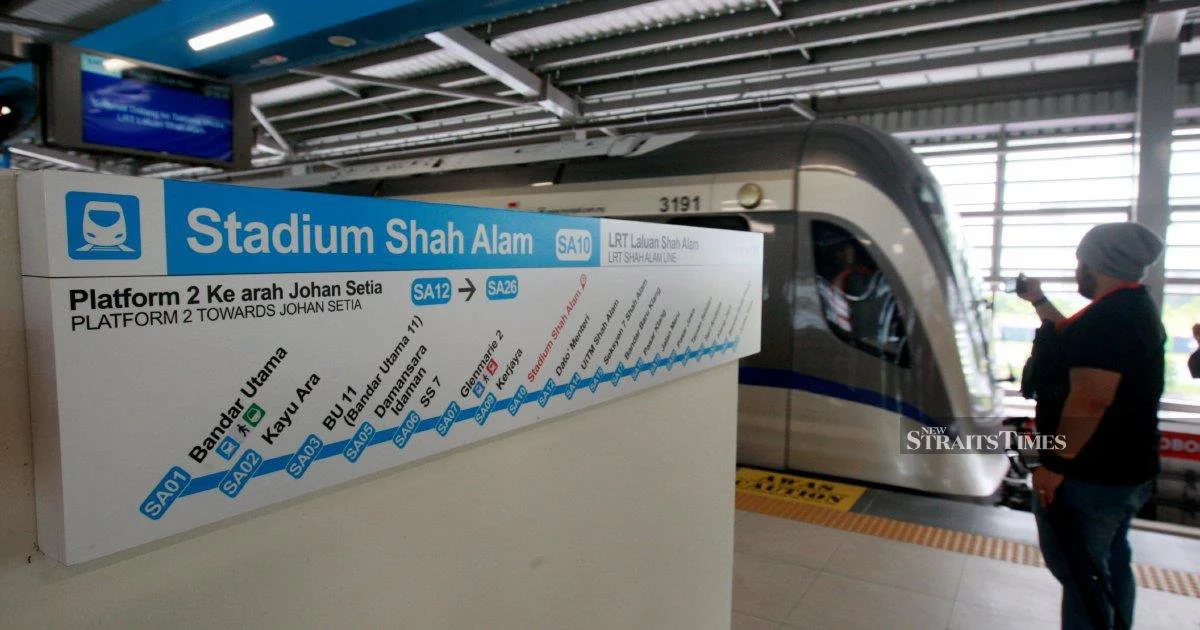
Prime Minister Datuk Seri Anwar Ibrahim will preside over the official launch of the Light Rail Transit Line 3 (LRT3) Shah Alam extension on Sunday, culminating years of development and paving the way for the line to begin regular passenger operations the following day. The ceremony will mark a crucial moment for Malaysia's expanding public transport network, particularly in the Klang Valley region where demand for efficient mass transit continues to grow.
The Shah Alam LRT3 line represents a significant expansion of the existing LRT3 network, which already serves commuters across the Klang Valley with connections to key commercial and residential areas. The new extension will extend rapid transit connectivity westward to Shah Alam, one of Selangor's largest and most economically important cities, accommodating hundreds of thousands of residents and workers across its industrial parks, administrative centres, and growing commercial zones.
This infrastructure development comes at a time when Malaysia is increasingly focused on reducing traffic congestion and promoting sustainable urban mobility. The Shah Alam line will offer commuters an alternative to road transport, potentially easing congestion on major highways such as the North-South Expressway and other key arterial routes serving the corridor. By providing direct rail access to Shah Alam, the project supports the government's broader agenda of strengthening public transport integration across the Klang Valley metropolitan region.
The timing of the launch under Anwar Ibrahim's administration reflects the government's commitment to advancing infrastructure projects that enhance connectivity and quality of life. The Prime Minister has previously emphasised the importance of modernising Malaysia's transport infrastructure as part of the country's economic development strategy. The LRT3 Shah Alam line serves as a tangible realisation of these policy priorities, demonstrating forward momentum on major capital projects that require substantial planning and investment.
From a practical standpoint, the line's operational commencement will integrate new stations into the broader LRT3 ecosystem, facilitating intermodal connections with existing transit systems and bus networks. Commuters travelling between Shah Alam and other parts of the Klang Valley will benefit from reduced travel times and improved reliability compared to road-based alternatives. The project also creates opportunities for transit-oriented development around station areas, potentially generating economic activity in surrounding neighbourhoods.
The Shah Alam extension is part of Malaysia's larger vision to create a comprehensive rapid transit network that rivals systems in other developed Asian cities. As urbanisation accelerates across the country and traffic challenges intensify, modern public transport infrastructure becomes increasingly critical for maintaining urban productivity and livability. The LRT3 expansion demonstrates the government's recognition of this imperative and its willingness to allocate resources toward long-term transport solutions.
For regional observers, the project underscores Malaysia's continued investment in metropolitan infrastructure despite economic pressures and competing budgetary demands. The expansion also highlights how Kuala Lumpur and its surrounding regions are positioning themselves as increasingly modern, liveable cities capable of attracting talent and investment through improved quality of life indicators, of which accessible public transport ranks prominently.
The Sunday launch ceremony will likely attract government officials, project stakeholders, transport sector representatives, and media attention, underscoring the project's significance within broader national development narratives. Such ceremonies serve not only ceremonial functions but also communicate to the public and international observers that Malaysia remains committed to infrastructure modernisation and sustainable urban development.
As passenger operations commence on Monday, focus will shift toward monitoring the line's performance, capacity utilisation, and integration with existing transport networks. Early operational metrics will provide valuable insights into commuter demand and the project's real-world impact on traffic patterns and public transport uptake across the Shah Alam and greater Klang Valley region. The success of this extension will likely influence future planning for additional rapid transit expansions in neighbouring areas facing similar congestion and connectivity challenges.
The LRT3 Shah Alam line ultimately represents more than a single infrastructure project; it reflects evolving governance priorities that increasingly emphasise sustainable transport, strategic investment in long-term urban livability, and integrated metropolitan planning. For Malaysian commuters and residents in the western Klang Valley corridor, the line's opening offers tangible improvements to daily mobility and reflects broader efforts to transform the country's urban transport landscape.

