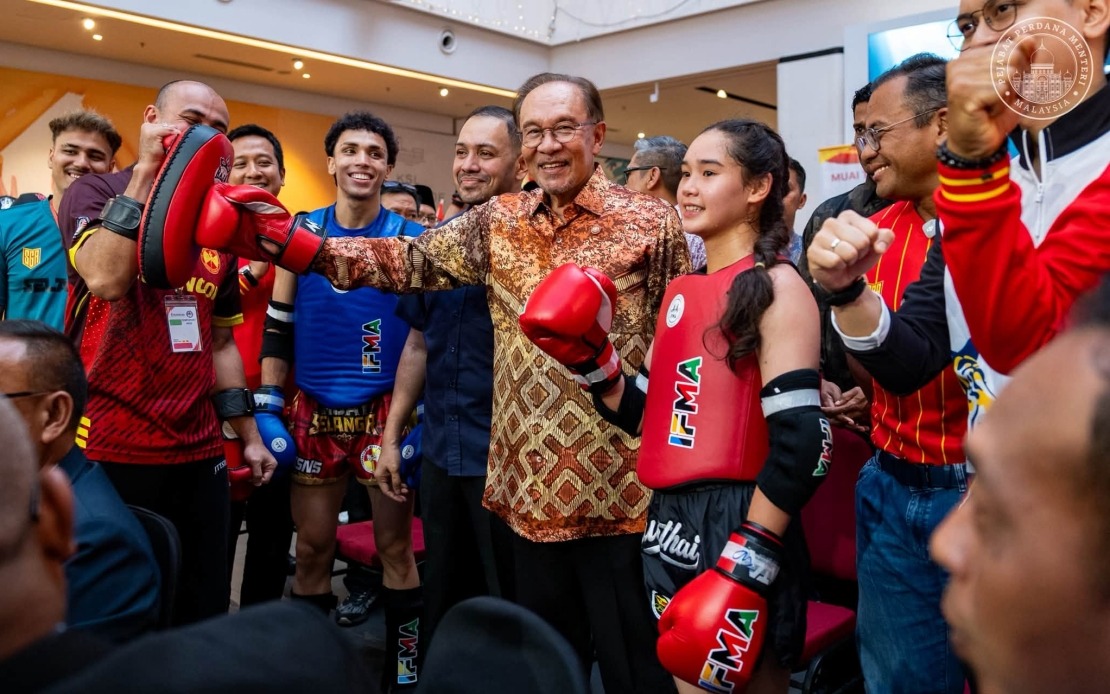
Prime Minister Datuk Seri Anwar Ibrahim has voiced strong optimism about the future of Malaysia's sporting talent after witnessing the calibre of young competitors at the ongoing 2026 Selangor Malaysia Games. During a visit where he observed Muay Thai events and engaged directly with athletes, Anwar expressed genuine admiration for what he described as their remarkable spirit, discipline, and courage—qualities he believes position them well for representing the nation in international competitions ahead.
In remarks shared on social media, Anwar articulated a vision whereby the current generation of SUKMA participants transitions into Malaysia's next wave of world-class sports ambassadors. His observation underscores a broader national interest in nurturing homegrown athletic talent through domestic competitions and channelling the most promising individuals toward international representation. The Prime Minister's direct engagement with competitors reflects the political significance attached to youth development programmes and sports infrastructure across Malaysia.
The 2026 Selangor Malaysia Games represents a milestone for the state, which is hosting the biennial championship for the first time in nearly three decades. The scale of the competition is substantial, drawing more than 5,000 young athletes from across the nation competing in 37 different sports. These athletes are vying for 468 gold medals in total, with the games continuing through August 24. Such a large-scale domestic competition serves as both a proving ground for emerging talent and a critical platform where young competitors gain exposure and experience under competitive conditions.
The resurgence of SUKMA in Selangor carries symbolic weight within Malaysia's sporting ecosystem. As one of the nation's most developed states and economic powerhouses, Selangor's hosting responsibilities extend beyond mere logistics to encompass demonstrating the state's commitment to youth development and athletic excellence. The 28-year gap since Selangor last hosted the games adds to the significance of the current edition, positioning it as an opportunity to reset investment in grassroots sports infrastructure and talent identification systems.
Anwar's emphasis on the character traits he observed—particularly discipline and courage—reflects a holistic approach to athlete development that extends beyond technical skill. These psychological and personal attributes are increasingly recognised as critical differentiators in international competition, where technical parity among nations is often high. Malaysian sports policymakers have been gradually shifting focus toward comprehensive athlete development programmes that address mental resilience, work ethic, and competitive mentality alongside physical conditioning.
The Muay Thai component of SUKMA holds particular relevance for Malaysian sports policy, given Thailand's dominance in the sport and Malaysia's growing competitive presence in this arena. By featuring Muay Thai prominently at SUKMA, organisers are signalling institutional support for developing local expertise in a discipline where regional reputation and international opportunities are substantial. The discipline's inclusion reflects Malaysia's recognition that diversifying its sporting portfolio—beyond traditional strongholds in badminton, squash, and palm oil-funded sports—can yield both competitive success and soft power benefits.
From a regional perspective, Anwar's remarks highlight Malaysia's positioning within Southeast Asian sporting hierarchies. Countries across the region employ similar domestic games structures to identify and develop talent, with Vietnam, Thailand, Philippines, and Indonesia all running comparable programmes. Malaysia's SUKMA framework, now reestablished in Selangor, places the nation within this competitive ecosystem while demonstrating commitment to systematic talent development that can translate into regional and global success.
The pathway from SUKMA participation to international representation is neither automatic nor guaranteed, yet the Prime Minister's public articulation of this aspiration serves to frame the games as consequential beyond immediate competitive outcomes. Young athletes gain tangible motivation when senior political leadership validates their efforts and articulates a coherent national vision for their sporting futures. Such messaging also signals to sports administrators and coaches that investment in talent identification and development enjoys political backing and resource prioritisation.
Selangor's hosting responsibilities include not only providing facilities and organisation but also ensuring that the games function as an effective talent scouting platform for national coaches and sports federation officials. The concentration of 5,000 young competitors in one location creates unprecedented opportunity for systematic evaluation and identification of athletes with potential for higher-level competition. This centralised talent pool approach has proven effective in other nations and represents an opportunity for Malaysia to refine its identification systems while maintaining competitive intensity throughout the games.
The international dimension that Anwar emphasised carries practical implications for Malaysian sports funding and athlete support structures. Success at SUKMA increasingly correlates with selection into national development programmes, access to coaching facilities, sports scholarships, and eventually international circuit opportunities. By publicly committing to this pipeline during his SUKMA visit, Anwar has implicitly endorsed continued investment in the institutional infrastructure required to support talented athletes' progression from domestic to international levels.
Looking ahead, the sustainability of Anwar's expressed vision depends on coordinated action across multiple stakeholders—not merely political rhetoric. Sports federations must maintain robust coaching standards, state governments must sustain facility investments, and corporate sponsors must remain committed to supporting athletic development. The 2026 Selangor SUKMA thus represents both a celebration of current athletic excellence and a test of Malaysia's capacity to systematically convert emerging talent into sustained international competitiveness.

