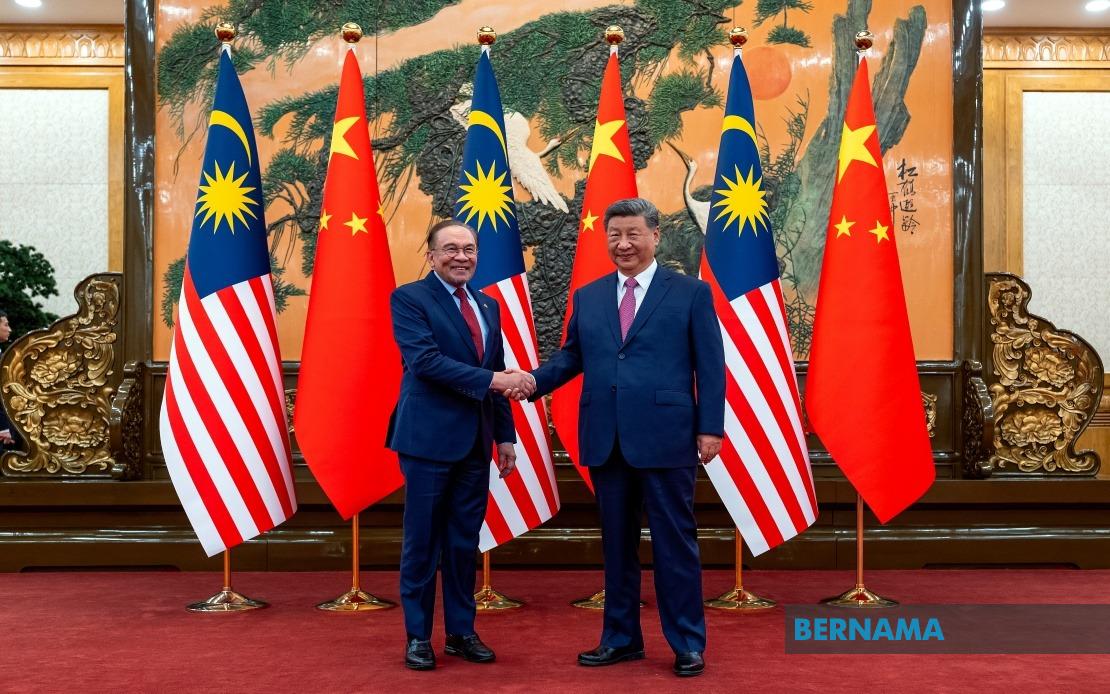
Prime Minister Datuk Seri Anwar Ibrahim has formally conveyed Malaysia's felicitations to the Chinese government through a letter to President Xi Jinping, observing the 105th anniversary of the Communist Party of China. The gesture, announced via Facebook, underscores the significance Malaysia continues to place on its relationship with Beijing—a relationship that has matured considerably since formal diplomatic recognition nearly five decades ago.
In his correspondence, Anwar praised the ideological journey and institutional evolution of China's ruling party, framing it within the broader context of the nation's civilisational heritage and accumulated cultural values. This framing reflects how Malaysia views China's political trajectory not merely as a contemporary phenomenon but as an extension of millennia-old traditions and strategic philosophies that have undergirded the country's transformation into a regional and global power. The Prime Minister's emphasis on civilisation and historical continuity aligns with Beijing's own narrative about the Communist Party's role as both revolutionary force and custodian of Chinese heritage.
Particularly significant in Anwar's message is his explicit reference to Malaysia's groundbreaking diplomatic decision on May 31, 1974, when it became the first non-socialist nation in Southeast Asia to recognise the People's Republic of China. This historical touchstone remains central to how Malaysian leadership frames bilateral relations, representing not merely a Cold War-era alignment shift but a strategic calculation that prioritised pragmatism over ideological rigidity. For Malaysian readers, this milestone deserves renewed appreciation: the decision represented considerable political courage at a time when much of the Western-aligned region viewed communist China with deep suspicion. Anwar's invocation of this precedent—with its emphasis on wisdom and foresight—suggests Malaysia views its own China policy as rooted in judicious statecraft rather than expedience.
The Prime Minister's language emphasising mutual respect, trust, and shared benefits reflects official Malaysian doctrine regarding great power engagement. This formulation is particularly important in the Southeast Asian context, where smaller nations must carefully navigate between competing powers. By stressing reciprocal advantage rather than dependency, Anwar signals that Malaysia intends to remain master of its own strategic destiny even as it deepens cooperation with a much larger neighbour. For Malaysian policymakers and business leaders, this messaging provides reassurance that closer ties with China need not come at the expense of autonomy or relationships with other partners.
The timing of such diplomatic courtesies during significant anniversaries serves multiple functions beyond mere ceremonial obligation. For China, receiving birthday greetings from Southeast Asian leaders validates its regional standing and soft power appeal. For Malaysia, maintaining this ritualistic diplomatic rhythm demonstrates commitment to a stable relationship that has become integral to Malaysian economic prosperity and regional influence. The consistent exchange of high-level courtesies helps insulate bilateral ties from the sort of sudden shocks or misunderstandings that might otherwise disrupt cooperation.
Malaysia's strategic partnership with China has expanded substantially across multiple dimensions since 1974. Economic integration has deepened through trade relationships, Chinese investment in Malaysian infrastructure and manufacturing, and Malaysian participation in Chinese-led regional initiatives. The Belt and Road Initiative has particularly transformed Malaysia's economic geography, with Chinese companies financing and executing major projects ranging from port development to energy infrastructure. Understanding Anwar's diplomatic language requires appreciating these material foundations—the letter represents not empty protocol but acknowledgment of concrete interdependencies that benefit both nations.
At the same time, Malaysia maintains relationships with the United States, Japan, Australia, and India, positioning itself within a complex regional balance. The Prime Minister's willingness to extend warm congratulations to Beijing does not signal exclusive alignment but rather reflects Malaysia's capacity to engage multiple partners simultaneously. This diplomatic flexibility has become increasingly challenging as great power competition in the Indo-Pacific intensifies, yet it remains essential to Malaysian interests. Anwar's messaging suggests Malaysia intends to continue this balancing act, deepening ties with China while maintaining space for other partnerships.
The reference to five decades of relationship-building carries particular weight for Malaysia, a nation that has successfully navigated multiple international power transitions and regional transformations. The durability of Malaysia-China relations through various global upheavals—from the Cold War through the rise of globalisation to contemporary geopolitical tensions—testifies to the relationship's resilience and mutual utility. For Malaysian investors, academics, and policymakers, this stability provides confidence for long-term planning and engagement.
Regional peace and prosperity, which Anwar emphasises as shared objectives, remain contested concepts in contemporary Southeast Asia. The South China Sea disputes, territorial disagreements, and competing claims among claimant states create persistent sources of friction. Malaysia, with its own maritime claims and economic interests in the region, must carefully balance its relationship with China against security concerns and the interests of other Southeast Asian nations. Anwar's diplomatic language sidesteps these contentious issues, focusing instead on the positive potential for cooperation. This approach—emphasising what unites rather than what divides—reflects Malaysia's preferred methodology for managing difficult regional challenges.
The broader implications for Malaysia extend to how the nation positions itself within Asian regional architecture. As China's influence grows and as regional institutions like ASEAN face pressures from geopolitical competition, Malaysia's ability to maintain constructive bilateral relationships with major powers becomes increasingly valuable. The nation can potentially serve as a bridge, translator, and mediator between different regional visions and interests. Anwar's consistent engagement with Beijing, balanced by interactions with other partners, supports this role.
Moving forward, the trajectory of Malaysia-China relations will likely remain shaped by economic complementarities and strategic prudence rather than ideological alignment. Malaysia benefits from Chinese investment, technology, and market access; China values Malaysia's geographic position, stability, and role within ASEAN. This mutuality of interest provides the foundation for sustained cooperation. Anwar's letter, while ceremonial in form, reinforces these underlying interests and signals Malaysian commitment to continuity in bilateral relations even as both nations navigate increasingly complex regional and global circumstances.

