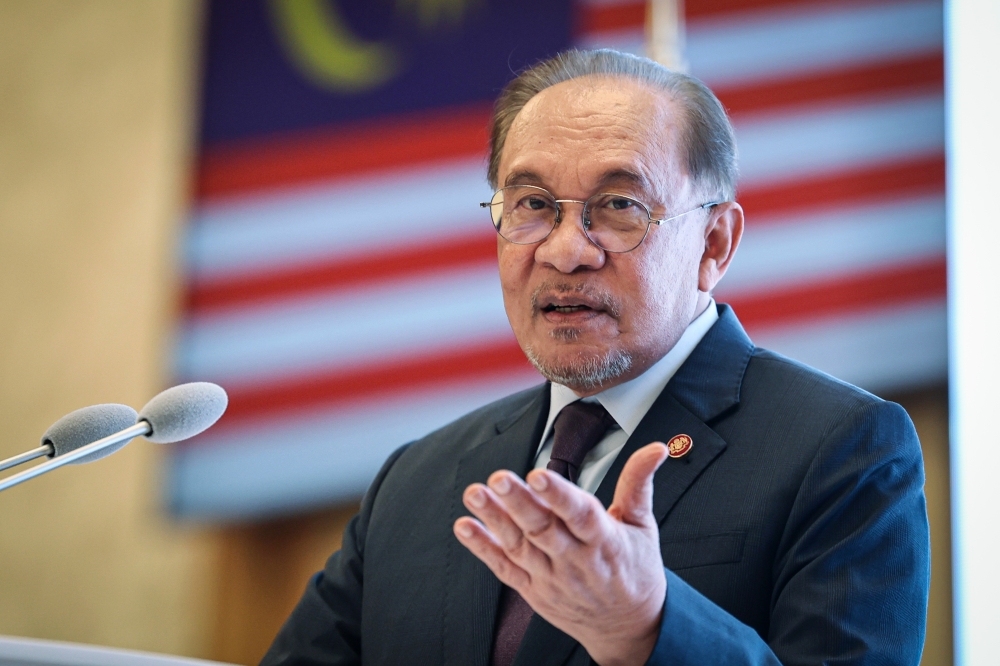
Prime Minister Datuk Seri Anwar Ibrahim has publicly acknowledged the outpouring of concern and prayers from Malaysians following recent health matters, signalling his return to active duties with a focus on legislative priorities. The Premier's expression of gratitude underscores the widespread public engagement that characterised his period of convalescence, reflecting the significant interest among both supporters and the broader population in the continuity of Malaysia's political leadership during this transitional phase.
With his attention now firmly back on governance, Anwar has set the stage for Parliament to convene in a special sitting dedicated entirely to examining the Royal Commission of Inquiry findings regarding Tabung Haji. This strategic scheduling reflects the government's determination to address one of Malaysia's most contentious contemporary financial issues—the management and performance of the Islamic pilgrimage fund, which holds immense cultural and religious significance for millions of Muslim Malaysians who rely on it for their Hajj savings.
The decision to dedicate an entire parliamentary session to the Tabung Haji RCI report signals the gravity with which the administration regards the commission's conclusions. Tabung Haji, formally known as the Pilgrimage Fund Board, has been under intense scrutiny following revelations of significant financial losses and governance lapses that triggered public outcry and calls for comprehensive institutional reform. The special sitting represents a notable departure from routine parliamentary business, indicating that senior leadership views this investigation as pivotal to restoring public confidence in a fund that processes billions of ringgit annually.
The Royal Commission of Inquiry had been established to investigate alleged irregularities, mismanagement, and significant financial losses within Tabung Haji spanning multiple years. Its mandate extended to examining investment decisions, governance structures, and the accountability mechanisms that should have prevented or detected the fund's deterioration. Given the fund's critical role in facilitating religious obligations for Malaysian Muslims—a demographic comprising roughly 70 per cent of the country's population—the stakes for institutional credibility are extraordinarily high.
For Malaysian lawmakers and constituents, the special parliamentary sitting will provide an unprecedented opportunity to scrutinise the detailed findings and recommendations emanating from months of intensive investigation. Members of Parliament are expected to engage in substantive debate regarding remedial measures, disciplinary actions against implicated officials, and structural reforms necessary to prevent recurrence of such institutional failures. This forum allows legislators to represent their constituents' concerns directly while holding the executive branch accountable for implementing corrective actions.
The timing of this parliamentary intervention carries significance within Malaysia's political economy. Public faith in major institutional actors has been tested repeatedly in recent years through various governance controversies, and the government's willingness to provide transparent parliamentary scrutiny of the Tabung Haji situation demonstrates a commitment to accountability mechanisms that were conspicuously absent in earlier administrations. The contrast reinforces evolving expectations regarding institutional transparency within Malaysia's democratic framework.
Beyond the immediate parliamentary proceedings, the RCI report's release and subsequent legislative discussion will likely influence broader policy conversations regarding governance standards across Malaysia's statutory bodies and government-linked companies. Regulators, financial supervisors, and institutional boards may face renewed pressure to enhance oversight mechanisms, strengthen internal controls, and improve reporting transparency. The Tabung Haji situation thus potentially catalyses systemic improvements applicable across Malaysia's institutional landscape.
For ordinary Malaysians, particularly those with funds invested in Tabung Haji, the parliamentary examination offers transparency regarding the circumstances that impacted their retirement savings and pilgrimage aspirations. Many contributors had accumulated substantial balances designated for what remains one of Islam's five pillars, making the institutional failure deeply personal. The RCI findings and subsequent legislative response will shape both compensation mechanisms and future governance structures affecting millions of savers.
Regionally, Malaysia's handling of the Tabung Haji crisis carries symbolic weight regarding governance standards in Southeast Asia. Neighbouring countries face similar pressures to balance rapid financial system development with robust accountability frameworks, making Malaysia's institutional response relevant to broader conversations about managing state-linked entities across the region. The parliamentary sitting thus extends beyond domestic political theatre to constitute a substantive contribution to regional governance discourse.
Anwar's resumption of active political engagement, marked by this parliamentary initiative, indicates renewed momentum behind the government's reform agenda. The special sitting represents the administration's assertion that institutional failures of the magnitude experienced by Tabung Haji demand comprehensive legislative attention rather than administrative remedies conducted behind closed doors. This approach reflects an evolving commitment to parliamentary democracy as the primary forum for addressing matters of public significance.
Moving forward, the parliamentary debate and subsequent implementation of RCI recommendations will constitute crucial indicators of institutional reform capacity within Malaysia's bureaucratic apparatus. The government's effectiveness in translating legislative scrutiny into tangible improvements—whether through leadership changes, structural reorganisation, or enhanced regulatory frameworks—will significantly influence public perceptions regarding institutional accountability. The Tabung Haji case thus functions as a bellwether for Malaysian governance trajectories during this administration's tenure.

