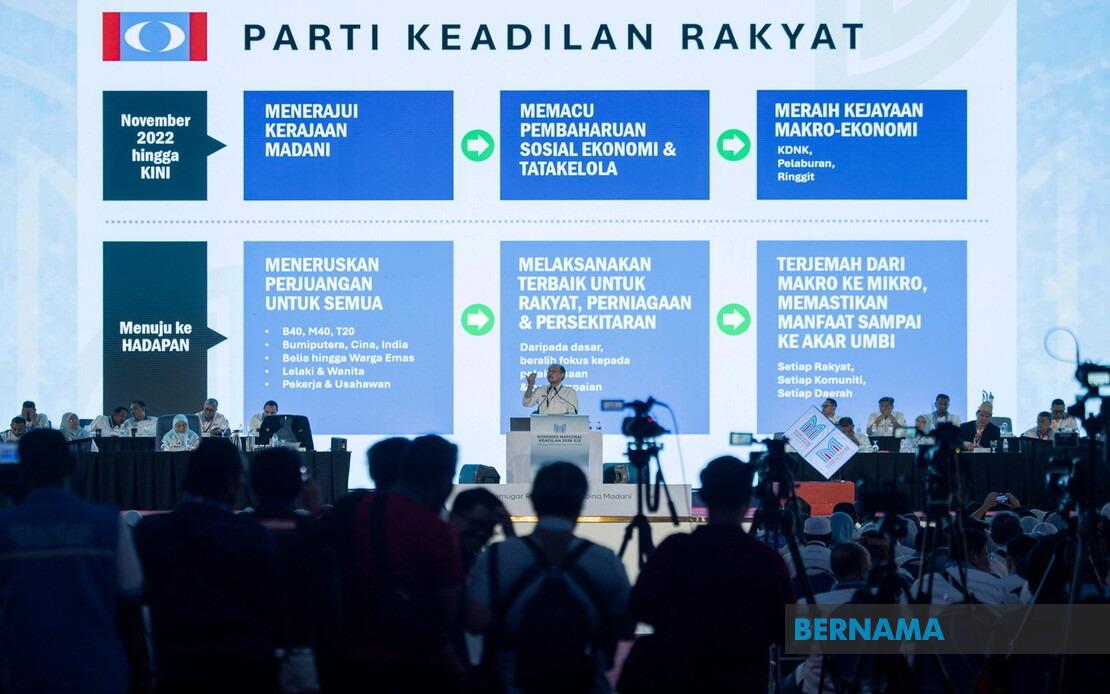
Prime Minister Datuk Seri Anwar Ibrahim has transferred full operational responsibility for the PKR deputy president portfolio to Home Minister Datuk Seri Saifuddin Nasution Ismail, cementing a significant leadership transition within the ruling party. The announcement, made during Anwar's closing address at the PKR National Congress 2026 in Melaka on August 16, signals confidence in Saifuddin Nasution's capacity to manage party affairs during what the leadership describes as a planned organisational restructuring. Nurul Izzah Anwar, the incumbent deputy president and the Prime Minister's daughter, has taken a temporary leave of absence from her position, prompting the need for interim coverage of her responsibilities.
Anwar characterised the assignment as a natural extension of Saifuddin Nasution's existing portfolio, framing the Home Minister's suitability through personal familiarity and proven loyalty. Speaking to assembled party delegates at the Melaka International Trade Centre in Ayer Keroh, Anwar emphasised that Saifuddin Nasution's lengthy association with him and deep understanding of party operations made him the logical choice for the interim role. The Prime Minister's public endorsement carries substantial weight within PKR's organisational hierarchy, effectively signalling to the broader membership that Saifuddin Nasution commands executive authority on party matters during this transition period.
The PKR Central Leadership Council had formally endorsed this arrangement on August 6, with party Information Chief Datuk Seri Fahmi Fadzil confirming the interim arrangement at that time. However, Anwar's formal pronouncement at the National Congress provided public legitimacy and allowed the Prime Minister to frame the decision within the context of broader party leadership adjustments. The timing appears carefully managed, with the announcement coming during the party's major annual gathering, ensuring maximum visibility and providing an opportunity to communicate the change to party grassroots simultaneously.
Beyond the deputy president transition, Anwar unveiled a comprehensive reshuffling of senior party positions that reflects his strategic approach to balancing political responsibilities with party management. Vice-president Datuk Seri Amirudin Shari has been appointed as the party's election director, a role that assumes growing importance as Malaysia approaches future electoral cycles. Meanwhile, Tengku Datuk Seri Zafrul Tengku Abdul Aziz has been designated as coordinator in the Prime Minister's Office, positioning him to serve as a bridge between PKR's organisational structure and the machinery of government.
The leadership changes extend to addressing internal tensions within state-level party structures, particularly in Negeri Sembilan where recent electoral disappointments have generated calls for accountability. Following PKR's defeat in the August 1 state election, six Negeri Sembilan division chiefs submitted a joint petition requesting a review of Datuk Seri Aminuddin Harun's position as chairman of the state party leadership council. Rather than acceding to these demands, Anwar instead redirected Aminuddin toward what he framed as a more strategically important portfolio: developing PKR's cadre and training younger party members.
Anwar's handling of the Negeri Sembilan situation reveals a deliberate approach to managing internal party dissent while maintaining leadership stability. The Prime Minister acknowledged the state election loss but resisted apportioning blame to any single individual, instead characterising the outcome as a collective responsibility that should prompt systematic improvement rather than personnel changes. This stance reflects Anwar's apparent preference for gradual institutional strengthening over reactive leadership removals, particularly when dealing with senior figures who bring accumulated party experience and established support networks.
The deputy president portfolio carries significance that extends beyond administrative routine. As the second-ranking position in PKR's internal hierarchy, the role traditionally involves representing the party at major events, managing internal discipline, and serving as a trusted advisor to the president. While interim arrangements are technically temporary, the appointment of a senior government minister to this position also ensures that the party's strategic interests receive attention from someone embedded within the cabinet. This approach allows PKR to maintain continuity in party leadership while Nurul Izzah's absence occurs, though questions naturally arise regarding the duration of her leave and whether this transition might eventually become permanent.
For Malaysian political observers, these adjustments underscore the ongoing challenge of managing parallel hierarchies within ruling coalition parties. Anwar must simultaneously direct government business as Prime Minister while steering PKR's internal evolution, a balancing act that requires careful attention to factional sensitivities and individual expectations within the party. The appointment of multiple senior figures to significant roles—Saifuddin Nasution in the deputy presidency, Amirudin Shari in election direction, and Zafrul in the Prime Minister's Office—distributes responsibility across trusted lieutenants while potentially limiting any single individual's accumulation of unchecked power.
The National Congress venue provided an appropriate setting for announcing these changes, offering Anwar the platform to explain his reasoning directly to party delegates and the broader PKR membership. His characterisation of Saifuddin Nasution as someone who understands his working methods and has demonstrated long-standing loyalty speaks to the personal dimension of these political arrangements. In Malaysian party politics, such public validation from the party president carries substantial weight in establishing legitimacy for interim appointments that might otherwise invite challenge from competing factions.
Looking forward, these restructuring moves suggest that Anwar is consolidating his control over PKR's leadership apparatus while simultaneously addressing the recent electoral setback in Negeri Sembilan without making dramatic personnel removals that might destabilise party cohesion. The emphasis on cadre development and member training through Aminuddin's reoriented role indicates a strategic focus on institutional strengthening rather than immediate crisis management. Whether this measured approach will satisfy the Negeri Sembilan division chiefs who sought more dramatic action remains to be seen, but Anwar's positioning suggests confidence in his authority to define the terms of party renewal without being pressured into reactive decisions.
For Southeast Asian politics watchers, these developments reflect the typical pattern of how ruling parties in the region manage leadership transitions and internal governance while maintaining their hold on executive power. The interim nature of Saifuddin Nasution's appointment to the deputy presidency, while technically temporary, may effectively normalise the arrangement if Nurul Izzah's leave extends significantly. This quiet consolidation of power through administrative appointments, rather than through dramatic confrontations, characterises much of contemporary Malaysian political management under Anwar's stewardship.

