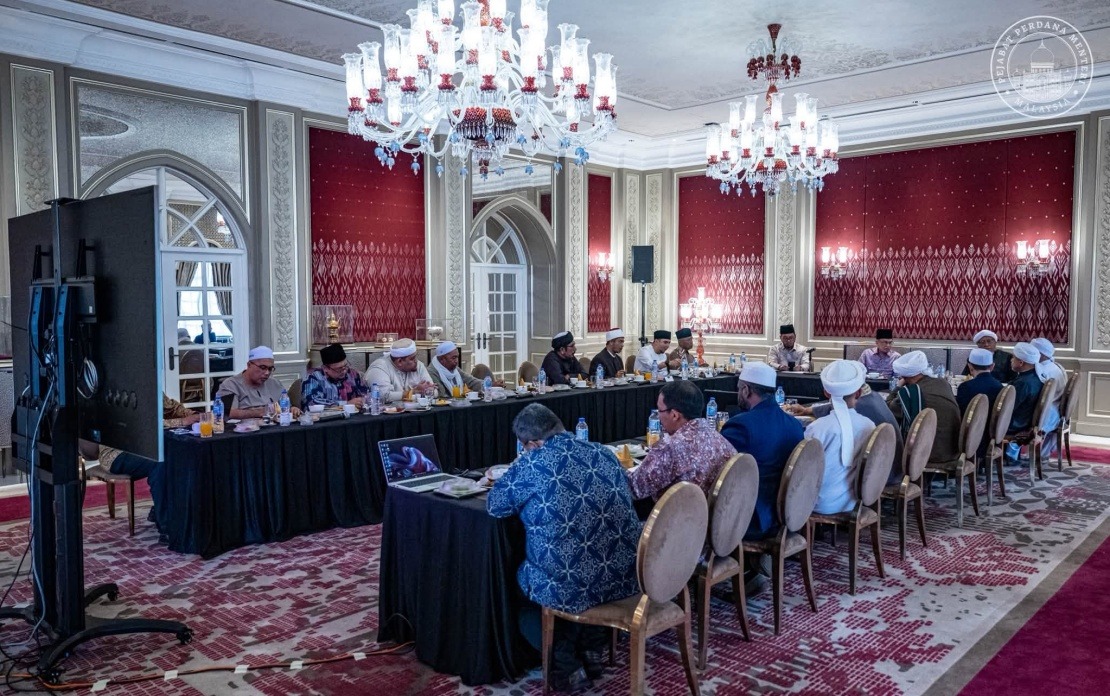
Prime Minister Datuk Seri Anwar Ibrahim has underscored the significance of engaging Malaysia's religious scholars as a mechanism for refining government policies and ensuring they remain rooted in Islamic knowledge and community values. Speaking following a series of theological discussions held in Kuala Lumpur, Anwar characterised such consultations not as ceremonial gatherings but rather as substantive occasions for institutional self-examination and intellectual enrichment that shape the country's approach to governance in the Muslim-majority nation.
The Prime Minister's remarks came during an afternoon of muzakarah—a term denoting structured scholarly dialogue—timed to commemorate the spirit of Maulidur Rasul, the birthday of Prophet Muhammad. Among those he consulted was Sheikh Dr Muhyiddin Awwamah, a representative of Darul Hadis al-Awwamiyyah, an institution dedicated to the study and preservation of hadith, the recorded traditions and sayings of the Prophet. This particular engagement signals Anwar's deliberate strategy to incorporate voices from established Islamic learning centres into the corridors of executive decision-making.
In articulating his philosophy of governance, Anwar stressed that sustained government effectiveness requires continuous calibration between institutional ambitions and the actual lived realities of Malaysia's Muslim population. He emphasised that policies emerging from the highest levels of government should be intellectually defensible, morally grounded, and responsive to evolving social circumstances. This framing suggests recognition that rigid adherence to either purely secular administrative frameworks or to interpretations of Islamic law disconnected from contemporary reality risks alienating the communities such policies are meant to serve.
The lineage of scholarly authority proved relevant to Anwar's engagement. Sheikh Dr Muhyiddin is the son of Al-'Allamah Sheikh Muhammad bin Awwamah, a preeminent Islamic scholar and internationally recognised hadith expert whose intellectual contributions have earned him standing across the Muslim world. By meeting with the younger Sheikh, Anwar positioned himself within a tradition of deference to established Islamic learning and acknowledged the intellectual inheritance that links generations of Muslim scholars across centuries of theological development.
During the encounter, Anwar took occasion to publicly commend several works authored by Sheikh Muhammad bin Awwamah, characterising these texts not merely as repositories of information but as intellectual patrimony that sustains continuity in Islamic scholarly tradition. This rhetorical move serves multiple functions simultaneously: it demonstrates the Prime Minister's familiarity with significant Islamic literature, signals respect for academic rigour in religious matters, and implicitly argues that governance grounded in such learning yields superior outcomes to approaches that dismiss or marginalise scholarly expertise.
The broader context of these consultations reveals an administration attempting to navigate a delicate terrain. Malaysia's constitutional framework designates Islam as the federation's official religion, yet the country remains multireligious and multiethnic with significant non-Muslim populations whose rights are constitutionally protected. Anwar's emphasis on dialoguing with religious scholars while remaining attentive to the needs of the broader Muslim community suggests an effort to strengthen Islamic institutional dimensions of governance without appearing to marginalise secular administrative competencies or minority communities.
For Southeast Asian observers, Malaysia's approach to systematically consulting religious scholars on matters of state represents a distinct governance model. Unlike secular frameworks that typically exclude religious perspectives from policy deliberation, or theocratic systems where religious scholars exercise direct political authority, the Malaysian approach positions Islamic learning as an advisory resource that informs but does not exclusively determine governmental decisions. This intermediary position attempts to draw legitimacy from Islamic tradition while preserving elected officials' ultimate responsibility for policy outcomes.
The emphasis on consultation and dialogue also reflects contemporary challenges facing Islamic governance across the region. Rapid social change, technological disruption, and generational shifts in values create pressure on traditional Islamic institutions to demonstrate relevance to younger Muslims navigating modern life. By visibly engaging with religious scholars, Anwar's government signals that Islamic perspectives remain integral to national decision-making and that religious institutions possess agency in shaping Malaysia's future trajectory.
The timing of these consultations during Maulidur Rasul carries symbolic weight. This observance commemorates the Prophet's birth and traditionally occasions reflection on Islamic teachings and their application to contemporary life. By scheduling his engagement with Sheikh Dr Muhyiddin during this period, Anwar reinforced the narrative that his government views religious celebration not as a ceremonial obligation but as an opportunity to renew commitment to principles grounded in Islamic scholarship and community welfare.
Moving forward, the frequency and substantive outcomes of such consultations will likely indicate whether Anwar's administration treats religious scholarship as genuinely influential in shaping policy or whether such engagements function primarily as symbolic gestures designed to satisfy Islamic constituencies. Malaysian observers will scrutinise whether insights from these dialogues translate into concrete policy adjustments affecting everything from religious education curricula to financial regulations addressing Islamic finance to family law matters where religious and secular legal frameworks intersect.
The Prime Minister's framing also addresses a persistent tension within modern Muslim-majority democracies: how to honour the legitimacy of religious expertise and community values while maintaining effective bureaucratic governance. Anwar's suggestion that knowledge should guide policy, advice should refine it, and community needs should direct it presents a triangular conception of authority in which no single source—not secular expertise, not religious knowledge, not democratic preferences—commands absolute dominance. Whether this approach proves sustainable depends on whether Malaysian institutions develop mechanisms for genuinely integrating these diverse sources of legitimacy or whether they revert to more traditional hierarchies.

