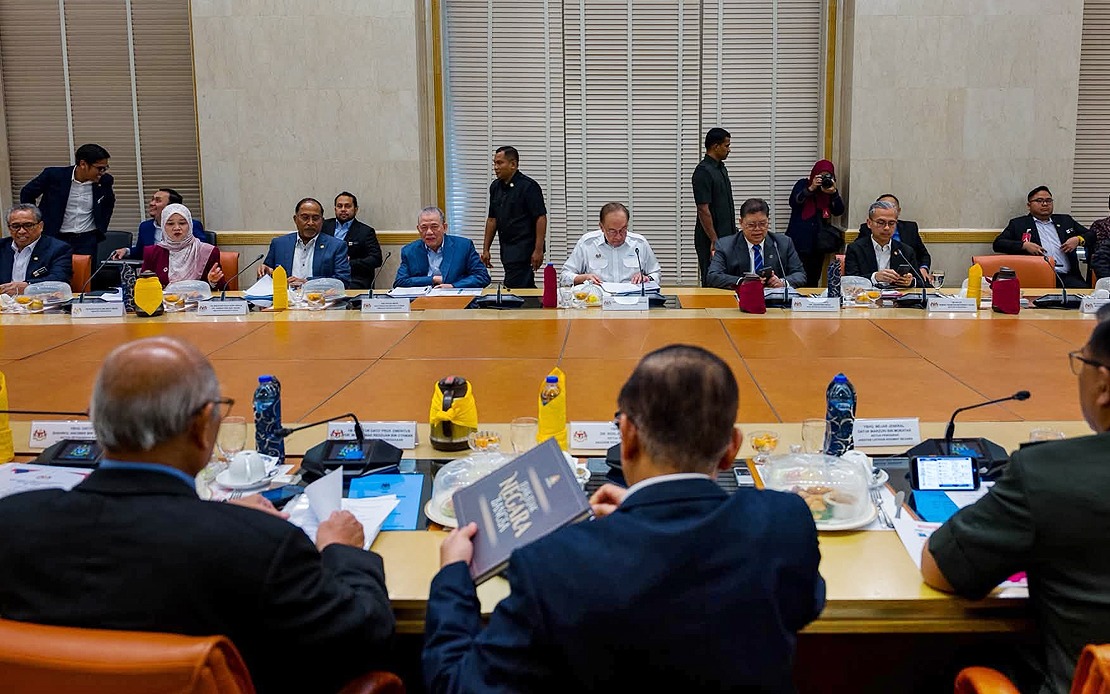
Prime Minister Datuk Seri Anwar Ibrahim has placed renewed emphasis on the cultivation of nationhood values as a foundational element for Malaysia's continued development, arguing that such values are indispensable for producing citizens with unwavering identity, ethical principles, and integrity. Speaking after chairing the Dewan Kenegaraan Board of Governance Meeting, Anwar stressed that fostering these values remains integral to nurturing patriotic sentiment among Malaysians and establishing a cohesive society rooted in shared national ideals.
The Prime Minister's remarks reflect a broader strategic focus on strengthening the social fabric of the nation through deliberate cultural and institutional measures. His emphasis during the governance meeting centred on ensuring that patriotic sentiment and commitment to the country's wellbeing remain vibrant across all demographic segments of the population. This approach recognises that national resilience extends beyond economic and political infrastructure to encompass the values and dispositions that bind citizens together around a common purpose.
A significant element of this nation-building strategy involves the National Service Training Programme (PLKN), which has garnered encouraging momentum and positive assessments from both programme participants and their families. Anwar indicated that the government views PLKN as a vital platform for cultivating discipline, resilience, and a cohesive national identity among young Malaysians. The programme's trajectory suggests it is achieving its intended objectives in fostering a generation equipped with the character and commitment necessary to contribute meaningfully to national development.
The positive reception of PLKN among stakeholders carries particular significance for Malaysia's developmental trajectory. As the nation navigates complex economic transitions and social dynamics, the capacity to instil shared values and collective purpose in younger generations becomes increasingly consequential. Anwar's commitment to strengthening the programme signals recognition that formal service training functions not merely as a disciplinary mechanism but as a formative experience capable of shaping national consciousness and civic responsibility.
Complementing institutional initiatives, Anwar highlighted the instrumental role of the Nationhood Fellows in advancing the nation-building agenda. This cohort, drawn from prominent figures and statesmen spanning diverse professional, cultural, and ideological backgrounds, serves as a think tank and advocacy network for reinforcing national cohesion. By assembling individuals with varying perspectives and expertise, the government aims to generate ideas and strategies that strengthen the foundations of nationhood while accommodating Malaysia's pluralistic character.
The inclusion of representatives from multiple backgrounds within the Nationhood Fellows reflects an implicit acknowledgment that nation-building in a diverse society requires inclusive dialogue and collective intellectual contribution. Rather than imposing a monolithic conception of nationhood, this approach invites input from various constituencies, thereby enhancing the legitimacy and cultural resonance of the resulting national narrative. This methodology proves particularly relevant for Malaysia, where managing unity amid religious, ethnic, and ideological diversity remains a persistent governance challenge.
The strategic interconnection between value inculcation, institutional programming, and elite engagement forms a coherent framework for Anwar's nation-building vision. By operating simultaneously on cultural, programmatic, and intellectual levels, the government seeks to reinforce nationhood values across multiple touchpoints and audiences. The National Service Training Programme reaches young citizens during formative years, while the Nationhood Fellows platform influences policy direction and intellectual discourse among Malaysia's leadership echelon.
This multifaceted approach carries implications extending beyond Malaysia's borders. Regional observers note that Southeast Asian nations confront analogous challenges in maintaining social cohesion amid rapid modernisation, demographic diversity, and competing globalising forces. Malaysia's experiments in combining formal service requirements, elite intellectual engagement, and values-centred education potentially offer templates or cautionary lessons applicable across the region. The success or limitations of such initiatives influence how comparable nations approach their own nation-building imperatives.
For Malaysian citizens and policymakers, Anwar's emphasis raises pertinent questions about the balance between state-directed values promotion and organic social development. While collective commitment to national ideals remains important, determining how such commitment should be cultivated without inadvertently suppressing legitimate diversity of thought or imposing culturally hegemonic constructions of nationhood presents ongoing tensions. The government's challenge involves strengthening cohesion while preserving the pluralistic character that constitutes a defining feature of Malaysian society.
The government's investment in nationhood values also reflects awareness that economic prosperity alone proves insufficient for sustaining national progress. Citizens motivated primarily by material concerns may pursue individual advancement at the expense of collective welfare, potentially exacerbating social fragmentation and institutional weakness. By deliberately cultivating shared values, the administration endeavours to align individual aspirations with national objectives, thereby creating conditions conducive to sustainable development benefiting broader society rather than narrow interests.
Moving forward, the effectiveness of Anwar's nation-building agenda will depend significantly on implementation fidelity and genuine community engagement. Programmes succeed not merely through government proclamation but through authentic participation by citizens who perceive such initiatives as reflecting their aspirations and concerns. The government's success in articulating a compelling national vision that resonates across Malaysia's diverse population will substantially influence whether these efforts generate sustained commitment or remain primarily bureaucratic exercises.

