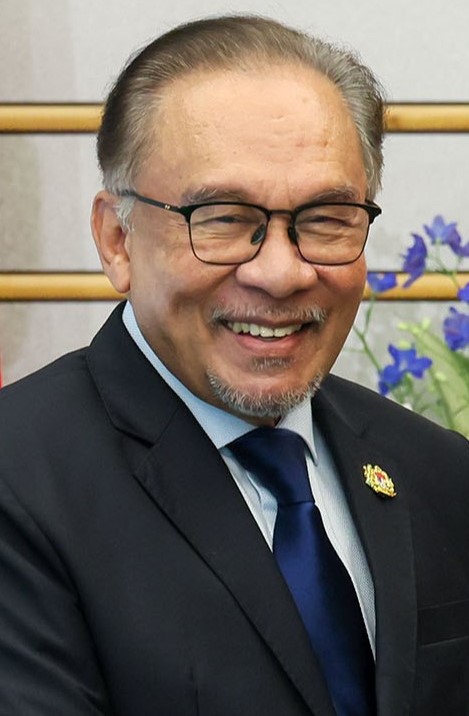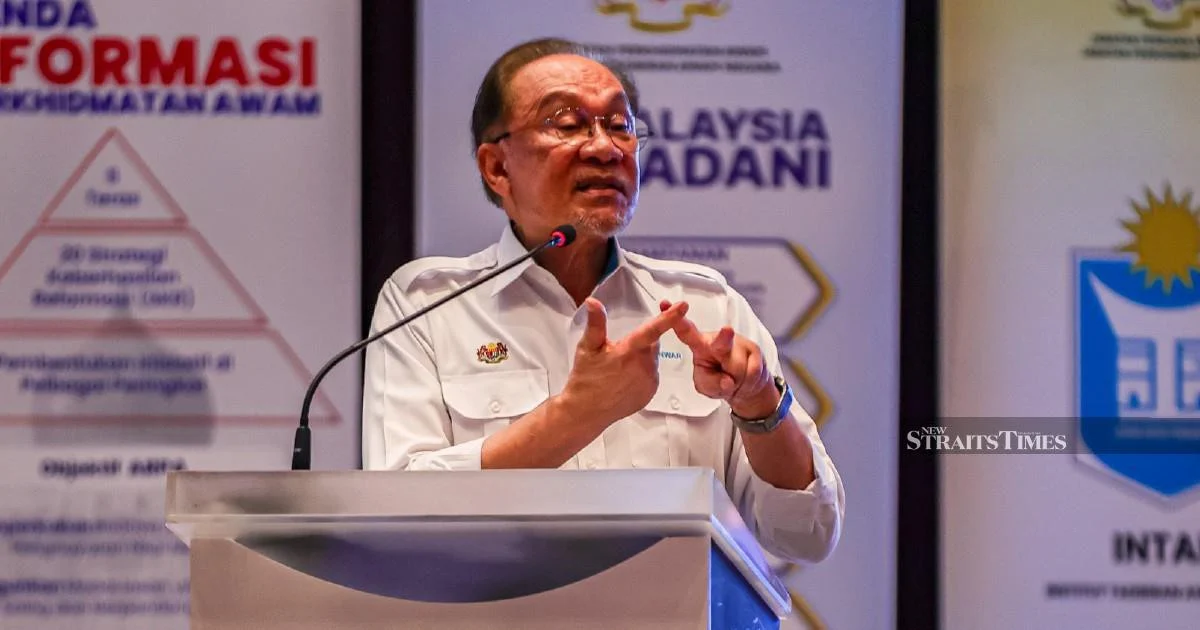
Prime Minister Datuk Seri Anwar Ibrahim sought to ease mounting tensions within the Pakatan Harapan coalition on Friday, clarifying that Amanah president Datuk Seri Mohamad Sabu had not intended any mockery towards fellow coalition members during remarks made at a candidate announcement ceremony in Tangkak. The prime minister's intervention comes as the ruling alliance navigates an increasingly delicate political landscape where unity remains essential for maintaining government stability.
The controversy emerged following Mat Sabu's speech at the Pakatan Harapan gathering, where his comments appeared to draw scrutiny from within the coalition. Rather than allowing the dispute to fester, Anwar moved swiftly to provide context and urge all parties involved to exercise restraint. His measured response underscores the coalition's commitment to internal harmony despite occasional friction between its constituent parties, a persistent challenge for any multi-party alliance operating under significant electoral and parliamentary pressure.
Packatan Harapan comprises several distinct political entities with sometimes competing interests and messaging strategies. The coalition's survival depends on maintaining sufficient cohesion to command parliamentary majorities and implement shared policy objectives, yet individual parties also pursue their own organisational goals and identity within the broader framework. This inherent tension occasionally produces public disagreements or misunderstandings that require careful management by senior leadership.
Mat Sabu, as Amanah's most prominent figure, operates within a party that occupies a particular ideological position within the coalition landscape. Amanah emerged from earlier political realignments and maintains its own support base and policy priorities. When statements from senior figures attract negative interpretations, they can quickly escalate into broader coalition disputes if not addressed promptly. Anwar's decision to provide immediate clarification reflects pragmatic coalition management.
The timing of such controversies carries additional significance given Malaysia's fluid political environment. The government requires consistent backing from its coalition members to implement legislative agendas and maintain parliamentary control. Any visible fracturing, even over seemingly minor issues, invites opposition scrutiny and potentially emboldens dissident lawmakers to reconsider their allegiances. Regular instances of internal controversy, if permitted to accumulate, gradually erode coalition cohesion and public confidence in the government's stability.
Anwar's approach demonstrates the balancing act required of coalition leaders in parliamentary democracies. Allowing critical comments towards coalition partners to go unchallenged risks legitimising future grievances and widening perceived divisions. Conversely, appearing to suppress legitimate internal debate undermines democratic principles and can breed resentment among party cadres. By characterising Mat Sabu's remarks as non-derisive and calling for calm, Anwar provides an off-ramp for all parties without appearing to silence dissent.
The broader context of Malaysian coalition politics reveals how reliant the current government remains on maintaining internal discipline across multiple parties with distinct organisational structures and leadership hierarchies. Unlike monolithic single-party systems, coalitions require constant negotiation, compromise, and conflict resolution. These demands intensify during periods of political uncertainty or when parties compete for credit on popular policies or diverge on sensitive issues.
Media coverage of such incidents carries weight in shaping public perception of governmental stability. When controversies remain unaddressed, they generate ongoing news cycles that amplify concerns about coalition durability. Anwar's intervention truncates this cycle, substituting a narrative of strong leadership and unity for one of internal dysfunction. This represents standard practice among experienced coalition managers who recognise that allowing disputes to play out unchecked damages all parties involved.
The incident also illustrates how statements at public events—particularly candidate announcements where multiple parties and leaders gather—warrant careful interpretation. What one observer perceives as mockery another might view as robust political discourse or rhetorical flourish. Amanah leaders can credibly claim their remarks were misunderstood, while critics can point to specific language choices. Such ambiguity creates space for senior figures to intervene diplomatically without requiring anyone to formally retract statements.
For Malaysian and Southeast Asian observers, this episode underscores the inherent complexities of plural governance models. Coalition governments offer advantages including broader representation and ideological diversity, yet demand constant maintenance and careful political navigation. Anwar's response suggests the current administration recognises these demands and possesses the experience and authority to manage tensions before they metastasise into more serious divisions.
Looking forward, the coalition's ability to weather periodic controversies without fracturing depends on maintaining trust between party leadership and demonstrating commitment to shared governance objectives. While individual parties will inevitably pursue distinct agendas and occasionally clash publicly, mechanisms for rapid de-escalation and reframing prove essential. Anwar's intervention provides a model for other coalition disputes likely to emerge, establishing expectations that senior figures will act as stabilising forces rather than amplifying internal disagreements for partisan advantage.