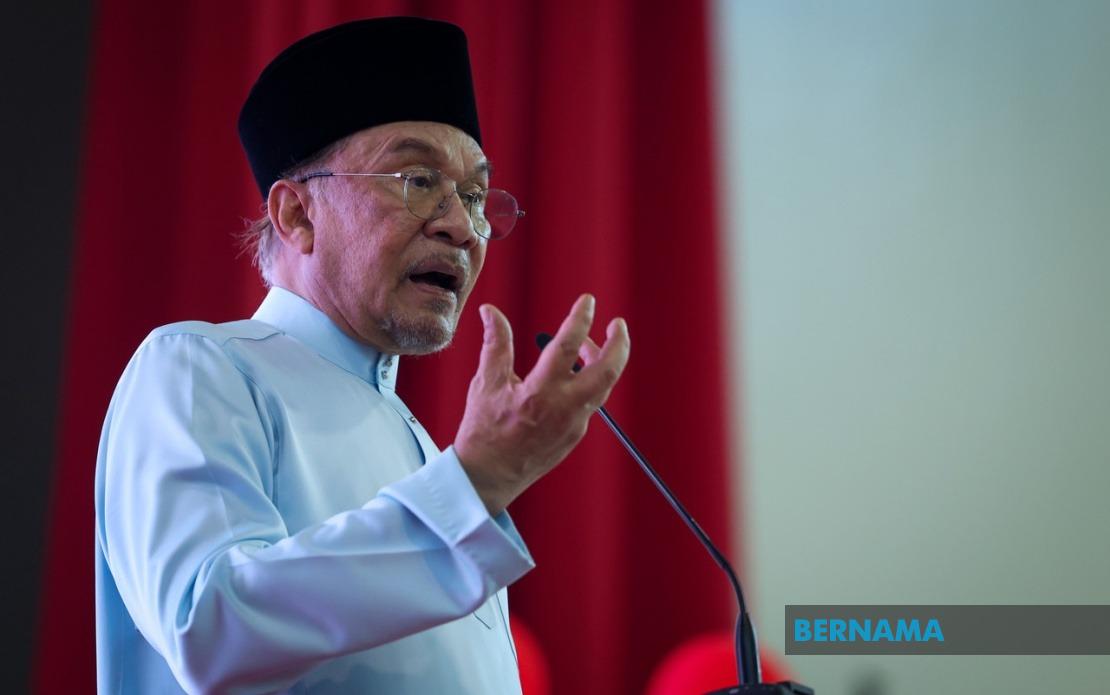
Prime Minister Datuk Seri Anwar Ibrahim has directed the Federal Land Development Authority (Felda) to conduct a thorough investigation into a proposed hotel disposal that would see the organisation sell the property at substantially below its original acquisition cost. Speaking at the Semarak Kenegaraan Programme with the Malaysian Armed Forces at Terendak Camp in Melaka on August 7, Anwar disclosed that he had declined to authorise the transaction after reviewing the financial terms, which would have resulted in a loss of approximately 60 million British pounds.
The Prime Minister, who also holds the Finance portfolio, revealed that Felda's management had approached him two months prior seeking approval for the hotel's sale at 100 million British pounds—a figure representing a dramatic markdown from the 160 million British pounds paid during an earlier acquisition. Anwar's refusal to endorse the deal reflected his broader concerns about institutional governance and the stewardship of state-owned enterprises. His immediate response was to request that the authority's leadership identify the individuals responsible for proposing such a commercially disadvantageous transaction and compile a detailed report documenting the circumstances surrounding the proposal.
An underlying tension in Anwar's intervention lies in the competing priorities facing Felda as both a commercial enterprise and a social welfare institution. The authority's settler population continues to grapple with material deprivation, with community members consistently raising grievances about inadequate infrastructure. During his visits to settlements, Anwar encountered residents requesting fundamental amenities such as air conditioning units and repairs to educational facilities, whilst noting that many household incomes remain insufficient to meet basic needs. Against this backdrop, the prospect of Felda incurring a massive financial loss through the hotel sale appeared particularly troubling to the Prime Minister, who characterised it as emblematic of institutional mismanagement that simultaneously harms both the organisation's financial viability and the constituencies it purports to serve.
Felda occupies a distinctive position within Malaysia's institutional landscape as a longstanding development and settlement agency with deep historical roots in rural transformation. Since its establishment, the organisation has been tasked with simultaneously generating commercial returns and advancing rural welfare objectives—a dual mandate that has occasionally created tensions between profit maximisation and social provision. The revelation that senior management had proposed such a disadvantageous transaction raised questions about internal governance structures, decision-making accountability, and whether adequate oversight mechanisms exist to prevent poor capital allocation decisions.
Anwar's public intervention underscores the Prime Minister's emphasis on institutional reform and fiscal discipline across government-linked companies. His administration has signalled a commitment to scrutinising major transactions and ensuring that state assets are deployed efficiently and that resources directed toward public welfare entities are not squandered through negligent management. The hotel sale proposal exemplified precisely the sort of governance failure that previous administrations had permitted to flourish—decisions made without adequate ministerial oversight that destroyed shareholder value whilst providing no corresponding benefit to intended beneficiaries.
The Prime Minister articulated a broader strategic concern regarding the preservation of Malaysia's important institutions. He warned that without corrective action and sustained ministerial attention, organisations previously regarded as foundational to national development and community empowerment risked deteriorating through incremental mismanagement and resource depletion. Felda, as a quintessentially Malaysian institution with longstanding credibility, warranted protection through active governance intervention. Anwar framed the demand for a comprehensive report not as punitive micromanagement but rather as a necessary corrective to ensure that institutions designed to uplift particular communities could continue fulfilling their social missions.
The immediate policy response—mandating a full investigation and demanding accountability—reflects an administrative approach that emphasises personal ministerial responsibility for major transactions. By assuming direct oversight of this particular deal, Anwar signalled that his government would not simply defer to institutional management on matters involving substantial financial exposure. This approach potentially carries implications for how other government-linked companies and statutory authorities conduct major transactions, suggesting that ministers may increasingly insert themselves into significant commercial decisions previously managed at institutional level.
For Felda's constituent communities, the Prime Minister's intervention carries symbolic importance beyond the immediate hotel transaction. It demonstrates that settler grievances regarding inadequate facilities and insufficient incomes have registered with the highest levels of government, and that leadership recognises the incongruity between institutional financial mismanagement and unmet settler needs. The public nature of Anwar's criticism and directive also establishes expectations that Felda's leadership should prioritise beneficiary welfare when making institutional decisions, particularly where commercial transactions might compromise the organisation's capacity to address community requirements.
The investigation that Anwar has demanded will likely examine the hotel acquisition circumstances, identify the decision-makers involved in the sale proposal, assess whether proper due diligence occurred before the initial purchase, and determine whether market conditions have genuinely deteriorated or whether the proposed sale reflected poor judgment. The findings could influence how Felda structures future asset management decisions and may result in personnel changes within the organisation's leadership. More broadly, the episode illustrates tensions inherent in expecting state-owned enterprises to simultaneously operate as commercial entities and deliver social welfare objectives, a challenge that extends beyond Felda to numerous other government-linked organisations across Southeast Asia that face similar competing mandates.

