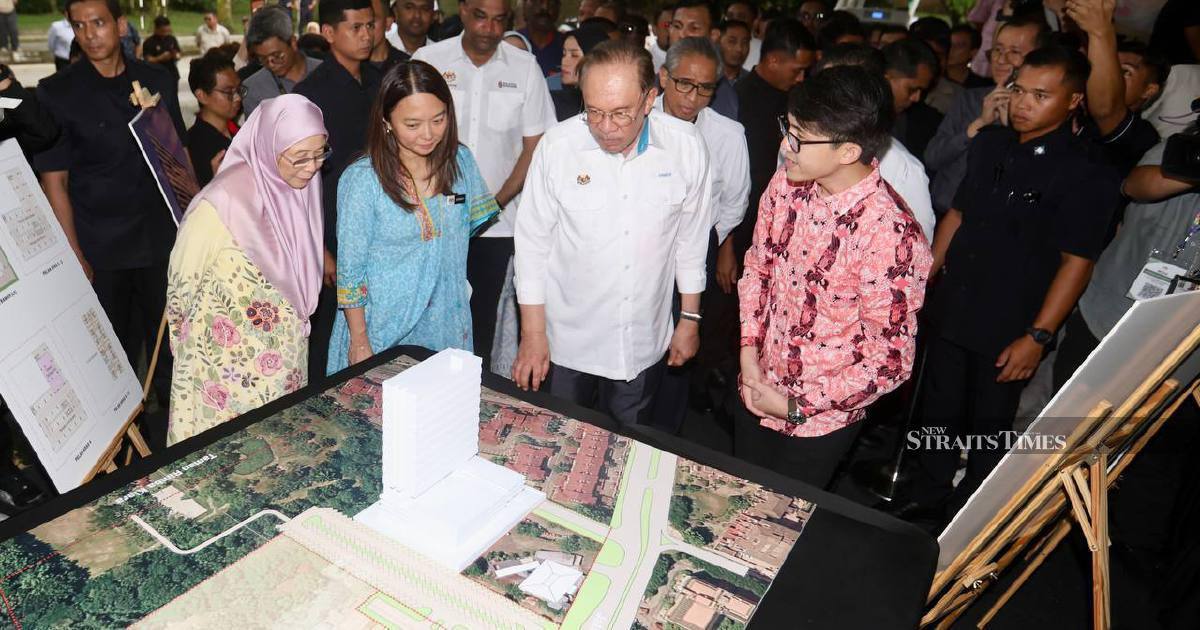
Prime Minister Datuk Seri Anwar Ibrahim has moved to counter growing concerns that Malaysia's development agenda risks overlooking the interests of economically marginalised city dwellers, insisting that his administration remains firmly committed to safeguarding the rights and welfare of those struggling to make ends meet in urban centres.
The assertion comes as the government faces mounting scrutiny over how large-scale infrastructure and property development projects balance growth imperatives against obligations to protect lower-income households. Urban poverty remains a persistent challenge across Malaysian cities, with many families facing inadequate housing, employment instability, and limited access to essential services. These structural pressures have prompted civil society organisations and opposition politicians to question whether recent policies adequately consider the vulnerabilities of those on society's economic margins.
Anwar's remarks specifically reference the Bukit Kiara project, a major development initiative that the prime minister frames as a practical demonstration of his government's commitment to inclusive growth. By invoking this particular undertaking, Anwar appears to be signalling that the administration's approach to urban development does not dismiss or deprioritise the needs of lower-income residents. The project appears designed to function as a policy showcase—tangible proof that poverty alleviation remains central to the government's developmental philosophy rather than an afterthought to commercial considerations.
The political context surrounding such declarations is significant. Malaysia's urban landscape has undergone rapid transformation over the past two decades, with prime real estate increasingly concentrated in fewer hands and construction-led growth benefiting primarily affluent investors. Simultaneously, informal settlements and rental-dependent communities have grown in visibility, particularly in Klang Valley, Penang, and other major metropolitan zones. This disconnect has become a focal point for political opposition, allowing critics to argue that the ruling administration favours big business over ordinary Malaysians.
By explicitly addressing these concerns, Anwar is attempting to reframe the government's development narrative. Rather than accepting a binary choice between economic growth and social protection, his framing suggests that properly designed projects can achieve both simultaneously. The Bukit Kiara initiative, whatever its specific features, has been selected as the symbolic anchor for this argument—a tangible reference point around which the government can build a broader claim about inclusive governance.
For ordinary Malaysians watching property prices climb beyond reach and housing affordability deteriorate, such statements carry political weight. Housing remains among the top concerns for urban voters across Malaysia's demographic spectrum, and affordability crises directly impact family budgets and social stability. A government perceived as neglectful of these pressures risks losing electoral support, particularly among younger voters establishing households and middle-income families squeezed by rising costs.
The emphasis on "rights" in Anwar's framing is analytically notable. Rather than discussing charity or welfare assistance, the prime minister couches urban poor support within a rights framework—suggesting that adequate living conditions and economic dignity constitute entitlements rather than discretionary benefits. This rhetorical choice aligns with constitutional provisions regarding education, healthcare, and dignity, and positions the government as guardian of constitutional obligations rather than dispenser of favours.
However, the gap between political rhetoric and implementation remains a practical concern for policy observers. Government statements affirming commitment to vulnerable populations require corresponding budgetary allocation, administrative capacity, and regulatory enforcement. Urban development projects frequently generate displacement pressures, whether through direct relocation or gradual gentrification that prices out original residents. How comprehensively the Bukit Kiara project addresses these dynamics will significantly influence whether Anwar's assurances translate into material improvement for struggling urban communities.
The timing of such statements also reflects broader regional trends. Across Southeast Asia, rapid urbanisation, property speculation, and development pressures have created similar tensions between growth and inclusion. Thailand, Indonesia, and the Philippines have all witnessed tension between urban development trajectories and lower-income community interests. Malaysia's policy approach thus carries regional relevance, potentially influencing how neighbouring governments address comparable challenges.
For Malaysia specifically, the housing dimension extends beyond immediate affordability concerns into questions about social cohesion and urban stability. When significant segments of the population feel excluded from prosperity opportunities or vulnerable to economic displacement, social friction intensifies. The government's explicit commitment to protecting urban poor interests—and its willingness to reference specific projects as evidence—suggests awareness that these concerns carry political salience extending well beyond individual hardship.
The Bukit Kiara project's success in demonstrating inclusive development principles will likely become a benchmark against which the government's broader urban policy is judged. If the initiative successfully provides housing security or economic opportunity for vulnerable populations while proceeding with development, it validates Anwar's framework. Conversely, if it generates displacement, affordability problems, or community resistance, it becomes evidence that rhetoric outpaces reality.
Moving forward, sustained attention to how this and comparable projects balance commercial viability against community protection will remain essential. Urban poverty in Malaysian cities is neither inevitable nor intractable, but addressing it requires deliberate policy choices, adequate resourcing, and genuine prioritisation alongside growth objectives. The government's explicit commitment to this balance suggests recognition of its importance, though implementation will ultimately determine whether such statements represent meaningful policy direction or merely political positioning.

%22%2F%3E%3C%2Fpattern%3E%3C%2Fdefs%3E%3Crect%20width%3D%22100%25%22%20height%3D%22100%25%22%20fill%3D%22url(%23ph1354vg)%22%2F%3E%3Crect%20width%3D%22100%25%22%20height%3D%22100%25%22%20fill%3D%22url(%23ph1354vp)%22%2F%3E%3Ctext%20x%3D%2250%25%22%20y%3D%2250%25%22%20text-anchor%3D%22middle%22%20dominant-baseline%3D%22central%22%20fill%3D%22rgba(255%2C255%2C255%2C0.95)%22%20font-family%3D%22Georgia%2C%20'Times%20New%20Roman'%2C%20serif%22%20font-weight%3D%22700%22%20font-size%3D%22320%22%20letter-spacing%3D%22-0.02em%22%3EGRS%3C%2Ftext%3E%3C%2Fsvg%3E)