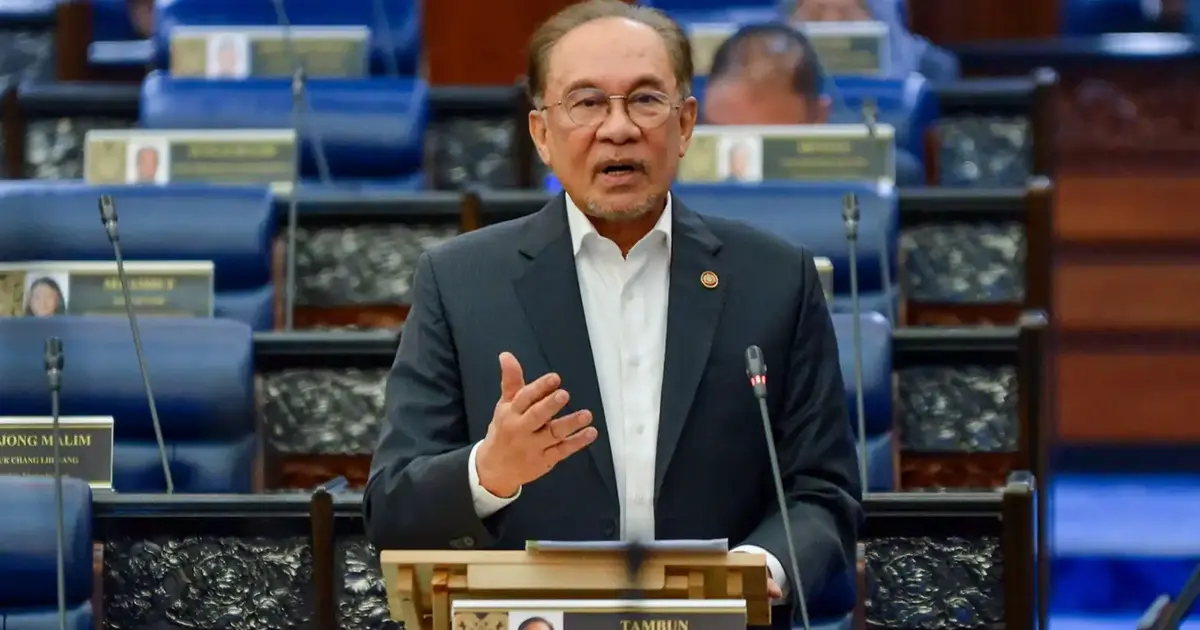
Prime Minister Anwar Ibrahim has once more rebuffed suggestions that the government should dissolve Parliament and call a fresh mandate from voters, asserting instead that the administration requires adequate time to complete its reform agenda and deliver tangible results to the Malaysian public.
The rejection comes amid ongoing speculation about the timing of the next general election, with various political figures and analysts periodically reviving the debate over whether the government should seek renewed parliamentary approval. Anwar's position reflects the administration's confidence that it has sufficient support to govern until the constitutionally mandated electoral cycle, expected to fall due before mid-2026. The Prime Minister's stance suggests the government believes its current parliamentary coalition remains sufficiently cohesive to manage legislative business without resort to early polls.
Anwar's argument centres on a fundamental political philosophy: that voters elected the government to implement a comprehensive economic and governance programme, not to participate in continuous electoral contests. This framing attempts to reposition early election calls as incompatible with sound economic stewardship. The government's position reflects concerns that persistent political uncertainty and campaign periods could unsettle investor confidence, complicate budget planning, and distract from priority policy initiatives requiring sustained focus and implementation.
The Malaysian economy's performance will likely prove crucial to this narrative's effectiveness. Economic growth, employment levels, and cost-of-living pressures directly influence public perception of government effectiveness. If economic indicators improve markedly, early election calls may diminish as voters perceive progress. Conversely, persistent economic sluggishness could reignite pressure for political change. The government's ability to demonstrate concrete improvements in household incomes and job creation will substantially shape the credibility of Anwar's stability argument throughout the coming months.
Stability has emerged as the government's primary rhetorical shield against critics advocating premature elections. The administration contends that markets, foreign investors, and ordinary Malaysians all benefit from policy continuity and reduced political noise. This messaging resonates particularly with business communities concerned about policy uncertainty and international firms evaluating investment decisions in Southeast Asia. By positioning stability as the electorate's true preference, the government attempts to delegitimise election-acceleration rhetoric as serving narrow factional interests rather than national welfare.
The underlying political reality remains more nuanced than the government's public messaging suggests. Coalition maintenance requires constant negotiation among component parties with divergent interests and ambitions. Individual faction leaders may calculate that their electoral prospects improve under fresh polls rather than continuation of current arrangements. The government must therefore balance its stated preference for completing its mandate against the practical necessity of managing intra-coalition tensions and preventing partner defection that could erode parliamentary majorities.
Regional context further influences this discussion. Southeast Asian neighbours including Indonesia and Thailand have recently experienced their own electoral cycles, focusing political attention across the region. Malaysia's political stability at a time when some neighbouring nations face governance challenges or protest movements could strengthen the government's claim that Malaysians benefit from continuity. This regional positioning potentially strengthens Anwar's argument that Malaysia's relatively predictable political environment serves economic interests better than instability.
Opposition parties maintain their own calculations regarding optimal election timing. Some calculations suggest that delaying polls allows economic conditions time to shift, potentially altering voter sentiment. Others argue that current parliamentary mathematics already disadvantage opposition groupings, and that circumstances are unlikely to improve from their perspective. These competing strategic judgments ensure that election-timing debate will persist as a persistent undercurrent in Malaysian politics regardless of the government's public pronouncements.
The government's reform agenda itself provides substantive scaffolding for its delay argument. Initiatives spanning judicial reform, anti-corruption programmes, economic restructuring, and institutional strengthening require multi-year implementation periods to demonstrate tangible results. Interrupting these programmes through early elections might allow successors to halt or redirect efforts, creating policy discontinuity that could undermine outcomes. This practical consideration gives Anwar's argument material substance beyond mere political convenience.
Public opinion research, where available, suggests that Malaysians display mixed preferences regarding election timing. While some voters express fatigue with political campaigning and appreciate policy focus, others retain interest in periodic electoral opportunities to register satisfaction or dissatisfaction with government performance. These divided preferences mean that the government cannot claim overwhelming popular demand for election avoidance, even if stability arguments carry intellectual weight among policy-oriented audiences.
Looking forward, the government's position on election timing will likely shift if circumstances change materially. Economic deterioration, significant coalition breakdown, or major scandals could force recalculation. Conversely, if economic indicators improve markedly and coalition harmony holds, the government may grow increasingly confident in its stability narrative. Anwar's repeated rejection of early election calls therefore represents current positioning rather than immutable strategy, subject to revision as circumstances evolve and political calculations shift.

